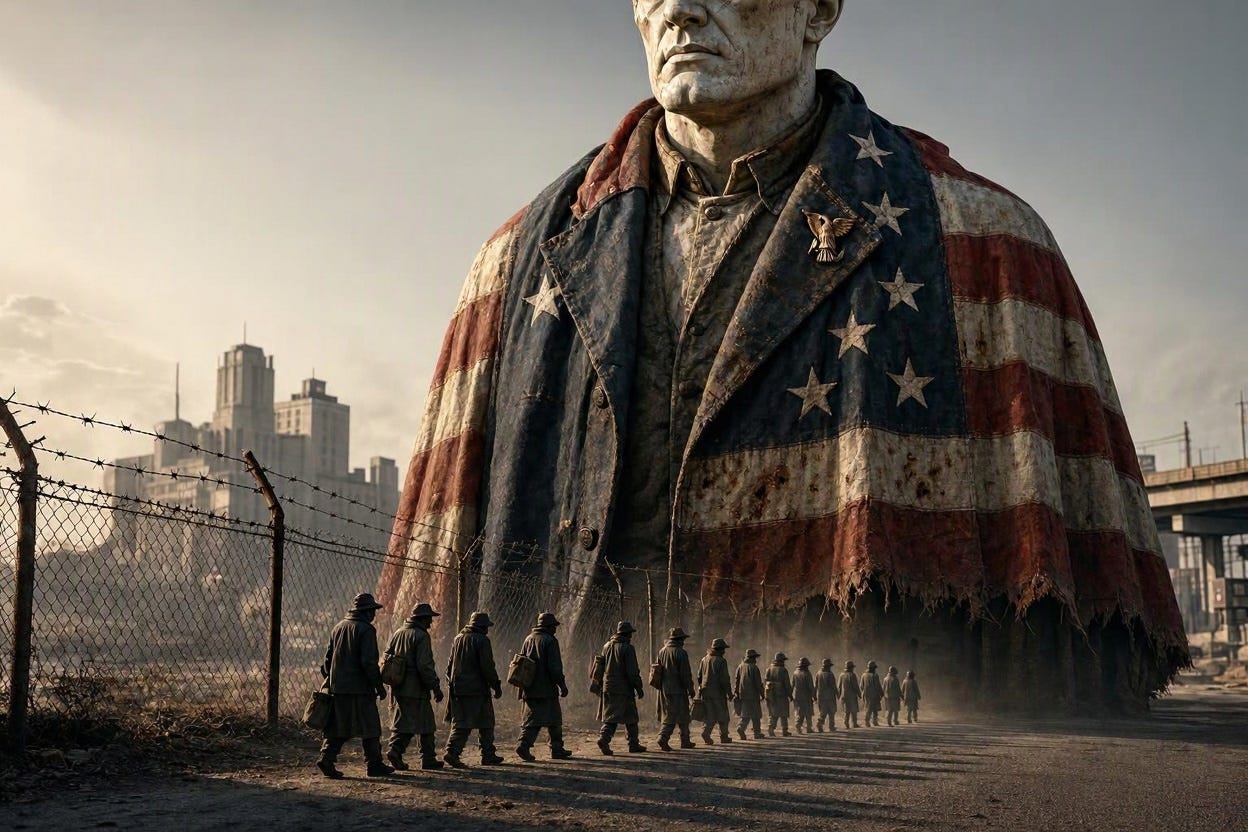
American exceptionalism has always been a story Americans tell themselves about being set apart—morally, politically, even metaphysically—from the rest of the world. It is a myth of inherent virtue, a belief that the nation’s actions are justified not because they are humane or lawful, but because they are American. And in moments of political strain, that myth becomes not just inaccurate but actively dangerous. It encourages a kind of moral insulation, a refusal to see how power is experienced by those who do not wield it. It becomes a shield against accountability and a license for cruelty.
The danger begins with the premise itself: that the United States is uniquely good. Once a nation imagines its goodness as innate rather than earned, it becomes easy to treat humanitarian norms as optional. If America is already righteous, then violations of human rights can be reframed as necessary, even noble. The separation of families at the border, the tolerance of mass incarceration, the willingness to let poverty and illness fester—these policies can be justified not on their merits but on the assumption that America’s intentions are pure. Exceptionalism becomes a moral loophole.
This myth also pits values against one another. Compassion is set against security. Equality is set against tradition. Justice is set against patriotism. The result is a culture that treats humanitarian commitments as weaknesses rather than strengths. When a nation believes it is exceptional, it becomes allergic to self‑critique. It cannot admit wrongdoing without feeling that its identity is under threat. And so it doubles down. It rationalizes. It insists that harm is not harm if done by the “good” country.
Exceptionalism also distorts the nation’s relationship to the world. Instead of participating in global norms, it imagines itself above them. Treaties become suggestions. International law becomes an inconvenience. Humanitarian crises become stages on which America performs its benevolence rather than situations demanding humility and cooperation. The myth encourages a kind of moral loneliness: a belief that America leads because it is better, not because it is responsible to others.
The most corrosive effect, though, is internal. Exceptionalism teaches citizens to see dissent as disloyalty. If the nation is inherently good, then criticism becomes inherently suspect. This is how humanitarian values erode—not through overt rejection, but through the quiet suggestion that empathy is unpatriotic. The myth encourages a politics of resentment, a belief that acknowledging suffering somehow diminishes national pride. It becomes easier to ignore the vulnerable when the national story insists that vulnerability is a personal failure rather than a collective responsibility.
To reject exceptionalism is not to reject America. It is to reject the idea that any nation is exempt from moral scrutiny. Humanitarian values—dignity, compassion, justice—require humility. They require the willingness to see oneself as capable of harm and responsible for repair. They require a civic imagination grounded not in superiority but in solidarity.
The truth is simple: a nation cannot be exceptional and humane at the same time if its exceptionalism is defined by denial. Humanitarian values demand honesty. They demand accountability. They demand the courage to see the country not as it wishes to be, but as it is—and to act accordingly.
American Exceptionalism and the Cruel Logic of Contemporary Immigration
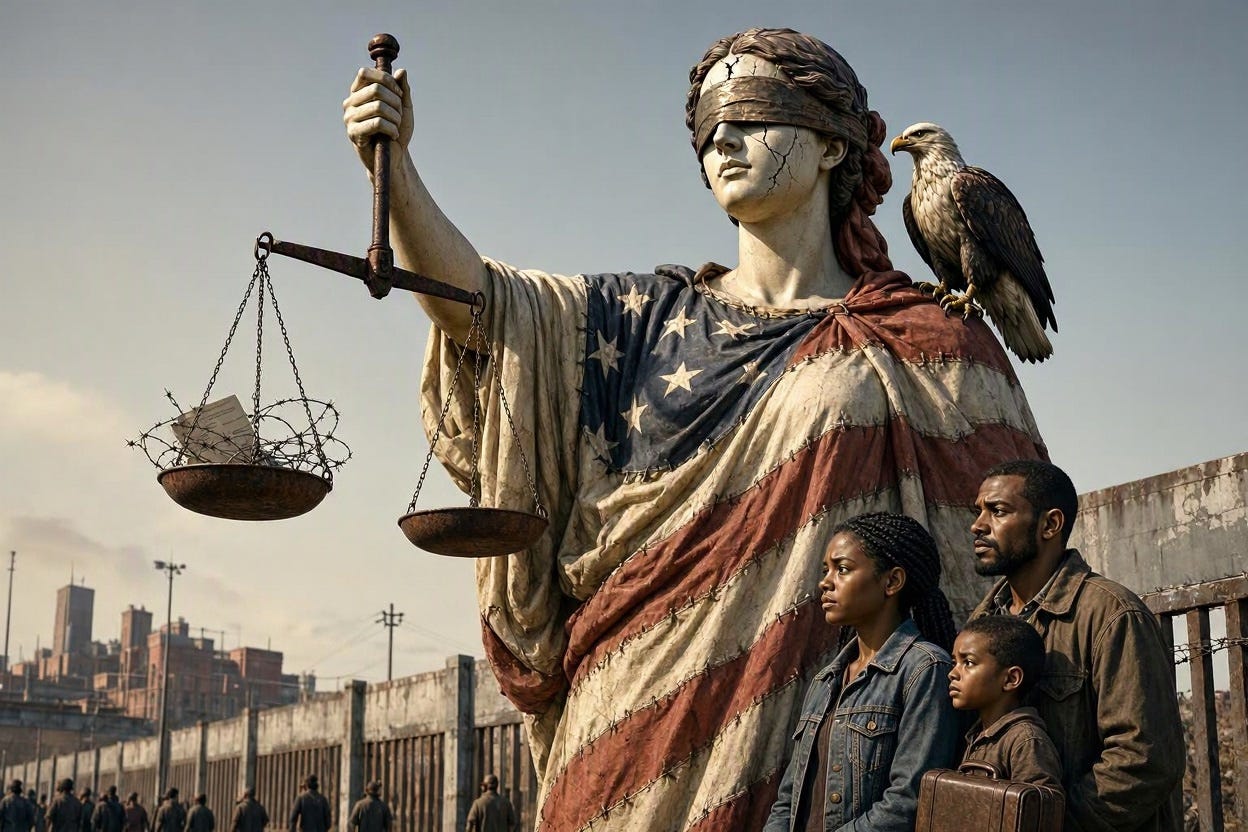
American exceptionalism becomes most dangerous not in abstract debates about national identity but in the concrete policies that shape how human beings are treated at the nation’s borders. Immigration is where the myth stops being rhetorical and becomes operational. It is where the belief in inherent national virtue collides with the lived reality of people seeking safety, opportunity, or simply the chance to exist without fear. And in today’s political climate, immigration attitudes and policies reveal how deeply exceptionalism has distorted America’s moral imagination.
The myth begins with the assumption that America is uniquely good, uniquely desirable, uniquely destined. If a nation believes this about itself, then those who seek entry are framed not as fellow human beings but as supplicants. Their worth is measured not by their dignity but by their usefulness. Exceptionalism encourages a hierarchy of humanity: Americans at the top, everyone else arranged below according to how closely they resemble the imagined ideal. This hierarchy is not always spoken aloud, but it is embedded in policy decisions that treat migrants as problems to be managed rather than people to be welcomed.
This logic is visible in the normalization of cruelty at the border. Family separation, prolonged detention, the use of asylum backlogs as deterrence—these practices are justified through the language of necessity, but they are rooted in a deeper belief that America’s security and identity are more important than the suffering of non‑citizens. Exceptionalism makes it easy to rationalize harm. If America is inherently righteous, then any action taken to “protect” it becomes righteous by extension. Humanitarian values—compassion, refuge, solidarity—are reframed as luxuries the nation cannot afford.
Exceptionalism also shapes public attitudes. It encourages citizens to see immigration not as a human story but as a threat to national purity or stability. It fuels the idea that newcomers must prove their worth, assimilate instantly, or remain perpetually grateful. It fosters resentment toward those who arrive with needs rather than resources. And it allows political leaders to weaponize fear, portraying migrants as invaders or burdens rather than neighbors. When a nation believes it is exceptional, it becomes allergic to the idea that it might owe anything to people beyond its borders.
The most troubling consequence is how exceptionalism erodes empathy. It narrows the moral circle. It teaches Americans to see suffering as something that happens elsewhere, to other people, in other places. When migrants arrive at the border fleeing violence, poverty, or climate disaster, exceptionalism encourages a kind of moral distancing: their crises are unfortunate, but not America’s responsibility. This distancing is incompatible with humanitarian values, which insist that dignity is universal and that borders do not erase moral obligations.
Immigration policy becomes a mirror. It reflects what a nation believes about itself. Today’s policies—deterrence through hardship, selective compassion, the normalization of dehumanizing rhetoric—reveal a country struggling to reconcile its myth with its reality. Exceptionalism insists that America is a beacon of freedom. But a beacon does not turn away those drawn to its light. A beacon does not punish people for seeking safety. A beacon does not confuse cruelty with strength.
To move beyond exceptionalism is not to abandon national pride. It is to abandon the idea that pride requires blindness. Humanitarian values demand a different kind of patriotism—one rooted in humility, responsibility, and the recognition that moral leadership is measured not by self‑regard but by how a nation treats the most vulnerable. Immigration is the test. And right now, the myth of exceptionalism is making America fail it.