
Epigraph
“Fantasy is not an escape from reality. It is a way of understanding it.”
— Lloyd Alexander
I. Two American Storytellers Walk Into a Culture
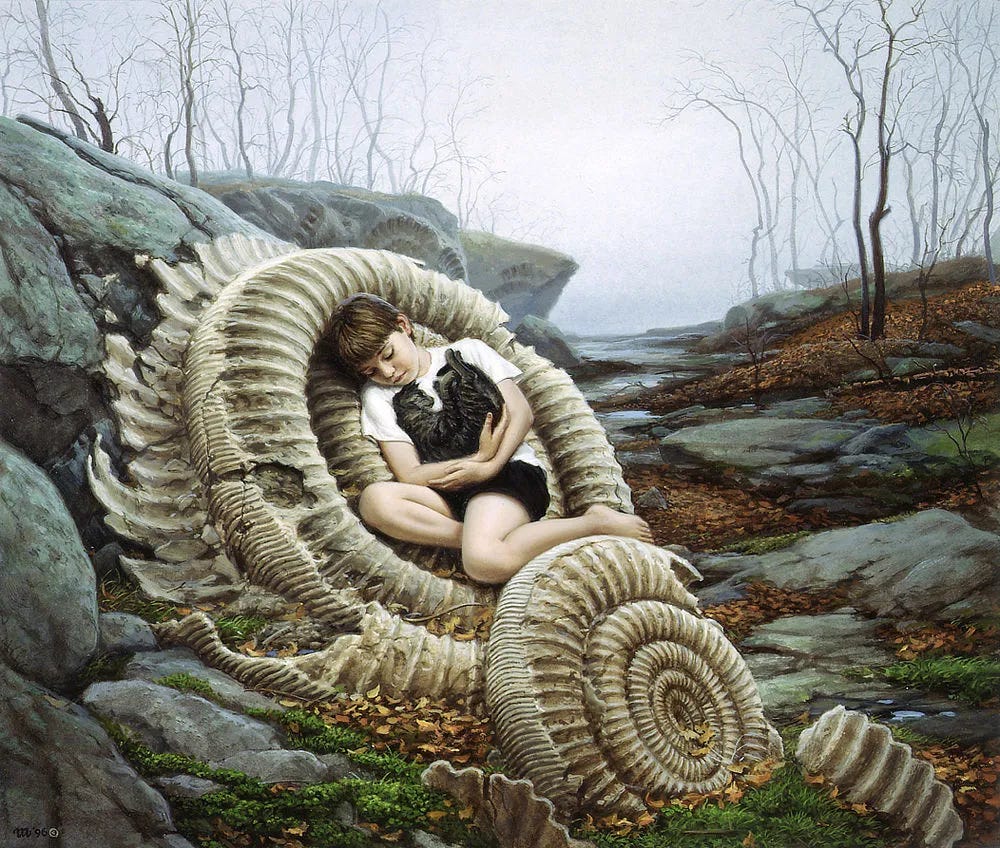
On one side: Michael Whelan, the painter whose canvases stretch from cosmic dread to intimate tenderness, whose dragons and starfields are less about spectacle than about the human interior.
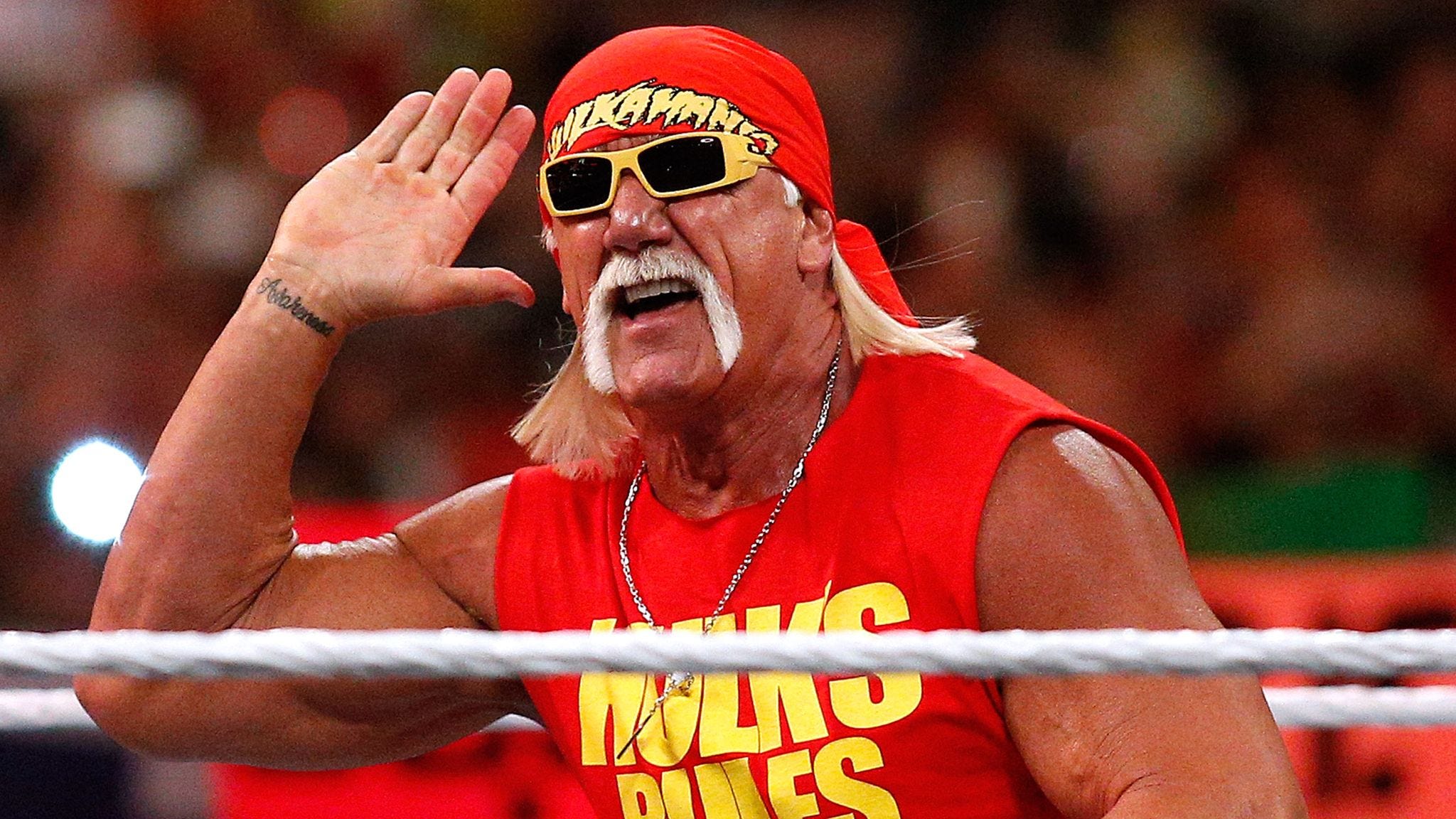
On the other: Netflix’s Hulk Hogan program, a glossy, high‑production retelling of a life already lived in the bright lights of kayfabe.
Both are forms of storytelling.
Only one is interested in truth.
II. Whelan’s Imaginative Realism: Art as Ethical Attention
Whelan’s work — even at its most fantastical — is anchored in observed reality: a childhood memory, a son’s gesture, a philosophical question about meaning in an indifferent universe. His images are not propaganda; they are invitations.
He paints the unreal to illuminate the real.
He treats symbols as living things.
He lets ambiguity breathe.
In Whelan’s world, fantasy is a discipline of humility.
It asks us to look again, and then again, until the familiar becomes strange enough to teach us something.
III. The Hogan Program: Myth Maintenance in the Age of Streaming
The Netflix treatment of Hulk Hogan is not art in the Whelan sense; it is brand management with dramatic lighting.
Celebrity documentaries in America often function as a soft form of propaganda — not sinister, but smoothing, sanding, polishing. They curate rather than reveal. They turn a complicated human life into a consumable arc: rise, fall, redemption, repeat.
Where Whelan uses fantasy to deepen reality, the Hogan program uses “reality” to flatten it.
It is a story designed to keep a legend intact.
This is not a moral failure; it is a cultural habit.
We like our heroes uncomplicated, even when the truth is not.
IV. Reality as Lens vs. Reality as Stage Set
Whelan:
Reality is porous. Symbolic. Ethically charged.
The universe is vast, indifferent, and therefore demands meaning-making from us.
Hogan/Netflix:
Reality is a backdrop. A set piece.
The goal is not inquiry but coherence — a narrative that reassures rather than challenges.
One expands the imagination.
The other stabilizes the myth.
V. Art vs. Propaganda: The American Split Screen
Whelan’s art resists propaganda because it refuses to tell you what to think.
It offers ambiguity, interiority, and the dignity of interpretation.
The Hogan program, by contrast, participates in the American tradition of self‑mythology — the belief that a life can be edited into a legend without remainder.
Both are American stories.
Only one is interested in the parts we don’t already know.
Sidebar: What This Says About Us
We trust fantasy more than “reality TV” because fantasy doesn’t pretend.
We prefer myths that comfort us to truths that complicate us.
We are hungry for interiority but trained to consume spectacle.
We confuse visibility with understanding.
VI. Closing Reflection: The Imagination We Choose
The deeper question isn’t Whelan vs. Hogan.
It’s what kind of imagination we want to cultivate.
Whelan’s work suggests that imagination is a civic virtue — a way of paying attention to the world and to one another.
The Hogan program suggests that imagination is a marketing tool — a way of keeping the lights on.
Both are possible futures for American culture.
Only one enlarges us.