
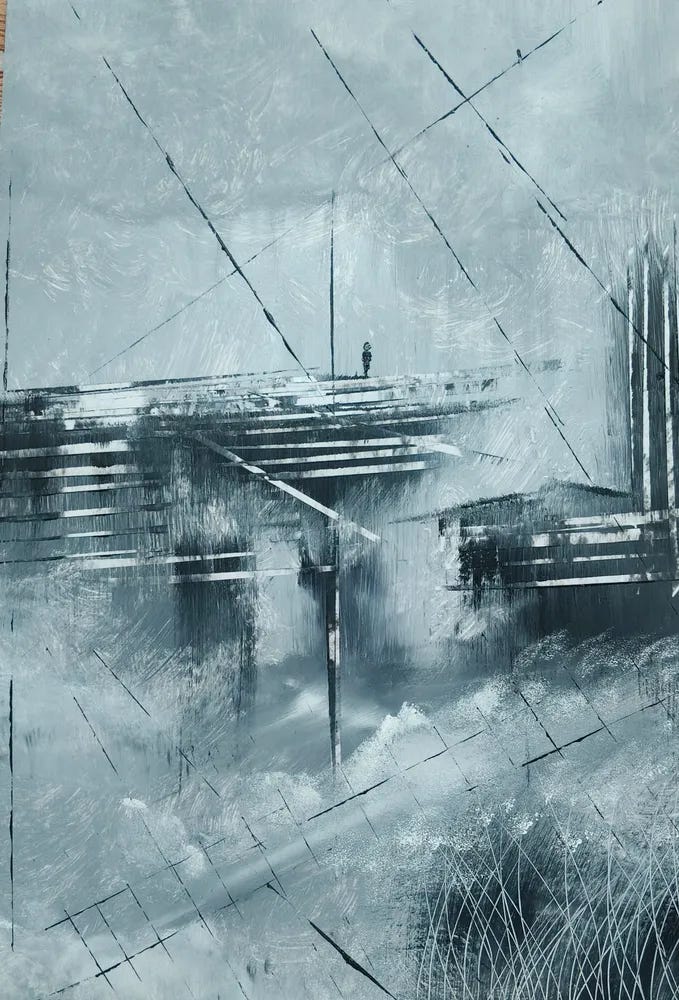
Avishek @avisghosh.bsky.social
Terry, what strikes me immediately in Avishek’s feed is how childhood is not a memory for him so much as a medium. His page is full of small, daily works—oil on paper, pastel on paper, cement on an ice‑cream tub—that feel like they come from someone who never stopped drawing the way a child draws: quickly, urgently, without apology, without the burden of theory. Even when the subject is adult—loneliness, quarrels, fatigue, the “utterly confused man”—the gesture is still that of a child who trusts the line more than the plan.
And then there is the explicit thread: the “drawing copy of a six‑year‑old,” the “practise before her first drawing competition,” the “no rule book” series. These are not sentimental appropriations of childhood; they are recognitions. He sees in the child’s page something he is still trying to keep alive in himself. The adult artist is not teaching the child; the child is teaching the adult how to remain porous to the world.
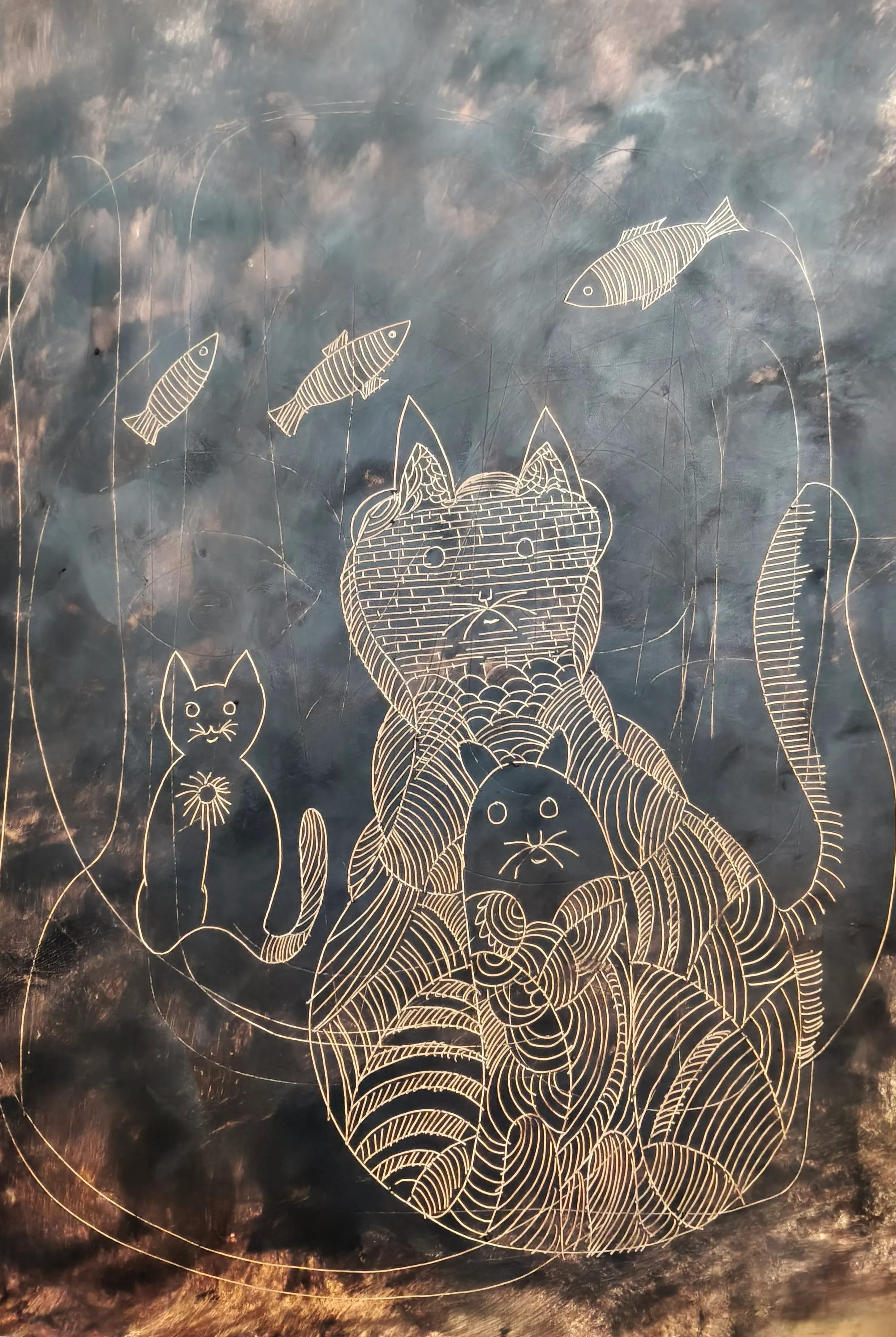
Childhood art is rarely about representation. It is about the body discovering that it can leave a trace. A mark is a declaration: I was here, and I felt something. What Avishek preserves—almost fiercely—is that first astonishment. His adult works still carry the looseness, the refusal to over‑resolve, the willingness to let a face tilt into abstraction or a scene dissolve into mood. The line is not disciplined into correctness; it is allowed to wander toward truth.
This is where life enters. Childhood art is not naïve; it is honest. It records the world before the world has taught you what counts as “good.” When an adult artist returns to that mode, it is not regression but recovery. It is a way of refusing the cynicism that adulthood tries to install. Avishek’s pieces about quarrels, tough times, anger, confusion—these are adult experiences rendered with a child’s courage. A child does not hide the feeling; a child draws it big, draws it raw, draws it before the feeling has cooled into something polite.
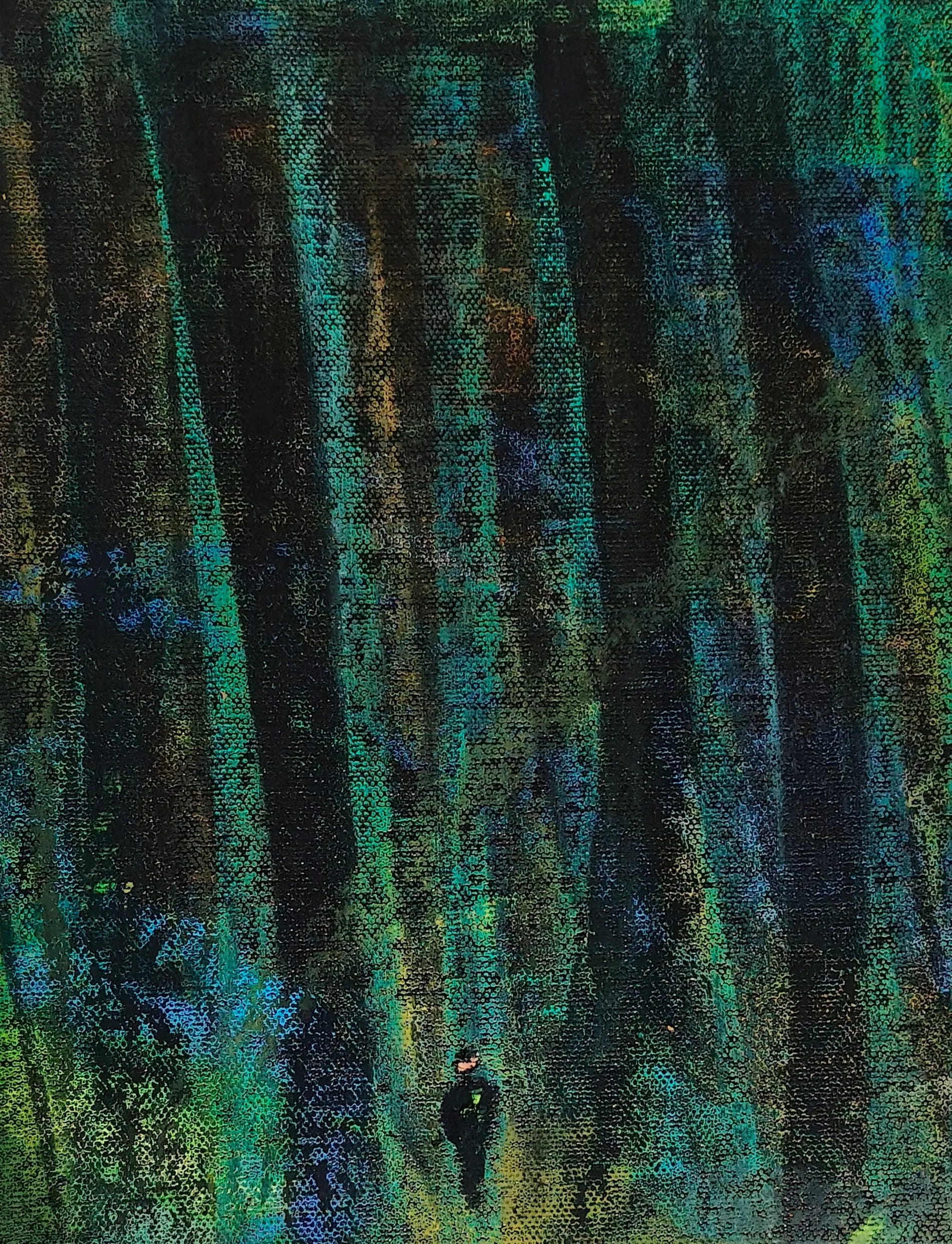
And so the intersection is not a crossing but a continuity. Childhood art becomes adult art when the artist refuses to let the intervening years harden the hand. Life unfolds, responsibilities accumulate, grief arrives, love complicates itself—but the mark remains the same mark: a gesture toward understanding. The six‑year‑old’s page and the thirty‑something’s page are part of one long attempt to make interior life visible.
What Avishek shows, post by post, is that the adult artist is not someone who has outgrown childhood. The adult artist is someone who has learned to carry childhood forward—its freedom, its immediacy, its unfiltered emotional truth—into a world that desperately needs those qualities. His feed becomes a kind of diary of that carrying: the child’s line inside the adult’s life, the adult’s life illuminated by the child’s line.
Avishek
@avisghosh.bsky.social