Epigraph: “Attention is the rarest and purest form of generosity.” — Simone Weil
There is a particular kind of digital space that feels less like a feed and more like a clearing — a place where the noise of the world thins just enough for meaning to become audible again. Luca’s Bluesky presence is one of those clearings. It blends creativity, culture, and politics not by juxtaposition but by permeability, allowing each to seep into the others until the boundaries dissolve. What remains is a kind of civic‑aesthetic commons, a space where beauty and responsibility are not competing impulses but mutually sustaining ones.
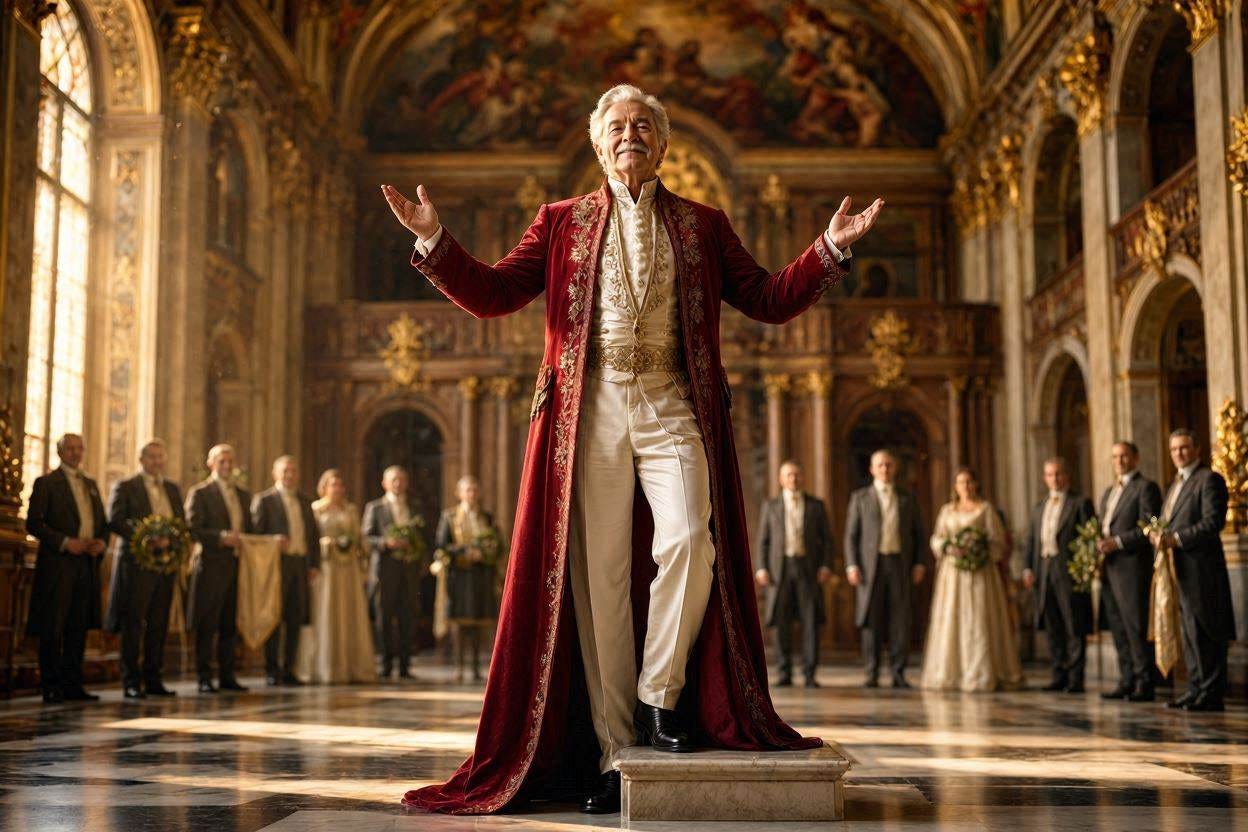
The creativity comes first, or at least it feels that way. Luca’s images — long‑exposure experiments, playful visual jokes, moments of wildlife caught in a reverent frame — operate like small acts of wonder. They remind the viewer that the world is not exhausted, not fully catalogued, not yet tamed by our attention economy. These images are not presented as escapes from politics or culture; they are reminders of what politics and culture are meant to protect. In a time when digital platforms often reward spectacle over substance, Luca’s art insists on the quiet, the curious, the handmade. It is creativity as devotion rather than performance.
Culture enters almost sideways. A massive cathedral door, a steam whistle diagram, a peculiar artifact from some forgotten corner of history — each post widens the aperture through which the viewer sees the world. Culture here is not a museum of settled meaning but a living archive of human strangeness. Luca treats cultural fragments as invitations rather than declarations. They ask the reader to look again, to consider how the past continues to shape the present, to notice how human ingenuity and folly coexist in every artifact we inherit.
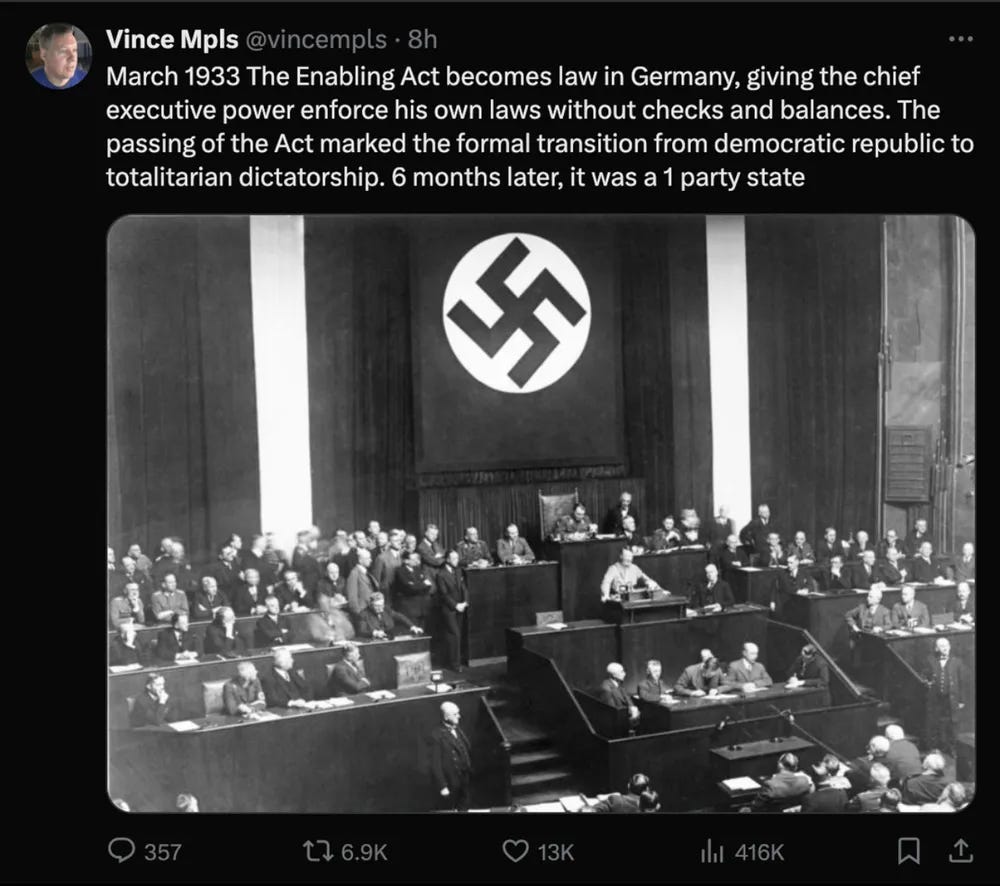
And then, without rupture, politics appears — not as partisan combat but as moral orientation. Luca’s political posts are rarely loud. They are acts of maintenance, small gestures of civic care. A reminder of historical atrocities framed as “Never Again.” A critique of disinformation that refuses hysteria. A note about public figures that avoids the easy slide into cynicism. Politics, in this feed, is not a performance of outrage but a practice of attention. It is the willingness to remain awake to the world’s wounds without surrendering to despair.
What makes the blend work is tone. Luca’s sensibility is steady, curious, and fundamentally humane. She does not treat art as decoration, culture as nostalgia, or politics as spectacle. Instead, she treats all three as expressions of the same underlying commitment: to see the world clearly and to care about what one sees. This is the kind of digital practice you’ve been tracing in your newsletter — spaces where aesthetic attention becomes ethical attention, where creativity becomes a form of citizenship, where the ordinary becomes a site of resistance simply by being noticed.
In an era when platforms often amplify the worst of us, Luca’s Bluesky feed models a different possibility: a digital commons shaped by generosity of attention. It is a reminder that creativity can deepen culture, that culture can contextualize politics, and that politics can be practiced without sacrificing beauty. It is, in short, a small but meaningful enactment of civic imagination — the very terrain the Trueman–Triola Newsletter has been mapping.
THE SKY, THE THREAD, THE THRESHOLD Epigraph: “Nature does not hurry, yet everything is accomplished.” — Lao Tzu
As we move through Luca’s Bluesky presence she seamlessly treats creativity, culture, and politics not as separate lanes but as a single braided current. Her feed isn’t a gallery, nor is it a soapbox; it’s a lived environment where aesthetic delight and civic vigilance coexist without competing for primacy. That coexistence is the point.
The art arrives in flashes: long‑exposure “light fossils,” Lego Homer disappearing into a hedge, calligraphy splatter rendered with reverence, wildlife moments that feel like small prayers. These aren’t presented as escapes from the world but as evidence of its strangeness and beauty, a reminder that wonder is a political resource. Luca curates images the way a naturalist might collect stones—each one a fragment of the world’s ongoing creativity.
Then, without rupture, the feed shifts into cultural commentary: the massive doors of Saint John Lateran, the mechanics of steam whistles, the oddity of a Stanhope ring. These posts function like apertures, widening the reader’s sense of time and place. Culture here is not a museum; it’s a living archive of human curiosity. The transitions are never jarring because Luca’s sensibility is consistent—she is always pointing toward the world’s capacity to surprise us.
And threaded through all of this is politics, not as partisan performance but as moral orientation. Her “Never Again” reflection is emblematic: a refusal to treat history as settled, a call to attention rather than alarm. Even the sharper posts—critiques of disinformation, commentary on public figures—are framed as acts of civic maintenance. She isn’t shouting; she’s sweeping the front steps.
What makes the blend work is tone. Luca’s voice is curious, amused, occasionally exasperated, but never cynical. She treats political awareness as a form of care, not combat. The art and nature posts soften the ground, reminding followers of what is worth protecting. The cultural fragments deepen the sense of shared inheritance. The political notes insist that inheritance requires stewardship. It’s a feed that models what democratic imagination looks like when it’s nourished by beauty rather than fear.
In this way, the site becomes a kind of civic‑aesthetic commons: a place where creativity is not decoration but sustenance, where culture is not nostalgia but connective tissue, and where politics is not spectacle but responsibility. It’s the kind of digital space you’ve been tracking in your newsletter work—places where attention becomes ethical, where art becomes a mode of citizenship, and where the ordinary becomes a site of resistance simply by being seen clearly.
Luca’s got some good shit going on; take a look!