
Every so often a question drifts through the mind that feels like a joke at first, then slowly reveals itself as a small philosophical trapdoor. Mine, recently:
Does Disney have any human‑resources people in Norway?
If they do, I’d like to meet them.
If they don’t, that absence is its own kind of answer.
Because what fascinates me isn’t Disney as a corporation—it’s the collision between a global entertainment empire and a culture like Norway’s, where the baseline assumption is that human beings deserve dignity, rest, and a life outside the office. A place where labor protections aren’t “benefits” but the ground floor of a functioning society.
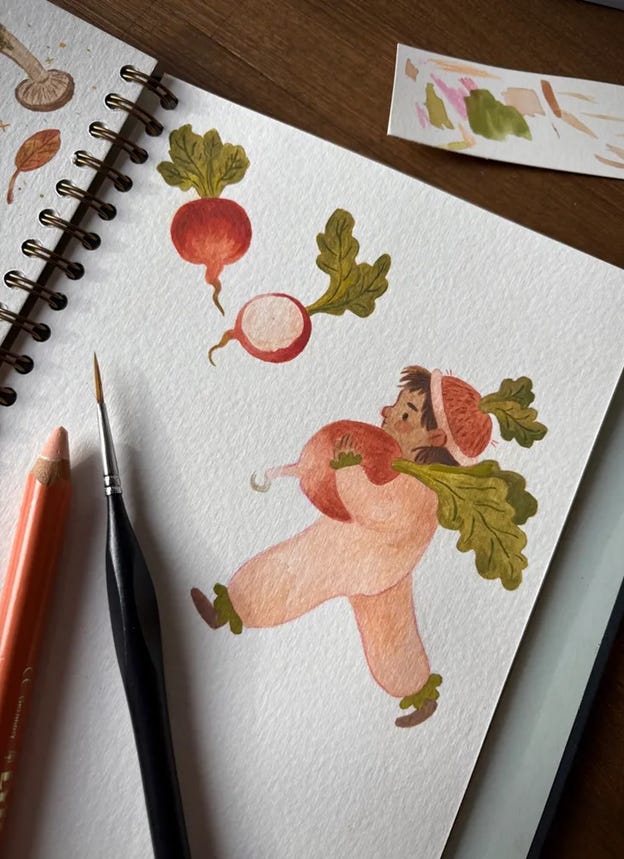
And then I think of Kristin Askland, the Norwegian illustrator whose Bluesky feed is a steady stream of gentle creatures, cozy interiors, and small, attentive moments—snails, bunnies, hedgehogs, birds, cups of tea, sketchbook pages filling slowly and honestly. Her work radiates a kind of humane pace, a refusal of frenzy, a belief that art grows best in environments where people are allowed to breathe. bsky.app
Imagine being the HR representative tasked with translating Disney’s corporate culture into that world:
“Here at Disney, we believe in magic.”
“Here in Norway, we believe in legally mandated vacation time.”
“Here at Disney, we encourage employees to bring joy to every interaction.”
“Here in Norway, we encourage employees to go home before the sun sets at 3 p.m. because joy is easier to find after a warm meal.”
It’s funny, but it’s also revealing. Because beneath the humor is a deeper question about scale—how large systems treat the humans inside them, and what happens when those systems meet a culture that refuses to shrink.
And this is where Ursula Nordstrom enters the conversation like a quiet thunderclap.
Nordstrom, the legendary editor who shaped modern children’s literature, understood something that corporate HR departments often forget: children’s art thrives when adults are allowed to be fully human. She championed creators—Sendak, Brown, Steig, and so many others—not by smoothing them into corporate shapes but by protecting their strangeness, their vulnerability, their interiority. She believed that children deserved books that told the truth, and that artists deserved editors who treated them as people, not production units.
In a way, Nordstrom was the anti‑corporate HR department:
not a manager of compliance, but a steward of humanity.
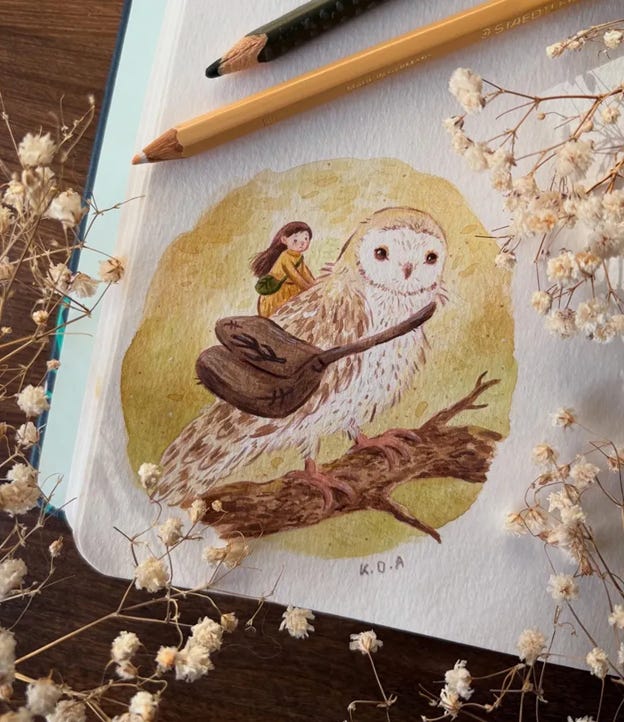
And when I look at Kristin Askland’s work—its softness, its quiet humor, its devotion to the small—I see a lineage that Nordstrom would have recognized instantly. Not stylistically, but ethically. A belief that art for children (and the child still alive in adults) is not a commodity but a relationship. A form of care.
So the question becomes:
What happens when a global corporation enters a culture where artists like Askland flourish, and where Nordstrom’s ethos—protect the human, honor the interior life—still feels alive?
Maybe the HR office becomes a site of negotiation.
Maybe the corporation bends, just a little, toward the humane.
Or maybe the Norwegians simply shrug, take their five weeks of vacation, and let the mouse adjust.
Either way, the thought lingers because it gestures toward a larger truth:
The world is full of systems that claim to be too big to change—until they meet a culture, or an artist, or an editor, who refuses to forget the human scale.
And maybe that’s the real magic.