
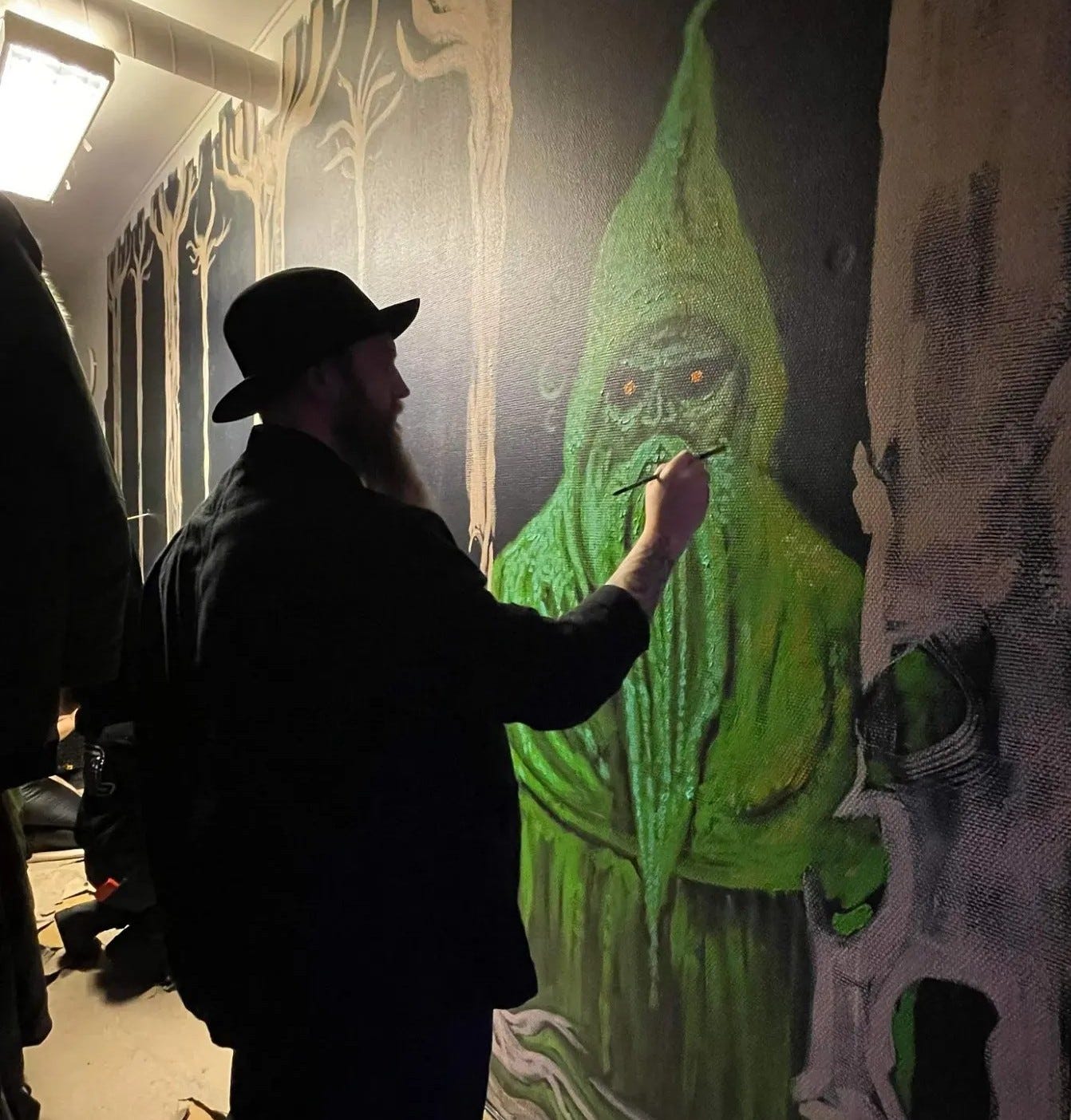
Doomcapitan’s art is scary in the way a good warning bell is scary—not because it glamorizes violence or nihilism, but because it insists that the grotesque, the skeletal, the uncanny, and the wounded are still part of the human story. And in a world where someone like Charles Manson once roamed—where charisma can be weaponized, where delusion can metastasize into atrocity—paying attention to the frightening is not morbid. It’s responsible. It’s a form of ethical vigilance.
🜁 Doomcapitan’s Scary Tenderness: Why the Grotesque Still Matters
Epigraph
“The skull is not a threat; it is a reminder.” — Anonymous medieval marginalia
1. The Aesthetic of the Harmlessly Haunted
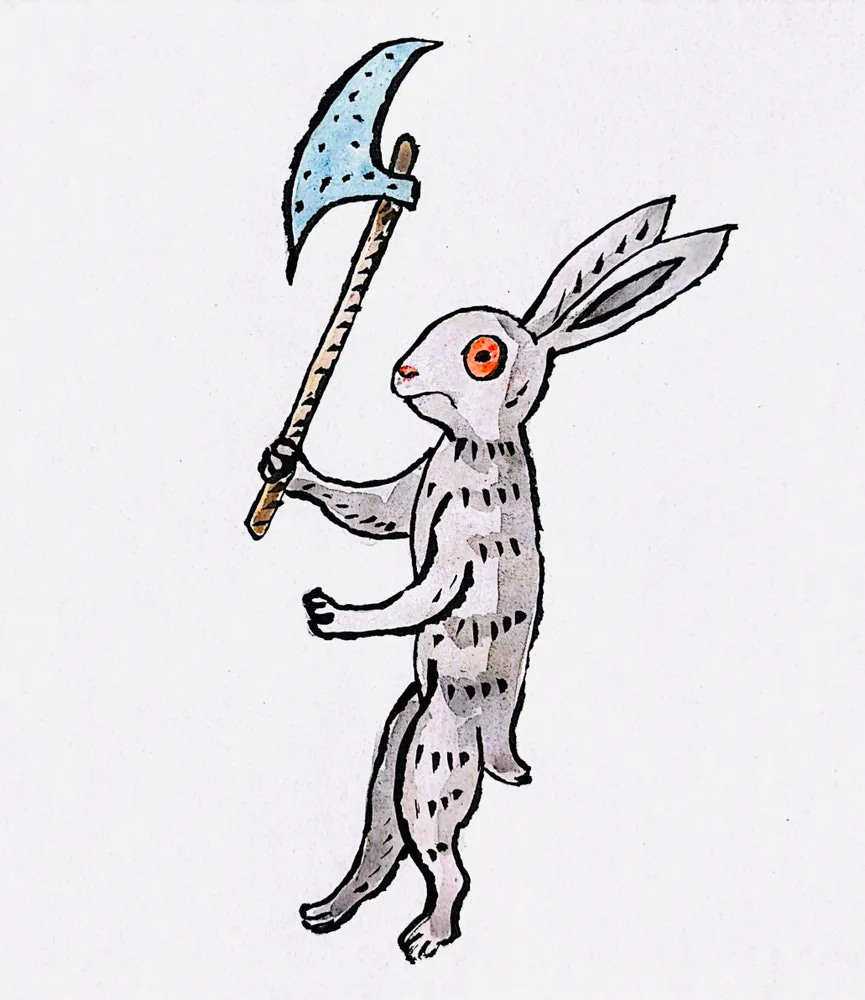
Scrolling Doomcapitan’s feed bsky.app, you encounter a world populated by skeletons on smoke breaks, ghouls sipping coffee, rabbits hefting battle-axes, goblins in bad moods, birds with knives, and skulls sprouting mushrooms. It’s a bestiary of the undead, but not the Hollywood undead—no spectacle, no gore, no fetishized brutality.
Instead, everything feels low-stakes, handmade, and oddly affectionate.
A skeleton chef.
A tired ghoul with a cigarette.
A “Cutlass Curlew” who will stab you, but only in the way a mischievous fable warns children not to wander too far.
This is horror as folk art, not horror as domination.
It’s the difference between a campfire story and a cult leader.
2. The Manson Problem: When Fear Becomes a Teacher
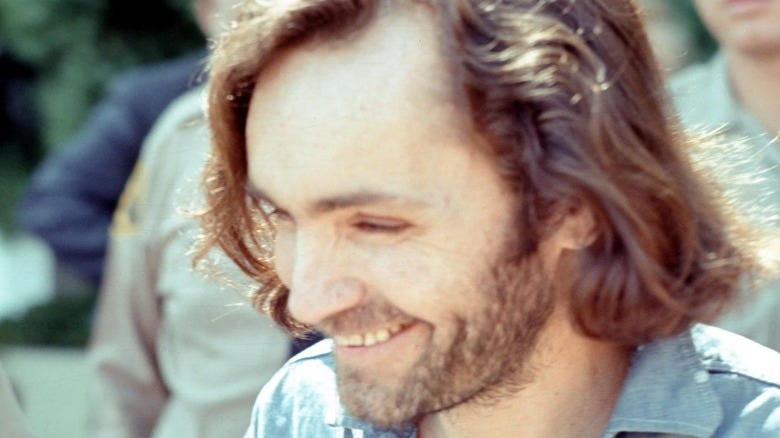
Our mention of Charles Manson is not incidental. Manson represents the nightmare scenario: a figure who used the aesthetics of counterculture—music, mysticism, charisma—to mask a predatory psychology. He is the reminder that evil often arrives wearing a costume of insight.
So the question becomes:
How do we distinguish between the frightening that protects us and the frightening that manipulates us?
Doomcapitan’s work answers by example:
His monsters are transparent.
They show their bones. They hide nothing.They are finite.
Ink, watercolor, micron pen—no grandiosity, no myth-making.They are funny.
A goblin with a cigarette is not recruiting anyone into a worldview.They are tired.
These creatures are not seducing; they are surviving.
In other words, Doomcapitan’s art is the opposite of Manson’s charisma.
It is anti-propaganda horror—horror that disarms rather than enthralls.
3. Why We Still Need Scary Visions
We live in a culture that often tries to sanitize fear, to turn away from the grotesque as if ignoring it will make it disappear. But the grotesque is part of the psyche. Jung knew this. So did Goya. So do the best contemporary artists on Bluesky.
Scary visions matter because:
They externalize what we’d rather repress.
A skull with mushrooms growing out of it is a reminder that decay is natural, not shameful.They let us rehearse danger safely.
A goblin with a battleaxe is a cartoon of threat, not a real one.They teach discernment.
When you can look at a frightening image without being seduced by it, you’re practicing the very skill that Manson exploited in the people who lacked it.They restore scale.
Doomcapitan’s horrors are small, hand-drawn, mortal.
Manson’s horror was the horror of a man pretending to be a prophet.
4. Doomcapitan’s Moral Universe
What emerges from the feed is a worldview that is:
Playfully macabre
Anti-heroic
Deeply human despite the bones
Suspicious of power
Tender toward the flawed and the doomed
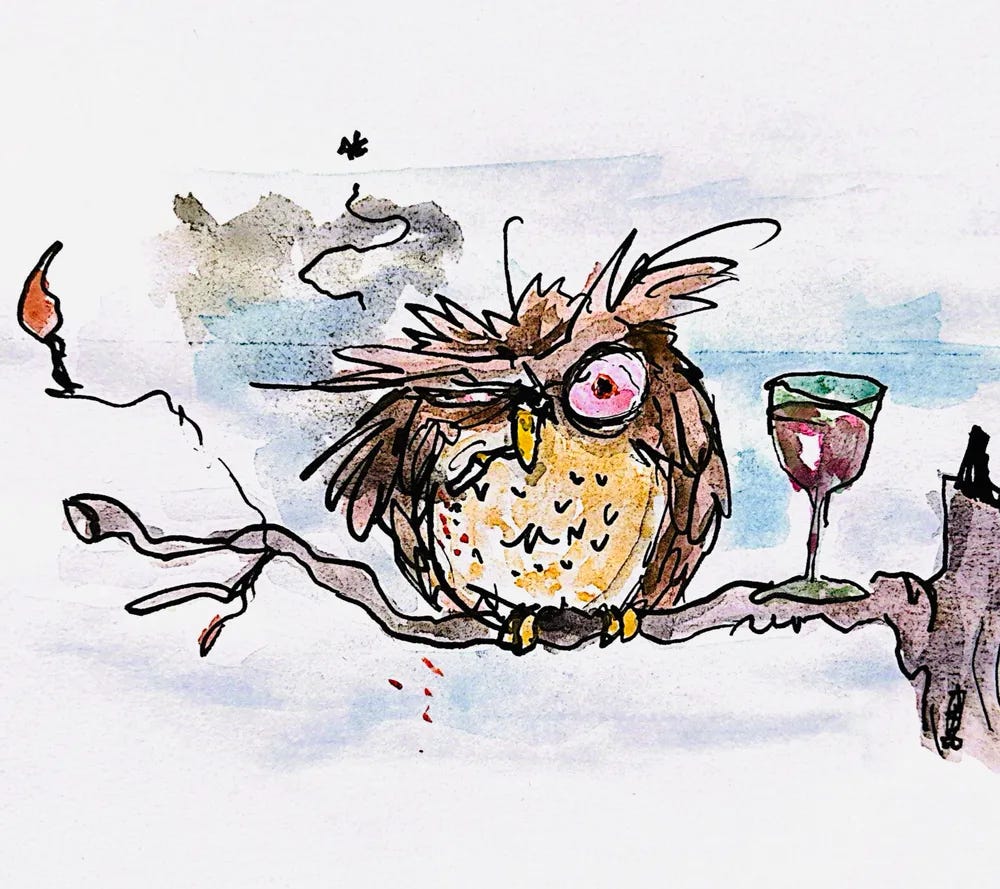
Even the “Owl of Judgement” looks less like a cosmic judge and more like a slightly disappointed friend.
Even the skeletons seem to be working-class stiffs on break.
This is horror as solidarity.
5. Closing Reflection: The Ethics of Looking
In a world where real violence is often hidden behind charisma, ideology, or spectacle, the honest grotesque becomes a civic virtue. Doomcapitan’s art reminds us that:
Fear is not the enemy.
Manipulation is the enemy.
The grotesque is not the threat.
The charismatic liar is the threat.
And sometimes the best way to stay awake to that truth is to spend time with a skeleton who just wants a beer and a smoke.