
Aging, Neural Plasticity, and the Strange Clarity of the Later Mind
Epigraph
“We do not grow older; we grow riper.” — Pablo Picasso
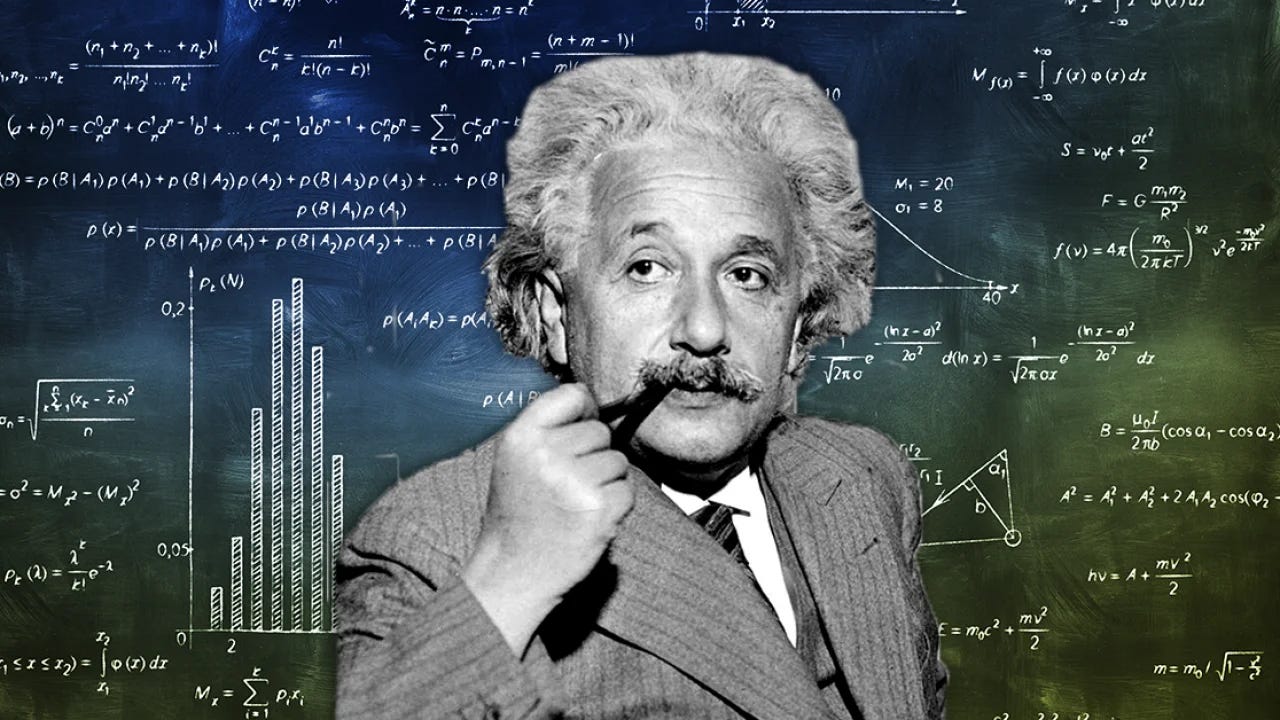
I. Einstein again, but differently
Einstein’s intuition was youthful — bold, imaginative, impatient with convention.
Late-life intuition is different. It is not the leap; it is the settling. It is not the chase; it is the recognition.
But both share a common root:
the willingness to trust a perception that arrives before language.
Einstein used intuition to reimagine the physical world.
Late-life intuition helps us reimagine the interior one.
Both require humility.
Both require attention.
Both require the courage to let the world disclose itself from within.
II. The late-life mind is not a dimming — it’s a distillation
There is a cultural myth that aging is a slow subtraction: fewer neurons, fewer memories, fewer capacities. But anyone who has lived into their seventies or eighties knows this is not the whole story. Something else happens — something quieter, stranger, and more interior.
The mind becomes selective.
Not in the sense of narrowing, but in the sense of refusing noise.
The late-life mind stops performing vitality for others.
It stops chasing every stimulus.
It stops pretending that everything matters equally.
And in that clearing, intuition begins to speak more clearly.
This is not decline.
It is distillation — the mind boiling off what is unnecessary so that what remains can be felt more directly.
Einstein trusted intuition early.
Many of us learn to trust it late.
III. The neuroscience of ripening
Neuroscience has a term for this shift: crystallized intelligence — the accumulated, pattern-sensitive, meaning-rich form of cognition that grows stronger with age even as processing speed slows.
But that term undersells what’s really happening.
Late-life intuition is not just knowledge.
It is pattern recognition fused with lived experience.
A younger mind can compute faster.
An older mind can see more.
Because:
It has lived through enough cycles to sense the shape of things.
It has watched desires rise and fall, and rise again.
It has seen how people behave when they are frightened, or in love, or ashamed.
It has learned the difference between urgency and importance.
It has learned that most crises are not crises, and the real crises are often invisible.
This is the soil from which late-life intuition grows.
It is not mystical.
It is earned.
IV. Intuition as a late-life survival skill
In youth, intuition feels like a spark — a sudden insight, a flash of coherence.
In late life, intuition feels more like a settling.
A sense that:
This is the right direction.
This person can be trusted.
This project matters; that one doesn’t.
This desire is real; that one is noise.
This grief needs attention; that one is a story I can release.
It is not impulsive.
It is not reactive.
It is not the “gut feeling” celebrated in business books.
It is a slow intuition — the kind that emerges when the mind has stopped trying to impress anyone, including itself.
And it becomes a survival skill because late life is full of decisions that cannot be outsourced:
medical choices
relational boundaries
the allocation of finite energy
the question of what to do with one’s remaining time
the question of who one is becoming, even now
Intuition becomes the compass when the map is incomplete.
V. The phenomenology of late-life interiority
Phenomenologists often describe perception as a negotiation between the world and the body. But in late life, the negotiation changes. The body slows. The world speeds up. And the mind becomes a kind of sanctuary — not in the sense of withdrawal, but in the sense of depth.
Late-life interiority has its own texture:
Time feels layered rather than linear.
Memories feel closer to the surface.
Desire feels more symbolic, more distilled.
Attention feels more precious.
The self feels less performative, more elemental.
This interiority is not a retreat from the world.
It is a way of inhabiting it more truthfully.
And intuition is the language this interiority speaks.
Trueman & Triola Newsletter
THE AGE OF INTERIORITY
A philosophical essay for the Trueman–Triola Newsletter

Trueman & Triola Newsletter | Substack
VI. Closing reflection: the intuition that belongs to you now
There is a moment in late life — sometimes sudden, sometimes gradual — when intuition stops feeling like a guess and starts feeling like a form of knowledge.
Not infallible.
Not magical.
But deeply, quietly reliable.
It is the knowledge that comes from having lived long enough to see patterns, long enough to recognize what matters, long enough to trust the interior signals that once felt too faint to follow.
This is the intuition that arrives late, but right on time.
And it is one of the great gifts of aging:
the sense that the mind, even as it slows, is ripening into a deeper form of clarity.