
Epigraph
“The really valuable thing is intuition.” — Albert Einstein
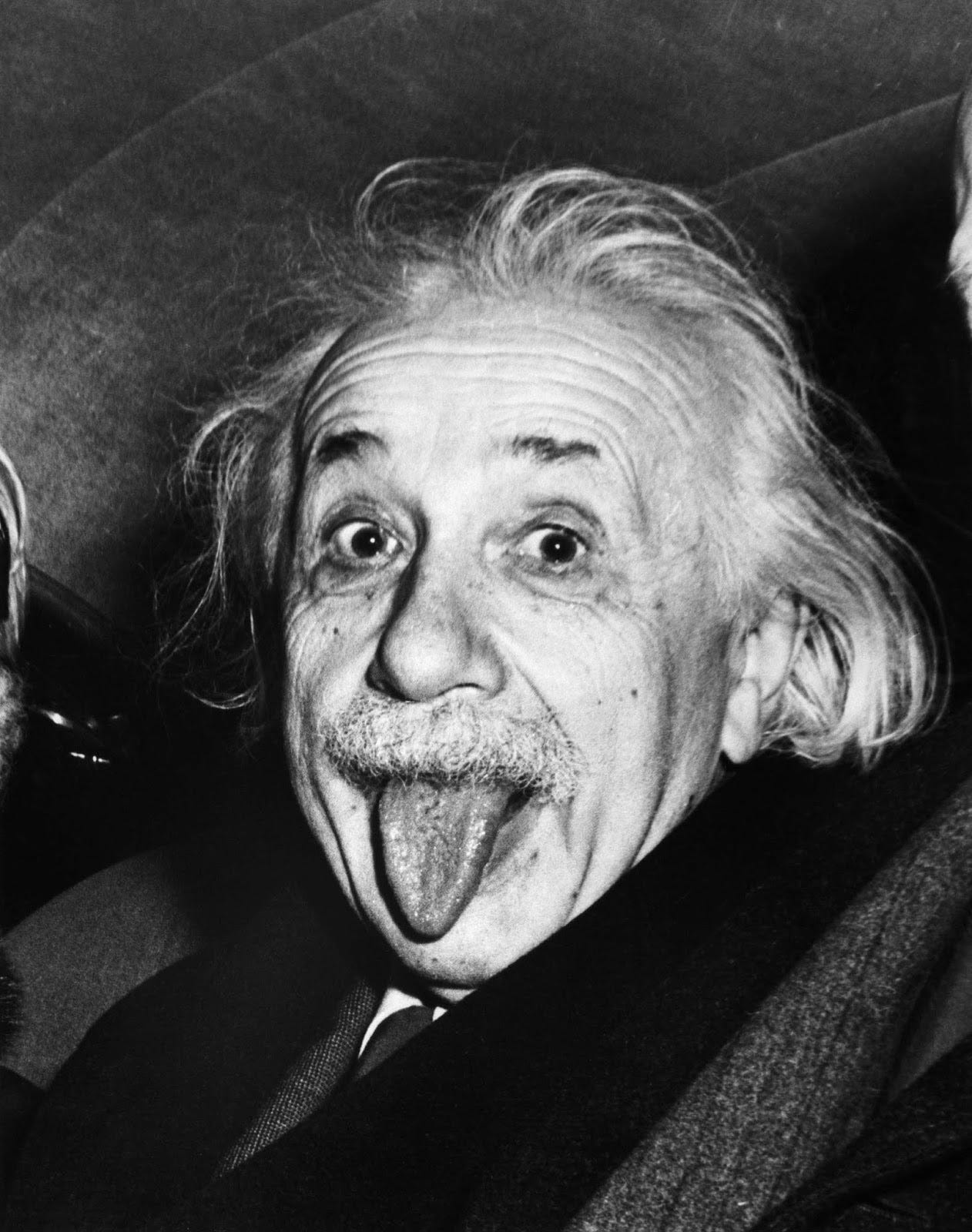
I. The physicist who trusted a feeling
Einstein liked to say that his ideas did not begin with equations. They began with a hunch — a felt sense of how the world must be, even before he could prove it. He chased a beam of light in his mind long before he could formalize relativity. He imagined falling in an elevator before he could articulate the equivalence principle.
These were not parlor tricks. They were acts of interior perception — a kind of disciplined imagination that let him inhabit a physical situation from the inside out. Einstein wasn’t guessing. He was seeing.
And that seeing was not visual. It was intuitive in the deepest sense:
a pre-linguistic grasp of structure, a felt coherence, a rightness that arrives before the reasons do.
This is where physics brushes up against phenomenology.
II. Intuition as a mode of knowing
We often talk about intuition as if it were a soft, sentimental cousin of reason. But Einstein’s practice reminds us that intuition is not pre-rational; it is trans-rational — a way of apprehending form before language, before proof, before the machinery of logic has spun up.
Phenomenologists like Merleau-Ponty would say that intuition is the body thinking.
Wittgenstein might call it a “seeing-as” — the moment when the gestalt flips and the world reorganizes itself around a new insight.
Einstein’s thought experiments were exactly this:
a willingness to let the mind inhabit a possibility so fully that the world had to reveal itself differently.
This is not mysticism. It is a method.
And it is a method we desperately need in our civic and ethical lives.
III. The bridge to ethical imagination
Your work — from Stuck in Neutral to the essays you’re shaping now — has always insisted on a simple but radical truth:

Ethical life begins with the capacity to imagine another interiority.
Not to project onto it.
Not to colonize it with our assumptions.
But to enter it, the way Einstein entered the elevator or the beam of light, and ask:
What does the world look like from here?
This is the ethical analogue to the physicist’s intuition.
It is a way of knowing that precedes argument.
A way of seeing that precedes judgment.
And it is the opposite of the corporate, algorithmic, spectacle-driven culture that tries to flatten interiority into content and turn intuition into a “gut feeling” optimized for engagement.
Einstein’s intuition was not reactive.
It was contemplative.
It required stillness, humility, and the courage to trust a perception that had not yet become language.
Your newsletter has been circling this for months:
the widening or shrinking of the self, the ethics of attention, the civic imagination that refuses to be rushed.
Einstein belongs in that conversation.
IV. Sidebar: A brief history of Einstein’s intuitive leaps
• 1895 — Chasing a beam of light
At sixteen, Einstein imagines riding alongside a light wave. This intuitive puzzle becomes the seed of special relativity.
• 1907 — The happiest thought of his life
He imagines a man falling off a roof and realizes that free fall cancels gravity. This intuition becomes the equivalence principle.
• 1912–1915 — The bending of space
He pictures how a beam of light would curve near a massive object. The intuition precedes the tensor calculus that eventually proves it.
• 1920s — The moon question
He insists the moon is there even when no one looks — an intuitive resistance to the probabilistic weirdness of quantum mechanics.
Einstein trusted intuition not because it was mystical, but because it was a disciplined way of inhabiting a problem.
V. What intuition asks of us now
We live in a moment when intuition is often confused with impulse, and interiority is treated as a liability — too slow, too private, too resistant to the metrics of attention.
But Einstein’s example suggests something different:
Intuition is a form of patience.
Intuition is a form of listening.
Intuition is a form of ethical imagination.
It is the willingness to let the world disclose itself from within, rather than forcing it to match our preconceptions.
And this is where your work lands with particular force:
you remind readers that interiority is not a retreat from the world but a way of returning to it more responsibly.
Einstein’s intuition was a bridge between physics and phenomenology.
Yours is a bridge between narrative and civic life.
Both insist that the world is richer when we learn to see from the inside.
Closing Reflection
Einstein once said that the most beautiful experience we can have is the mysterious. He meant the moment when the world feels larger than our concepts, when intuition outruns language, when we sense — without yet knowing — that a deeper coherence is waiting to be understood.
That moment is not just scientific.
It is ethical.
It is civic.
It is human.
And it is the moment your newsletter keeps inviting us back to:
the place where imagination becomes responsibility, and where interiority becomes a form of care.