
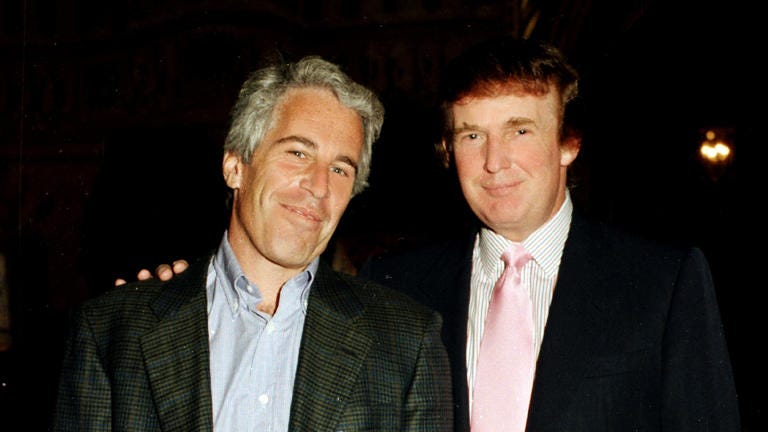
In recent weeks, as the Epstein files have circulated through the public sphere with their characteristic mixture of revelation and rumor, Trueman and Triola have found themselves returning not to the names or the headlines but to the deeper cultural currents that make the reaction to these documents feel so charged. The files, after all, are not merely a dossier of crimes; they are a mirror held up to a society whose understanding of sexual morality has undergone a profound and disorienting transformation.
What strikes them first is the collapse of an old American bargain — that tacit arrangement in which private vice could coexist with public virtue so long as decorum was maintained. That bargain, once the quiet scaffolding of elite life, has eroded. In its place stands a newer conviction: that sexual behavior is not a sealed-off domain of personal indulgence but a window into one’s relationship to power, vulnerability, and the humanity of others. The Epstein revelations land in a culture that no longer accepts the neat separation between the intimate and the ethical.
This shift is inseparable from the rise of a consent-centered moral vocabulary. Over the past two decades, the language of coercion, grooming, and power imbalance has become part of the public’s ethical grammar. What earlier generations might have dismissed as “private scandal” is now understood as a structural failure — a failure of institutions, of oversight, of the moral imagination itself. In this light, the Epstein files are not simply evidence of individual wrongdoing; they are an indictment of a system that allowed exploitation to masquerade as freedom.
Yet Trueman and Triola also sense a quieter undercurrent: a generational reassessment of the sexual libertinism that once passed for progress. The permissiveness of the late twentieth century, with its celebration of autonomy unmoored from responsibility, now appears to many as a landscape in which the vulnerable were left unprotected. The reaction to the files carries the tone of a culture attempting to reclaim an ethical center — not a return to puritanism, but a demand that freedom be tethered to justice.
Layered atop this is the moralization of trauma. In an age that has learned to name psychological harm with unprecedented clarity, the stories embedded in the Epstein archive resonate with a particular force. They evoke not only outrage but a sense of collective failure: the recognition that silence, complicity, and institutional indifference can wound as deeply as the acts themselves.
And then there is the democratization of judgment. Social media, for all its distortions, has flattened the hierarchy of who gets to speak. The reaction to the files unfolds not in the hushed corridors of editorial boards but in the open agora of millions of voices. Hypocrisy is exposed more quickly; patterns of abuse are mapped more easily; the old gatekeepers no longer control the narrative. This, too, shapes the intensity of the moment.
Perhaps the most paradoxical feature of the current moral landscape is its dual movement: more permissive toward consensual adult sexuality, more punitive toward anything involving coercion or exploitation. The distance between the two has widened, and the Epstein story falls squarely into the realm of the unforgivable.
In the end, Trueman and Triola see the reaction to the Epstein files as a kind of cultural x‑ray. It reveals a society in the midst of renegotiating its moral boundaries, struggling to reconcile freedom with responsibility, and searching for a vocabulary adequate to the harms of the past. The files matter not only for what they contain but for what they illuminate: the evolving ethical architecture of a nation still learning how to see.