
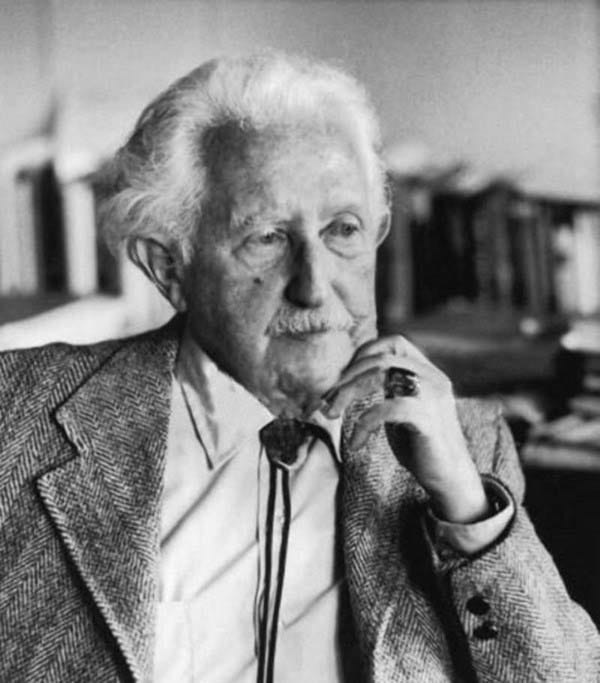
Erik Erikson’s Gandhi’s Truth remains one of the most ambitious attempts to understand how a single human life can become a source of political and ethical transformation. Erikson does not treat Gandhi as a saint or a strategist but as what he calls a Homo Religiosus—a person whose inner conflicts, childhood experiences, and lifelong identity struggles become the raw material for a new moral imagination. Gandhi’s nonviolence, in Erikson’s view, is not a tactic but a psychological achievement, a disciplined way of confronting aggression without becoming its mirror. It is the culmination of the final life‑cycle challenge Erikson describes elsewhere: the movement toward integrity rather than despair.
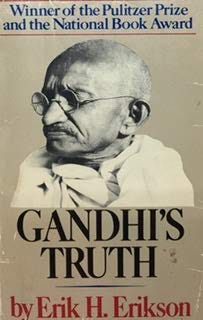
At the heart of Erikson’s interpretation is the idea that Gandhi’s political creativity cannot be separated from the emotional and developmental forces that shaped him. Gandhi’s mother, with her ritual fasting and uncompromising moral discipline, gave him an early model of self‑control that he later transformed into public action. His ambivalence toward sexuality—so often misunderstood or caricatured—becomes, in Erikson’s hands, a central thread in Gandhi’s lifelong struggle for purity, a struggle that he sublimated into a philosophy of militant nonviolence. Shame, guilt, and self‑doubt were not obstacles to Gandhi’s leadership; they were the psychological energies he learned to redirect toward ethical innovation.
Erikson’s most striking contribution is his reading of the 1930 Salt March as a kind of national ritual. He treats it not simply as a protest but as a carefully staged psychosocial drama in which India could reclaim its sense of autonomy. Gandhi’s slow, deliberate, symbolic leadership becomes a form of public ego therapy for a colonized people. The march, in Erikson’s telling, is a life‑cycle moment not only for Gandhi but for India itself—a collective passage from dependency to self‑rule.
Throughout the book, Erikson traces Gandhi’s identity crises with the same developmental vocabulary he applies to Luther, Freud, and other figures. Gandhi wrestles with role confusion: Was he a lawyer, a saint, a politician, or something else entirely? He struggled with intimacy and isolation, particularly in his marriage and his vow of celibacy. He confronted the challenge of generativity—how to nurture a nation without succumbing to stagnation or despair. Gandhi’s eventual resolution of these crises produced not only a coherent identity but a moral philosophy and a political method that reshaped the world.
Erikson also places Gandhi in a lineage of religious innovators. Like Luther—whose biography Erikson also explored in depth —Gandhi transformed personal psychological conflict into a new form of ethical and political life. Both men created rituals that allowed communities to inhabit new identities. Both became symbolic fathers to movements that outlived them. But Gandhi’s innovation is distinctive: he created rituals of nonviolence, fasting, spinning, marching, and public confession that provided psychological containment for aggression and despair. These rituals were not performances; they were technologies of moral imagination.
What makes Erikson’s Gandhi so compelling now is the way he shows that political ethics emerge from interior life. Childhood shapes political imagination. Psychological crises become sources of moral creativity. Gandhi’s story becomes a case study in how interiority becomes history—how a person’s private struggle can become a public possibility.
For a moment like ours, when civic imagination feels thin and moral leadership often collapses into spectacle, Erikson’s Gandhi offers a reminder that ethical innovation begins in the depths of the self. Gandhi’s achievement was not simply political independence but the creation of a new way of being in public—a disciplined, imaginative, psychologically grounded form of resistance that turned inner conflict into collective transformation.
Erik Erikson’s broader view of Gandhi begins with the idea of ego integrity. He sees Gandhi as someone who reached this final life‑cycle virtue long before old age, a figure who accepted suffering without bitterness and met death without fear. Gandhi’s ability to hold contradictions—purity and politics, asceticism and activism, inward discipline and outward defiance—made him, in Erikson’s eyes, a psychological exemplar. His inner life was not a retreat from the world but the foundation of a new way of acting within it.
Erikson also describes Gandhi as a “historical moment” personality, someone whose private crises aligned uncannily with the crises of his nation. Gandhi’s struggle for autonomy echoed India’s struggle for independence. His lifelong search for purity mirrored India’s attempt to reclaim cultural coherence after generations of colonial rule. His disciplined nonviolence became the ethical counterpart to India’s need for a political method that did not simply reproduce the violence of empire. Gandhi’s interior conflicts and India’s collective conflicts moved in parallel, each illuminating the other.
In this sense, Erikson places Gandhi in a lineage of religious innovators that includes Martin Luther. Both men transformed personal psychological conflict into new forms of religious and political imagination. Both created rituals that allowed communities to inhabit new identities. Both became symbolic fathers to movements that reshaped the moral landscape of their eras. Gandhi’s innovation, however, is distinctive: he turned fasting, spinning, marching, and public confession into instruments of civic transformation, rituals capable of containing aggression and despair while opening space for ethical creativity.
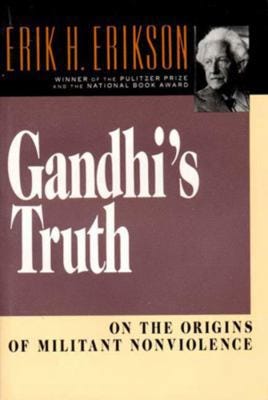
This is why Gandhi’s Truth matters. It is not a biography but a psychological interpretation of political ethics. Erikson shows how personal identity shapes public action, how childhood shapes political imagination, and how psychological crises can become sources of moral creativity. For readers invested in narrative, ethics, and civic imagination, Gandhi becomes a case study in how interiority becomes history — how the deepest struggles of a single life can generate new possibilities for collective life.