
Epigraph: “I paint to escape. Here are some of my escape attempts.” — Ehko
The art of Ehko on Bluesky: Ehko @ehkoart.bsky.social
I. The Nervous System as Studio
Expressionism once belonged to the heroic gesture — the painter wrestling with existential dread on a monumental scale. Ehko’s work, glimpsed in the steady stream of acrylics and watercolors she posts from her life as a full‑time RN, shifts the center of gravity. Her canvases don’t announce grand suffering; they register the micro‑tremors of a nervous system under constant pressure.
This is expressionism for people who live inside overstimulation: care‑workers, doom‑scrollers, parents, anyone whose emotional life is fragmented by interruptions. The paintings feel like compressed episodes of affect — the kind of intensity you experience between crises, not in the middle of one.
Expressionism becomes less a performance of anguish and more a record of endurance.
II. Claustrophobic Color, Interrupted Gesture
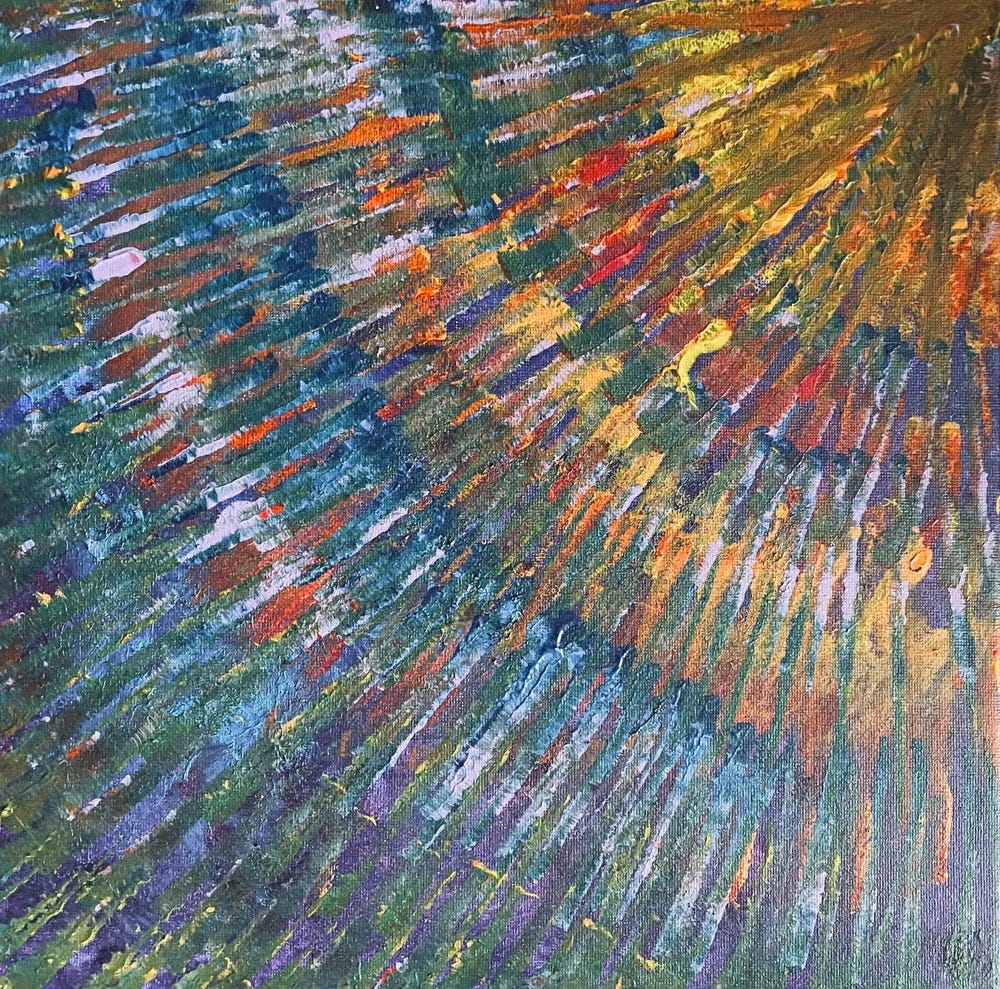
Where mid‑century expressionists often reached for theatricality, Ehko’s palette and mark‑making lean toward claustrophobia. Her colors press inward. Her gestures look half‑completed, as if she was pulled away mid‑stroke — which, given her profession, may be literally true.
The result is a new emotional geometry: tight chambers of color, atmospheres that feel crowded, horizons that tilt under pressure. These works don’t explode; they constrict. They show what intensity looks like when it’s lived rather than staged.
This is expressionism tuned to the rhythms of contemporary anxiety.
III. Escape Attempts, Not Escapism
Her pinned line — “I paint to escape, here are some of my escape attempts” — is not branding; it’s a thesis. The humility of attempts matters. These paintings aren’t fantasies of transcendence. They are breaches: small openings carved out of emotional compression.
Each canvas feels like a momentary reprieve, a psychic exhale. The escape is temporary, but the attempt is honest. In an era defined by burnout and ambient dread, honesty is its own aesthetic.
Expressionism becomes a practice of survival rather than spectacle.
IV. Anti‑Spectacle in a Platform World
We’ve written often about art that resists commodification, and Ehko’s feed embodies that ethic. Her posts are not polished content; they are dispatches from a private struggle. No algorithmic pandering, no self‑promotion, no spectacle.
This refusal is part of the work. In a digital environment that rewards performance, she offers presence. The paintings arrive without narrative, without explanation, without the usual digital self‑mythologizing. They feel like fragments of interior life shared without manipulation.
Expressionism becomes a form of civic honesty — a way of showing up without spectacle.
V. Spatial Anxiety as Innovation
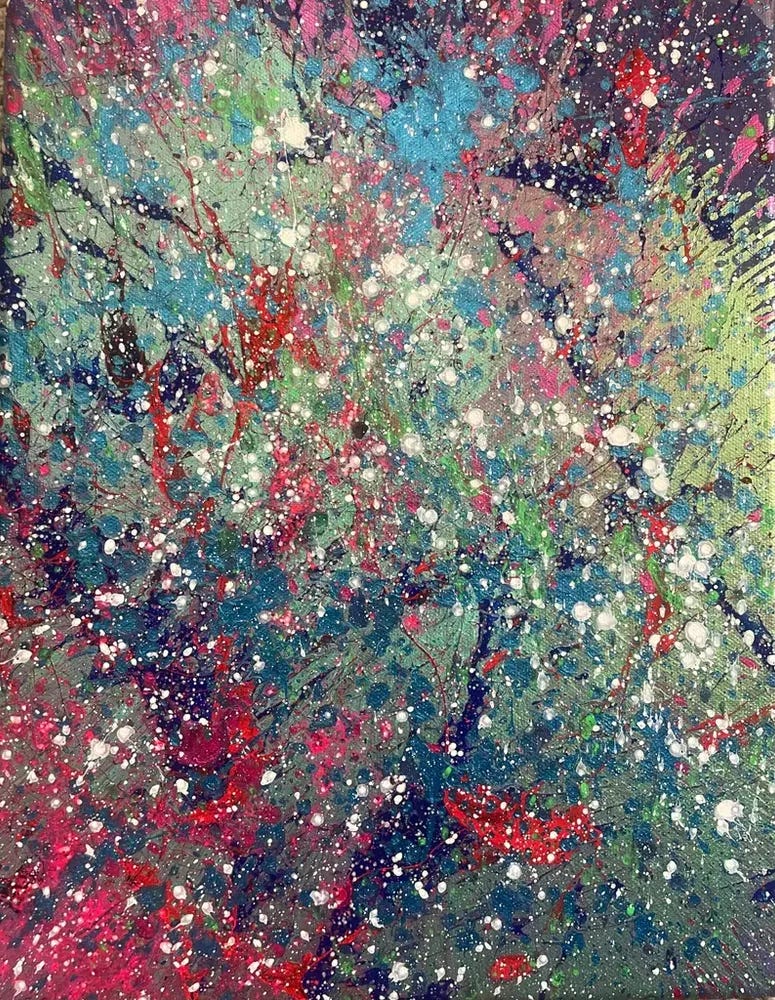
Her recurring #perspective pieces introduce something genuinely new: expressionist perspective. Not literal perspective, but emotional perspective — depth that buckles, rooms that collapse inward, space that feels unstable.
This spatial distortion is not decorative. It’s psychological. It captures the feeling of living in a world where the ground is always shifting: politically, economically, emotionally. The canvases tilt because the times tilt.
Expressionism becomes a map of unstable interior terrain.
VI. Why This Work Fits Our Intense and Scary Times
Because it doesn’t pretend to rise above them.
Ehko’s paintings acknowledge fear without dramatizing it. They show overload without nihilism. They offer beauty that feels earned, not decorative. They are made in the margins of labor, exhaustion, and digital noise — and they carry that truth without apology.
In her hands, expressionism becomes a language for people who are overwhelmed but still trying to make something honest. It is art as emotional endurance, art as momentary escape, art as refusal to let fear define the interior life.
Closing Reflection
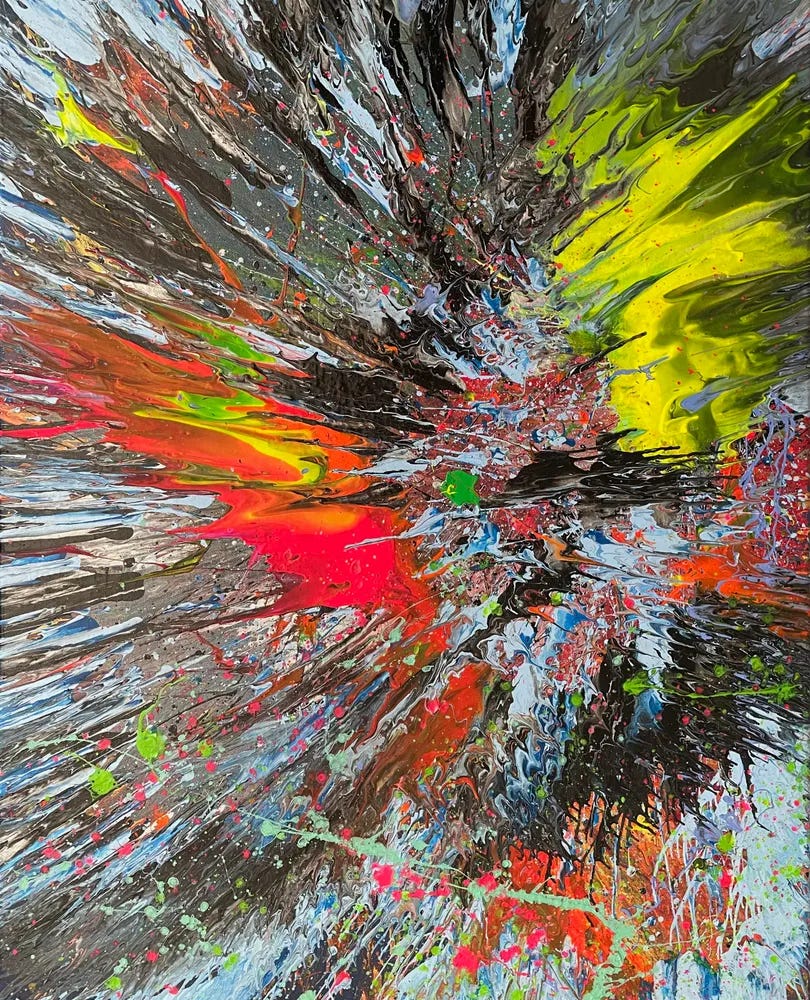
What Ehko gives us is not catharsis but companionship: a visual record of someone navigating the same pressures we all feel, using color and gesture to carve out small sanctuaries of attention. Her work reminds us that escape is not a destination but a practice — a way of insisting on interior freedom even when the world feels tight around the edges.
In a time when everything is loud, her paintings tremble instead of shout. And in that trembling, they tell the truth.