
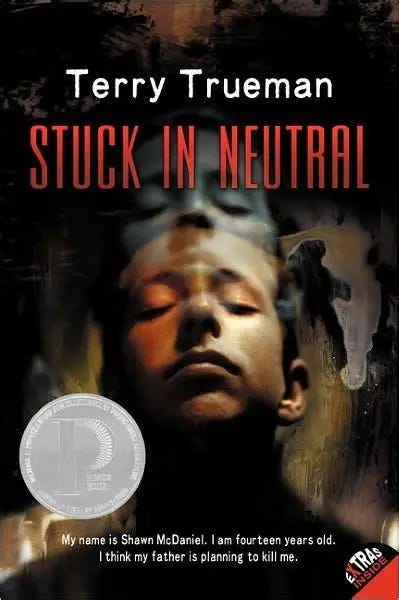
A shift has been underway in American letters, quiet but unmistakable, and it comes into focus when one looks at a book like Stuck in Neutral. The old architecture of literary greatness—adult prestige, critical consecration, the slow climb into the academy—no longer maps cleanly onto the books that actually shape the civic imagination. What endures now are works that enter the culture through ethical influence, pedagogical reach, and the subtle reorientation of how ordinary people imagine the lives of others. In this sense, Stuck in Neutral offers a case study in a new kind of American greatness, one that bypasses the traditional gatekeepers and instead circulates through classrooms, conversations, and the moral development of the young.
A Culture No Longer Governed by Prestige
For most of the twentieth century, the American canon was built from the top down. Critics, universities, and major publishing houses determined which books mattered, and the public followed. Greatness was measured by adult readership, reviews in the right journals, and the slow accumulation of scholarly attention. The assumption was that culture flowed outward from elite institutions into the wider civic bloodstream.
But the last generation has inverted that flow. The books that matter most now often begin in the hands of young readers, teachers, and communities far from the prestige economy. They shape the ethical imagination long before they are noticed—if they are noticed at all—by the academy. Their influence is democratic rather than hierarchical, civic rather than institutional.
This is not a decline. It is a redistribution of cultural power.
The Ethical Reach of Stuck in Neutral
The novel’s achievement lies not in adult acclaim but in the way it has quietly altered how millions of readers think about interiority, disability, and the fragile boundaries of autonomy. It invites readers—especially adolescents—to imagine a consciousness that cannot speak for itself. It asks them to consider the moral weight of parental fear. It trains them in empathy without sentimentality, and in ethical attention without spectacle.
This is a form of cultural influence that does not announce itself. It accumulates in the ways people learn to see one another.
Pedagogy as a Cultural Engine
The classroom has become one of the last truly democratic spaces in American life, and it is there that the novel has taken root. For more than two decades, teachers have chosen it not because critics told them to, but because students respond to it with seriousness and recognition. Its longevity in the curriculum—rare for any contemporary work—signals a deeper kind of cultural penetration than bestseller lists or awards can measure.
A book taught at the right moment in a young person’s life becomes part of their ethical vocabulary. It shapes how they understand vulnerability, agency, and the dignity of lives that do not conform to familiar narratives. This is the bloodstream of the culture now: not the academy, but the shared moral education of the young.
A New Measure of Greatness
If American literature once defined greatness through adult prestige, it may now be defined through civic consequence. The works that matter most are those that enlarge the moral imagination, that teach readers to attend to lives unlike their own, that circulate not through elite institutions but through the everyday ethical formation of citizens.
By this measure, Stuck in Neutral stands as an emblem of a new American literary greatness—one rooted in empathy, pedagogy, and the quiet reshaping of public feeling. It is a greatness that does not depend on the academy, because it has already entered the bloodstream of the culture through the people who will inherit it.