Epigraph
“The demagogue is the actor who has mistaken the stage for the world.”
— Hannah Arendt (paraphrased from Origins of Totalitarianism)
I. The Problem— and Why It Still Matters
Let’s start with the obvious:
Hitler and Trump are not equivalent historical figures.
Not yet anyway.
One engineered genocide and global war; the other destabilizes democratic norms through grievance politics and authoritarian posturing. The scale is not comparable.
At least not yet.
Remember, for all Hitler’s insane evil, he never had nuclear weapons.
But the spectacle of their public rage — the performative loss of temper, the theatrical rant — is worth examining because it reveals something deeper about how authoritarian personalities use emotional volatility as political currency.
The question isn’t “Who was worse?”
The question is:
What does each man’s rage do in the culture that receives it?
II. Hitler’s Rage: Choreographed Fury in a Culture of Obedience
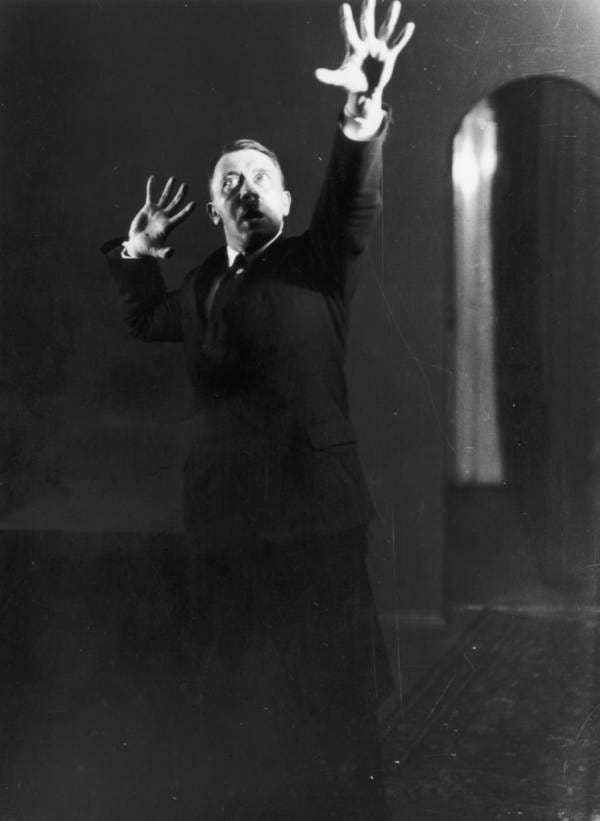
Hitler’s rants were not spontaneous eruptions.
They were rituals — rehearsed, timed, and delivered with the precision of a conductor. Historians note that he practiced gestures in front of mirrors; his crescendos were engineered; his “loss of control” was a performance designed to:
overwhelm the listener,
fuse emotion with ideology,
and create a sense of historical inevitability.
His rage was instrumental, not impulsive.
It was the rage of a man who understood that in a traumatized, humiliated nation, fury could be sold as strength.
To modern eyes, his speeches look unhinged — eyes bulging, veins taut, voice cracking — but in the 1930s, this was received as mystical intensity, the embodiment of a national grievance.
His “craziness” was a tool of mass mobilization.
III. Trump’s Rage: Impulsive, Televised, and Perpetually Self‑Referential

Trump’s rants, by contrast, are not choreographed.
They are improvisational, driven by mood, grievance, and the immediate need for attention. They lack ideological architecture; they are not building toward a vision of the world but toward a vision of himself.
Where Hitler’s fury was nationalistic, Trump’s is narcissistic.
Where Hitler’s rage was staged, Trump’s is reactive.
Where Hitler’s anger was a weapon, Trump’s is a reflex.
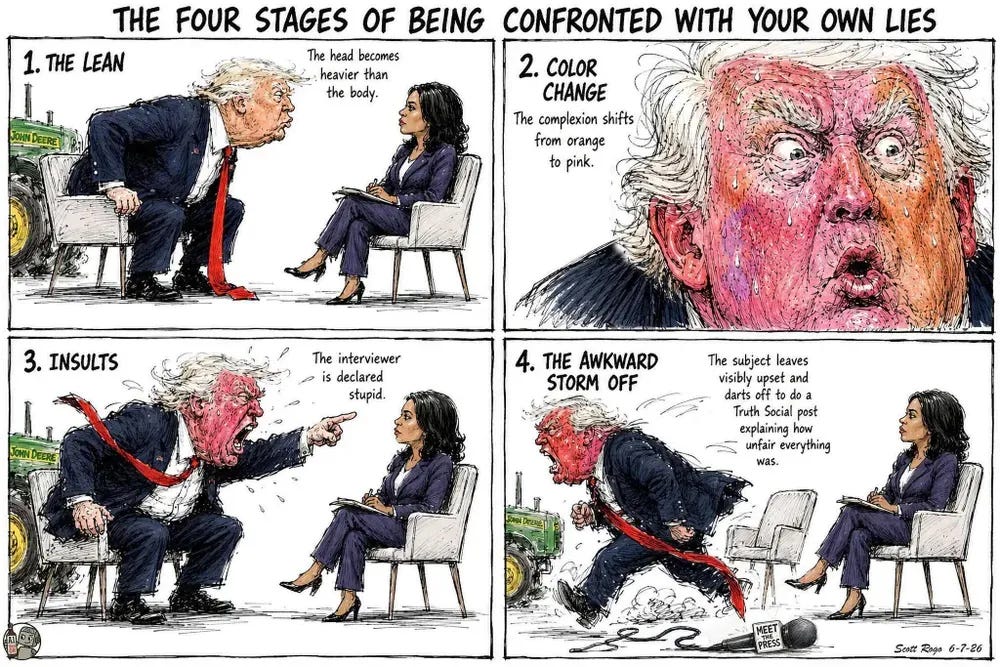
Trump’s public meltdowns — the shouting, the slurred tangents, the invented enemies, the sweaty monologues about dishwashers and windmills — read less like political theater and more like late‑stage celebrity meltdown, the kind that would have been a punchline in the pre‑MAGA era.
His “craziness” is not mythic; it is petulant.
It is the rage of a man who cannot tolerate limits, boundaries, or the erosion of adoration.
IV. The Cultural Mirror: Why Each Man’s Rage Landed the Way It Did
Germany in the 1930s
A nation devastated by war, inflation, and humiliation.
Collective trauma primed the public to interpret rage as moral seriousness.
America in the 2010s–2020s
A nation addicted to spectacle, irony, and reality‑TV emotional chaos.
Collective cynicism primed the public to interpret rage as entertainment.
Hitler’s fury was received as destiny.
Trump’s fury is received as content.
This is the most American distinction imaginable.
V. So Who Looked “Crazier”?
If we mean visually unhinged, Hitler wins by a mile — the contorted face, the spittle, the Wagnerian crescendo.
If we mean psychologically unmoored, Trump’s improvisational tantrums — the inability to regulate emotion, the public unraveling, the self‑pitying tirades — feel more like the textbook case.
But the deeper truth is this:
Hitler’s rage was terrifying because it was purposeful.
Trump’s rage is terrifying because it is not.
One man weaponized fury to reshape a nation.
The other wields it to protect his ego.
Both forms are dangerous.
One is historically catastrophic.
The other is civically corrosive.
And both remind us that democracies are most vulnerable not to the strongman’s strength, but to the public’s appetite for emotional spectacle.
VI. Closing Meditation: The Age of Performed Unreason
We live in a moment when losing one’s temper on camera is not a liability but a brand. The authoritarian personality thrives in such a culture because rage is no longer a warning sign — it is a form of entertainment.
The question for us, as citizens and storytellers, is not which man looked crazier, but:
Why do we keep rewarding leaders who mistake emotional volatility for authenticity?
That is the civic imagination problem of our time.
Our POTUS and darned proud of him: