
🧭 How the “Eternal Present” Informs Contemporary Ethics and the Psychology of Consciousness
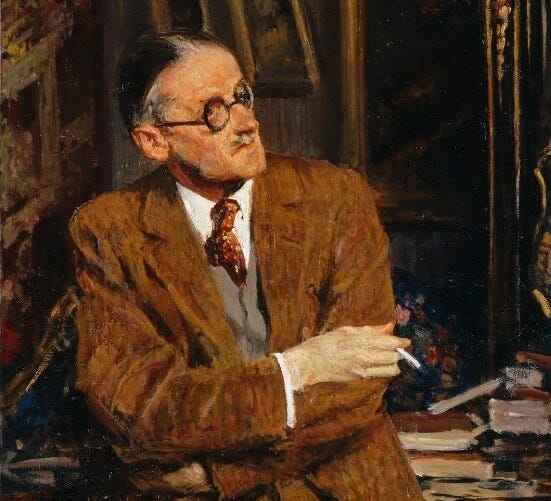
Joyce’s idea that “everything flows in the eternal present” isn’t just a literary flourish. It anticipates several of the most important contemporary debates about how minds work and how we ought to treat one another.
Below are three major bridges from Joyce’s modernist insight to today’s ethical and psychological frameworks.
🧠 1. The Eternal Present and the Psychology of Consciousness
Modern cognitive science increasingly supports Joyce’s intuition:
consciousness is not a sequence of snapshots but a continuous, dynamic process.
🌀 A. Predictive processing and the “thick present”
Contemporary neuroscience suggests that the brain is constantly:
predicting the next moment
updating based on error signals
integrating memory and expectation into perception
This creates what some theorists call a “specious present”—a temporally extended now. Joyce dramatized this long before the science existed.
🧩 B. The self as a process, not an object
Psychology increasingly treats the self as:
emergent
fluid
constructed moment-to-moment
This aligns with Joyce’s portrayal of identity as something always in motion, never fully graspable, never finished.
🔄 C. Trauma, aging, and the persistence of past states
Clinical psychology shows that:
traumatic memories
formative experiences
deeply encoded emotional patterns
continue to shape the present as if they were still happening. Joyce’s “eternal present” captures this beautifully: the past is not behind us; it is active within us. The older we get, the more the present becomes a palimpsest of earlier selves.
⚖️ 2. The Eternal Present as an Ethical Framework
If consciousness is a continuous flow rather than a set of discrete, rational choices, then ethics must shift accordingly.
🌱 A. Ethics of presence rather than judgment
Traditional moral frameworks assume:
stable agents
discrete decisions
clear intentions
But if the self is fluid and time is layered, then ethical life becomes less about judging isolated acts and more about attending to the ongoing texture of another person’s experience.
This is deeply resonant with our long-standing commitment to recognizing interiority, especially in vulnerable minds.
🫂 B. Recognition becomes the primary ethical act
If a person’s consciousness is a flowing present, then:
to see them
to listen to them
to acknowledge their lived reality
is already an ethical gesture.
Joyce’s fiction trains us in this kind of attention. It slows us down, immerses us in another mind’s flow, and demands that we recognize the humanity of consciousness itself.
🧭 C. Ethics without teleology
Joyce rejects fixed endpoints—salvation, progress, moral perfection.
Instead, ethics becomes:
improvisational
responsive
moment-to-moment
This aligns with contemporary care ethics, which emphasizes situated, relational, present-tense moral responsiveness rather than abstract rules.

🩺 3. Implications for End-of-Life Ethics and the Moral Imagination
This is where Joyce’s insight becomes especially powerful for modern bioethics.
🧬 A. The present is where dignity resides
If consciousness is a continuous present, then:
even when memory is impaired
even when speech is impossible
even when agency is limited
the person still inhabits a meaningful, lived now.
This challenges paternalistic assumptions that a life is only valuable if it conforms to external criteria of autonomy or productivity.
🧠 B. The interior life is not reducible to outward function
Joyce’s radical interiority reminds us that:
the absence of expression
the absence of conventional communication
does not imply the absence of consciousness.
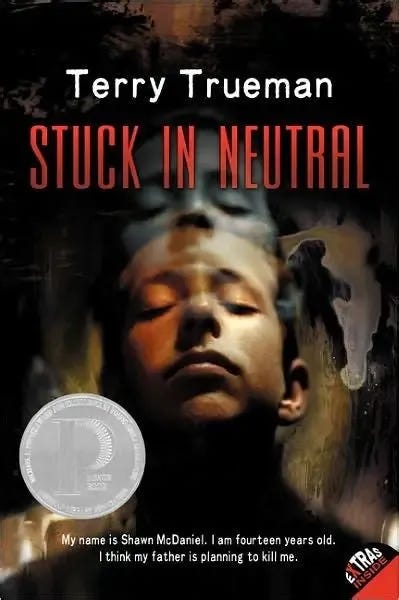
This is precisely the ethical terrain we’ve explored in Stuck in Neutral: the danger of misrecognizing another’s interior life because it does not mirror our own.
🔍 C. Ethical imagination as a present-tense discipline
To honor another person’s consciousness, we must cultivate:
curiosity
humility
attentiveness
patience
Ethical imagination becomes the ability to enter the flow of another’s present, even when it is opaque or inaccessible.
🌟 Bringing It All Together
Joyce’s “eternal present” is not just a metaphysical claim.
It is a psychological insight and an ethical provocation:
Consciousness is a flowing, layered, dynamic process.
The self is always in motion.
Meaning arises in the present, not from fixed narratives.
Ethics must be grounded in recognition, presence, and humility.
Vulnerable or atypical minds demand an ethics attuned to interiority rather than external function.
In other words:
Joyce gives us a way to see consciousness—and therefore moral life—as something unfolding, fragile, and profoundly worthy of attention.