
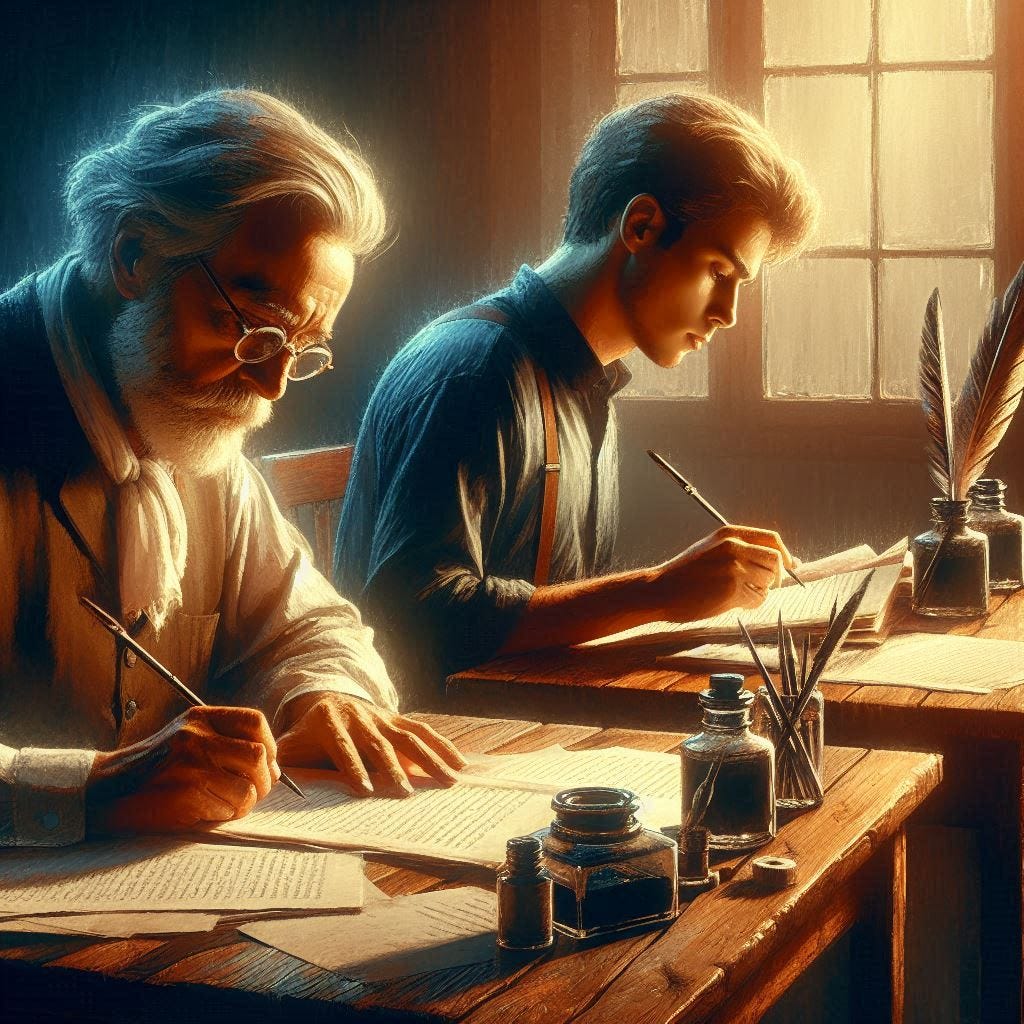
There are books that feel like beginnings—full of promise, propulsion, the sense that the writer is stretching toward a horizon still out of reach. And then there are books that feel like endings, not because they close anything off, but because they gather a life’s worth of questions into one distilled gesture. These are the books that read like testaments—the last writes of a writer who has seen enough of the world to know what matters and what doesn’t.
Ernest Hemingway’s The Old Man and the Sea is one such testament.
Terry Trueman’s The Kid Who Killed Cole Hart is another.
Though separated by decades, audience, and literary lineage, both novels circle the same existential territory: What does a life mean when stripped to its essentials? What remains when the illusions fall away? What is the writer’s final duty—to the world, to the self, to the truth?
Under the shared title “Last Writes and Final Testaments,” these two works speak to each other across time.
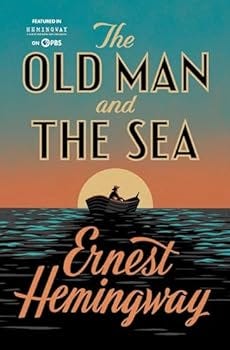
1. The Old Man and the Sea: A Testament Written at the Edge of Life
Hemingway’s novella is famously spare, but its simplicity is deceptive. Santiago’s battle with the marlin is not merely a fisherman’s ordeal; it is Hemingway’s own reckoning with the end of his creative life. The marlin becomes the last great work he can still imagine, the final act of mastery before the darkness closes in.
Santiago is old, alone, and nearly forgotten. Yet he rows out farther than he should, not because he expects triumph, but because the act of striving is the only thing that still proves he is alive.
The novella becomes Hemingway’s final argument:
Life is suffering.
Art is struggle.
Meaning is found not in victory but in endurance.
A person is measured by how they face the inevitable loss of everything they love.
The skeleton of the marlin—beautiful, ravaged, undeniable—is Hemingway’s own self‑portrait. A final testament carved into saltwater and bone.
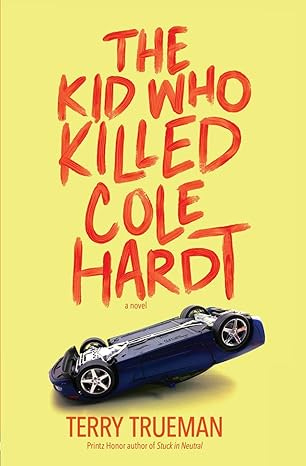
2. The Kid Who Killed Cole Hart: A Testament Written at the Beginning of Life
If Hemingway writes from the far shore of life, Trueman writes from the precipice of youth. Ryan Turane is seventeen, not seventy. His crisis is not the exhaustion of a lifetime but the terror of a life that has barely begun.
Yet the thematic resonance is unmistakable.
Ryan’s night in the woods with Cole Hart is his Santiago moment:
the instant when the world strips him bare and demands to know who he really is.
He enters the night as a kid who wants to be a writer.
He emerges as someone who has seen the cost of wanting anything too much.
Where Hemingway’s old man confronts the end of his powers, Ryan confronts the beginning of his responsibility. Both are trapped—Santiago on the sea, Ryan in the overturned Corvette—and both must face the truth that the stories we tell about ourselves are fragile things, easily shattered by reality.
But Trueman’s testament differs in one crucial way:
Hemingway’s world is solitary; Trueman’s is relational.
Ryan’s crisis is not about proving himself to nature but about being seen, understood, forgiven. His fear—of being forever known as “the kid who killed Cole Hart”—is the fear of a young person whose identity is still forming, still vulnerable to the judgments of others.
If Hemingway’s testament is about endurance, Trueman’s is about recognition.
3. Two Writers, Two Testaments, One Question
Both novels ask the same question:
What does a life mean when the story we wanted to live collapses?
Hemingway answers:
A life means what you endure.
Your dignity is in the struggle itself.
Trueman answers:
A life means what others are willing to see in you.
Your humanity is in the connections that survive your mistakes.
Hemingway’s Santiago dies into myth.
Trueman’s Ryan grows into a self.
One testament closes a life.
The other opens one.
4. Why These Books Belong Together Under This Title
“Last Writes and Final Testaments” is not just a clever phrase; it is a lens that reveals the deep kinship between these two works.
Both are about writing—its illusions, its costs, its moral weight.
Both are about the moment when a person realizes that life will not give them what they imagined.
Both are about the fragile dignity of human beings facing forces larger than themselves.
Both are, in their own ways, autobiographical: Hemingway’s farewell to his craft; Trueman’s meditation on the young writer he once was and the older writer he has become.
Read together, they form a dialogue about what it means to leave something behind—a marlin’s skeleton, a confession, a story that might save someone else from making the same mistakes.
5. The Trueman–Triola Note: Why This Matters Now
In the spirit of the Trueman–Triola Newsletter, the deeper point is this:
Literature is where we go to understand the meaning of our lives when our lives refuse to explain themselves.
Hemingway gives us the testament of a man who has lived too long with his own myth.
Trueman gives us the testament of a boy who is just beginning to understand the weight of his own choices.
Both remind us that writing is not merely expression—it is reckoning.
Both remind us that life is not merely lived—it is interpreted.
Both remind us that the final measure of a person is not what they achieve, but what they understand.
And perhaps that is the ultimate testament:
that we are all, in our own ways, writing our last writes every time we try to tell the truth about who we are.
If you want, I can expand this into a longer newsletter essay, add section breaks for publication, or weave in more explicit craft commentary about writing, mentorship, and the ethics of storytelling.