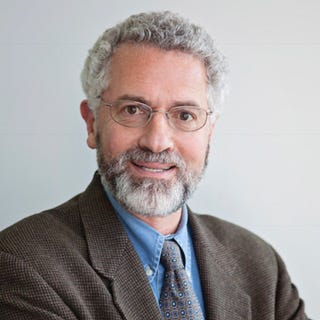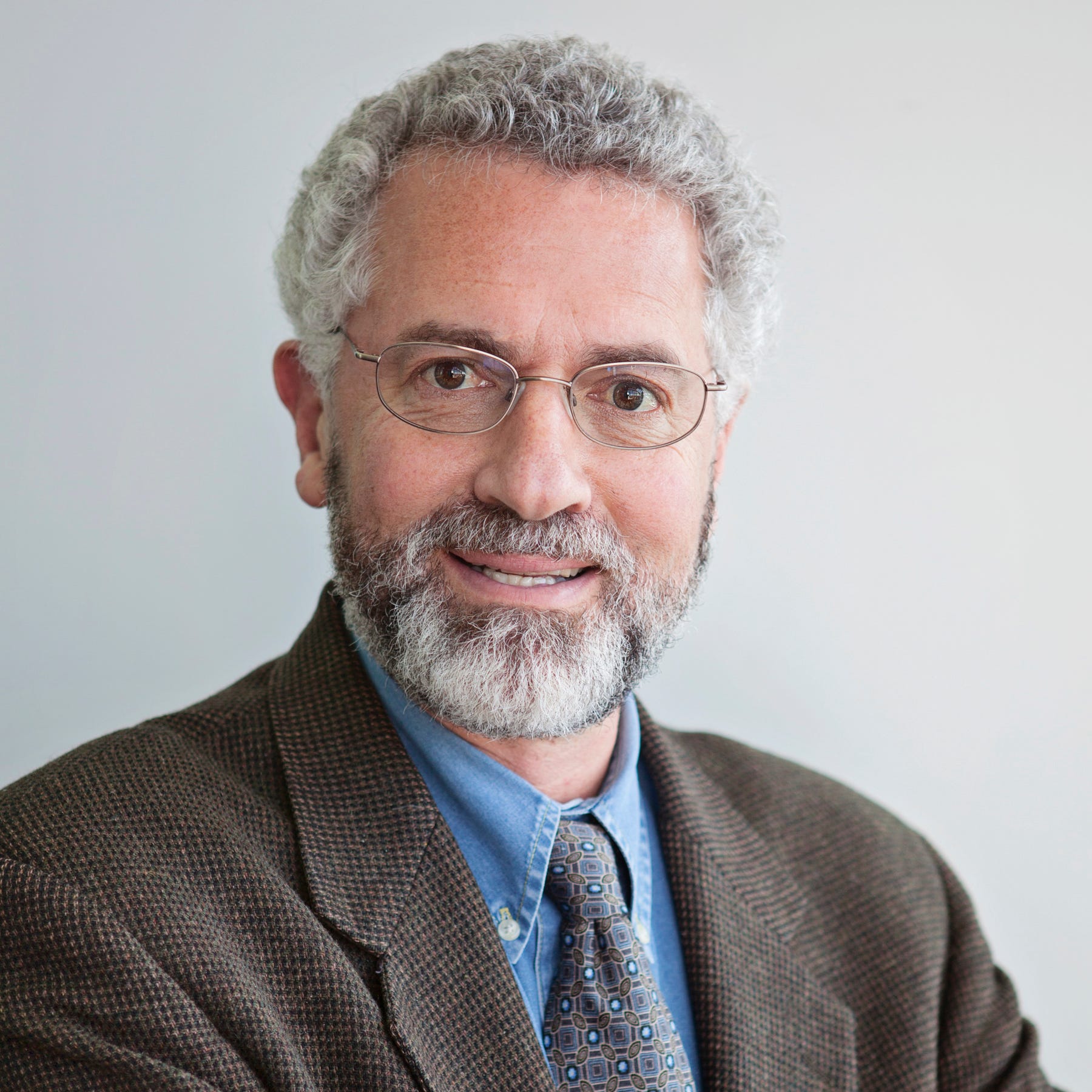
Full disclosure: Micheal Gurian and Terry Trueman have been friends and associates for over forty years; they have worked together on numerous books and projects. They sometimes find themselves in disagreement with interpretations in Gurian’s well known and highly regarded non-fiction work. Nonetheless, both writers continue their long friendship and affection.
Readers who know Michael Gurian primarily through his influential nonfiction—his work on gender, neurobiology, education, and family systems—often overlook the quieter, more intimate body of writing that has accompanied it from the beginning. Yet in his novels and poetry, another Gurian steps forward: not the theorist or reformer, but the storyteller who trusts ambiguity, who listens for the tremor beneath a character’s voice, who allows landscapes and silences to speak where theory cannot.
In the spirit of the Trueman–Triola project—where narrative, ethics, and human development meet in a shared pursuit of deeper understanding—Gurian’s fiction and poetry invite us to consider how a writer known for prescriptive clarity navigates the open terrain of interiority, trauma, and spiritual longing when he sets aside the scaffolding of argument.
The Fictional Terrain: Interior Lives and Unresolved Questions
In An American Mystic, Gurian’s protagonist moves through the world with a sense of spiritual bewilderment that no developmental chart could capture. Early in the novel, he confesses, “I keep waiting for the world to speak in a language I can finally understand.” That line alone signals the shift: fiction becomes a space where uncertainty is not a problem to be solved but a condition to be inhabited.
Similarly, The Miracle places its characters in the fragile aftermath of trauma, where healing is neither linear nor guaranteed. At one point, a character reflects, “Some wounds don’t close; they just learn to breathe differently.” This is not the language of prescription. It is the language of lived experience, rendered with a tenderness that refuses to simplify.
These novels move through the emotional and geographic landscapes of the Inland Northwest with a lyrical sensibility. The Spokane River, the basalt cliffs, the winter light—they are not backdrops but emotional registers. Gurian’s fiction is where he allows the world to remain unresolved, where characters are permitted to be contradictory, wounded, searching.
In this mode, he echoes the Trueman of Stuck in Neutral and the Triola of The Ethics of the Unsaid: attentive to the fragile interior worlds of individuals, unwilling to force them into neat interpretive grids.
The Poetry of The Embrace: Spirituality as Atmosphere
If the fiction opens a door into Gurian’s interior landscapes, the poetry in The Wonder of Aging walks directly into them. The poems are contemplative, intimate, and often suffused with a quiet mysticism. In one piece, he writes, “The soul leans toward light even when the body remembers only darkness.”
This is Gurian at his most distilled: the spiritual impulse rendered not as doctrine but as breath. Another poem offers a moment of almost monastic simplicity: “I hold the world gently, as if it were a bird unsure of my hands.”
These lines reveal a writer who understands that some truths cannot be diagrammed. They must be felt. Poetry becomes the place where Gurian lets language loosen, where metaphor does the work that neuroscience cannot.
Nonfiction’s Architecture: Systems, Patterns, and Prescriptions
By contrast, Gurian’s nonfiction—The Wonder of Boys, The Minds of Girls, The Good Son, and others—operates with a different set of commitments. These books are built around developmental psychology, neuroscience, and sociological patterns. They aim to guide parents, educators, and policymakers toward better outcomes.
The tone is structured, authoritative, and solution-oriented. Where the fiction says, “Sit with this,” the nonfiction says, “Here is what we know, and here is what we should do.” Both modes are sincere; both are rooted in care. But they speak in different registers.
Two Modes, One Preoccupation
What becomes striking, when viewed through the lens of the Trueman–Triola newsletter’s ongoing inquiry into narrative ethics, is how both bodies of work circle the same questions:
What does it mean to grow
How do we carry trauma
Where does the self find belonging
How do landscapes shape the soul
In nonfiction, these questions become frameworks.
In fiction and poetry, they become lives.
The difference is not merely stylistic; it is ethical. Fiction and poetry allow Gurian to relinquish authority, to let characters and speakers inhabit their own fractured cadences, to let the world remain unresolved. It is a humility that resonates with the newsletter’s ethos: the belief that literature is not a tool for instruction but a space for expanding the moral imagination.
Why Gurian’s Fiction and Poetry Matter Now
In a cultural moment saturated with explanation—data, models, arguments, counterarguments—Gurian’s fiction and poetry remind us that understanding is not always a matter of clarity. Sometimes it is a matter of dwelling. Sometimes it is a matter of listening.
Triola might say that fiction reveals the ethical underside of systems: the lived consequences that no chart can capture. Trueman might say that stories are where the human stakes of theory become visible. Together, their sensibilities help us see Gurian’s dual career not as a contradiction but as a dialogue between two ways of knowing.
His nonfiction builds structures for the world.
His fiction and poetry walk through them at dusk, listening for the voices that echo inside.
For more info. about Michael Gurian and his work, visit: