
Trueman–Triola Newsletter — Reflection
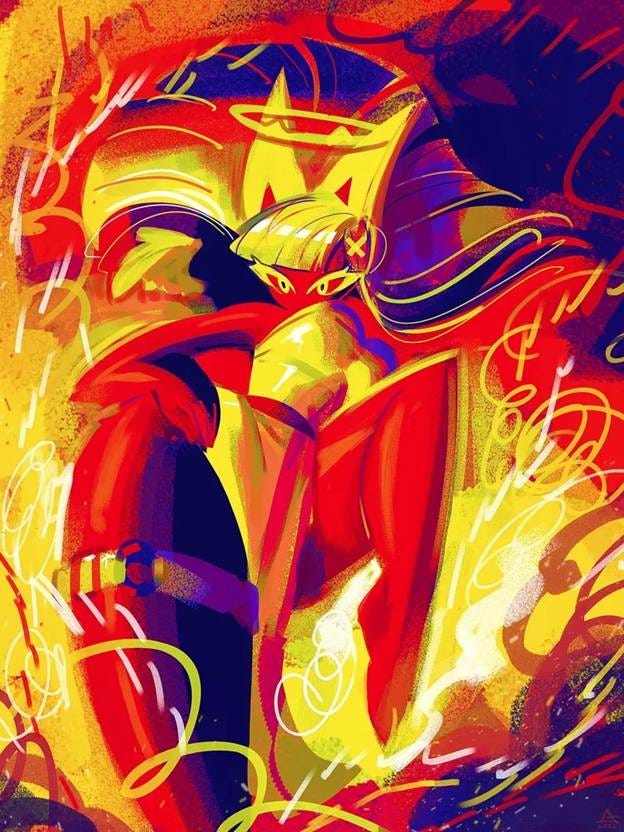
Every so often, an artist appears whose work feels like a hinge between eras — not because they announce themselves as revolutionary, but because their practice quietly reconfigures what we think a figure can do on the page. Browsing Andaerz’s daily sketches — the “Eye‑y doodles,” the “Smoky hoodie,” the winged creatures, the catgirls, the mousegirls, the characters who seem to stretch themselves into moods — one begins to sense a lineage being bent, not broken.
Classical and neo‑classical figure drawing, with its devotion to anatomy, proportion, and the disciplined line, still hums beneath these drawings. You can see it in the way weight settles into a hip, or how a gesture arcs through the spine before it ever reaches the fingertips. Even in the most whimsical posts — Daily #2007’s wide‑eyed creature or #2005’s slouching hoodie‑ghost — the old atelier priorities remain: gesture first, rhythm second, clarity of intent always.
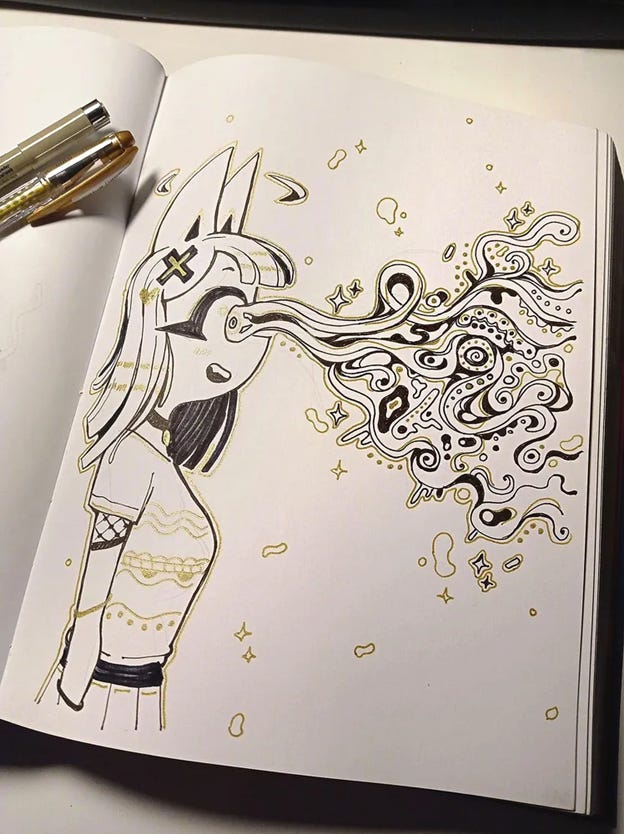
But the divergence is where the work becomes unmistakably contemporary. Andaerz’s figures are not idealized bodies; they are emotional anatomies. Limbs elongate not for beauty but for emphasis. Eyes widen into portals of mood. Spines coil with a flexibility that belongs less to the human body than to the expressive imagination. These are not the bodies of gods or heroes; they are avatars of interior weather — characters who carry micro‑narratives in their posture alone.
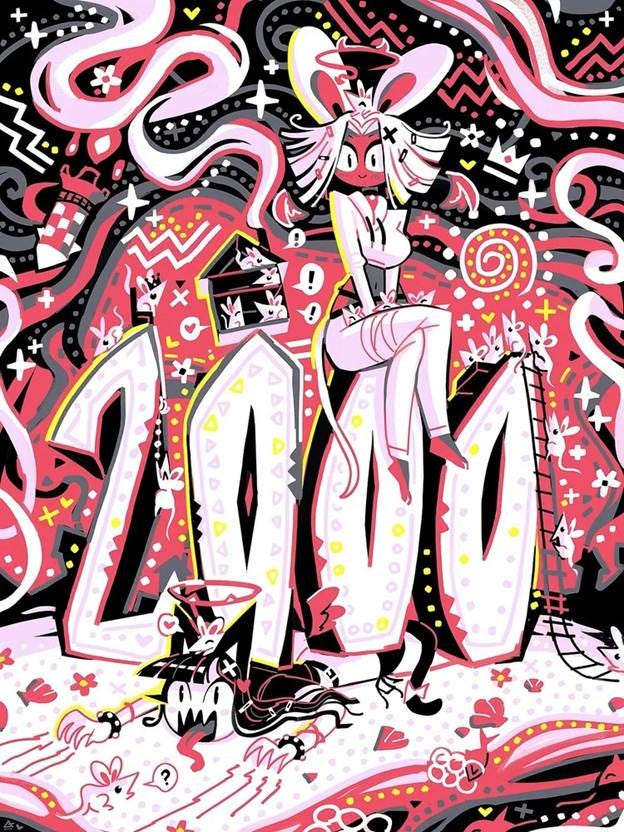
Classical drawing sought the universal. Andaerz seeks the particular: the quirk, the twitch, the fleeting state of being. The line, once a symbol of mastery, becomes instead a record of aliveness — jittery, swooping, occasionally chaotic, as in the confession accompanying Daily #2000: “Very chaotic drawing for a very chaotic past few years.” The body here is not proof of control; it is evidence of feeling.
And then there is the digital‑age ethos: the daily practice, the public sketchbook, the iterative unfolding of a character world in real time. Where the academies prized secrecy and slow refinement, Andaerz offers transparency, process, and play. The figure becomes less a monument and more a companion — a way of thinking aloud with the hand.
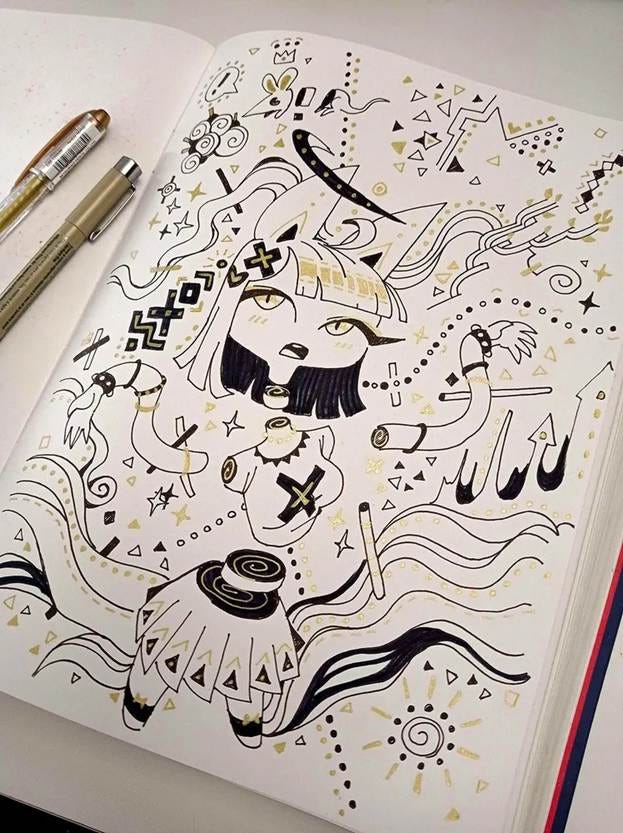
In this sense, Andaerz’s work belongs to a new lineage: one that takes the skeleton of classical draftsmanship and wraps it in the musculature of contemporary expressiveness. The result is a hybrid body — part tradition, part improvisation, part emotional cartography.
If the classical figure was an argument about ideal form, Andaerz’s figure is a meditation on interiority. If the neo‑classical body was a symbol of virtue, this one is a symbol of mood. And in that shift — from ideal to experience, from archetype to character — we glimpse a distinctly 21st‑century understanding of embodiment: fluid, playful, emotionally legible, and delightfully unbound.
A reminder, perhaps, that the body we draw is always the body we imagine — and that imagination, like line, is at its best when it moves.