
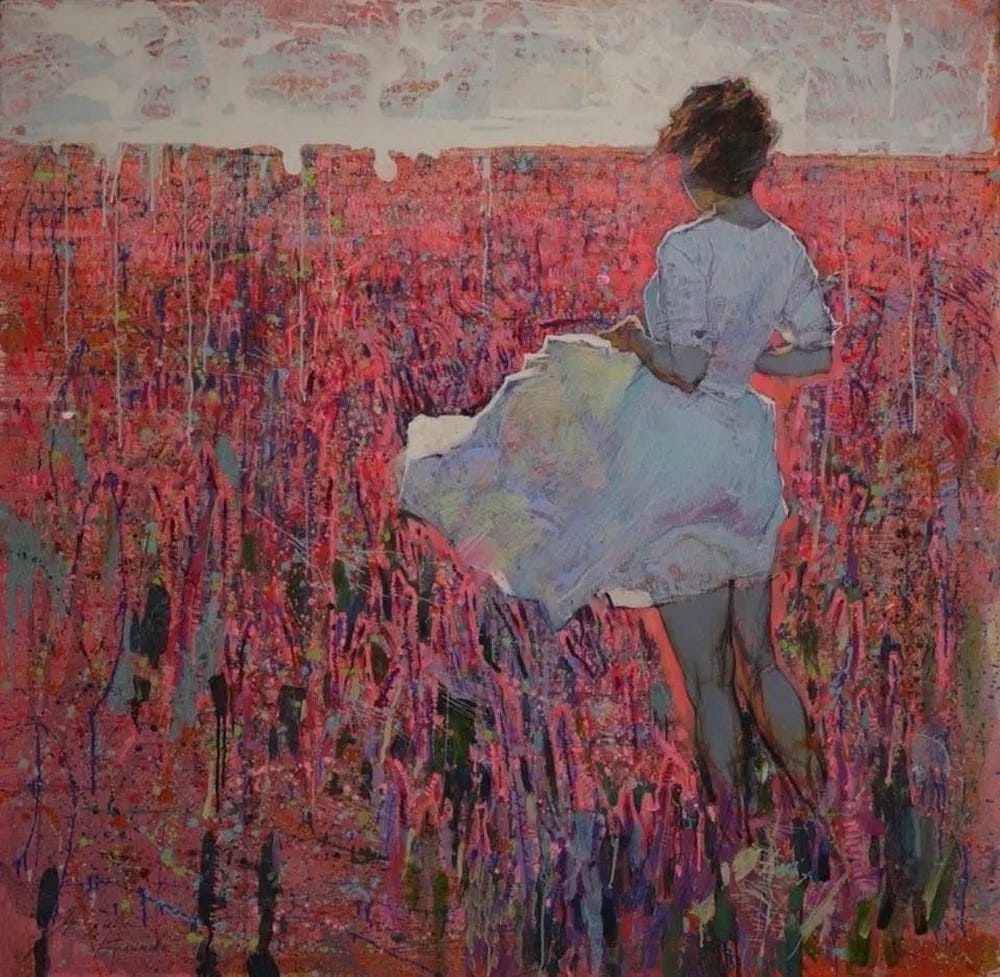
@caldeiragiselle.bsky.social GC Gi
There is a particular kind of generosity that appears online only rarely, and almost never with fanfare. It looks, at first glance, like someone simply posting art — a Klimt here, a Staël there, a morning tulip, a Magritte cloud. But if you linger, if you let the rhythm of it accumulate, you begin to see the deeper architecture: a daily practice of attention, a public offering of beauty without commentary or ego.
Such is the quiet, steady work of @caldeiragiselle.bsky.social on Bluesky, whose feed has become, for many of us, a kind of informal museum — not the marble‑floored kind, but the kind built out of care, curiosity, and the belief that art is a civic good.
What strikes you first is the range. Her selections move freely across continents and centuries: the chromatic storms of Nicolas de Staël, the botanical precision of Lucille Clerc, the dream‑logic of Magritte, the domestic warmth of Irish painters, the luminous gardens of contemporary illustrators. It is a world tour without hierarchy, a reminder that the canon is always larger than we remember.
But range alone is not the point. What she curates is not a syllabus; it is a mood, a way of inhabiting the day. Morning posts often carry the hush of first light — tulips, windows, quiet interiors. Afternoons bring color, saturation, the pulse of modernism. Evenings drift toward the surreal, as if acknowledging that the day’s rational scaffolding has loosened and the imagination is free to wander.
In this way, the feed becomes a kind of visual diary, not of her life but of a shared emotional weather. It teaches without instructing. It invites without demanding. It cultivates the old civic virtue of looking closely.
And this, perhaps, is why such a site matters. In a digital world optimized for outrage and acceleration, she offers a counter‑practice: beauty as a form of resistance, attention as a form of care. Her posts democratize access to art history, yes, but more importantly, they democratize the experience of wonder. You don’t need a museum ticket or a graduate seminar; you need only a moment of stillness and a willingness to see.
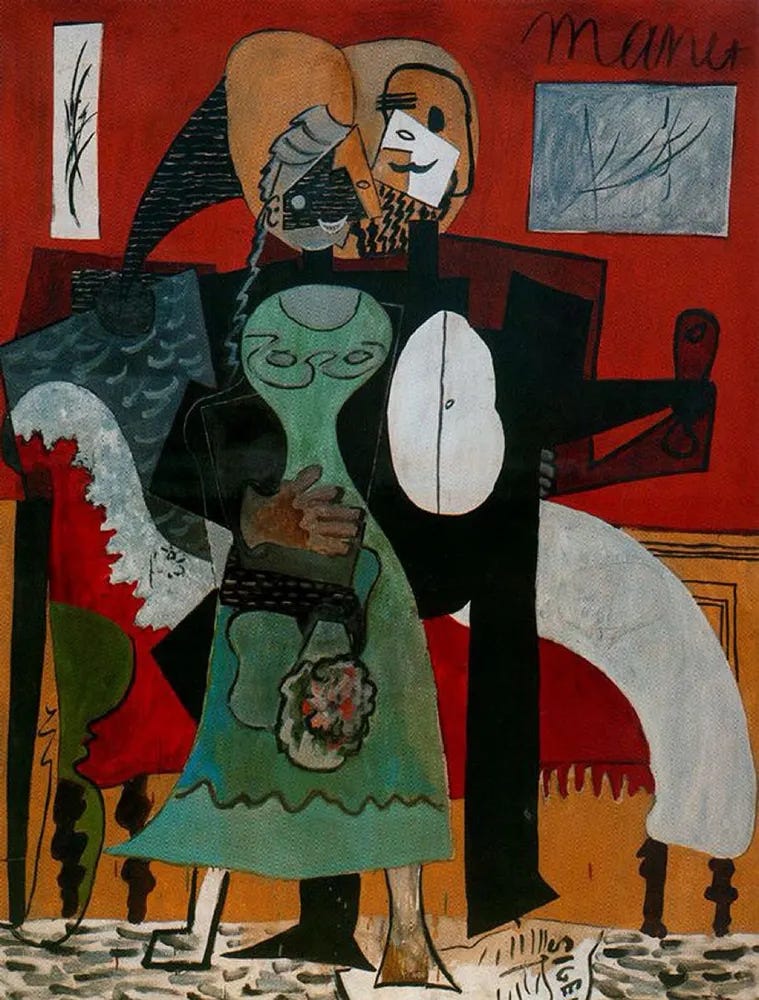
There is a politics here, though not the kind that shouts. It is the politics of cultural memory, of shared delight, of refusing to surrender the public square to noise. It is the belief — increasingly radical — that art can be a commons, and that tending to that commons is a civic act.
In the end, what she offers is simple and rare: a daily reminder that the world is larger, stranger, and more beautiful than our timelines would have us believe. And that this, too, is part of how we stay human.