
The Trueman–Triola Newsletter
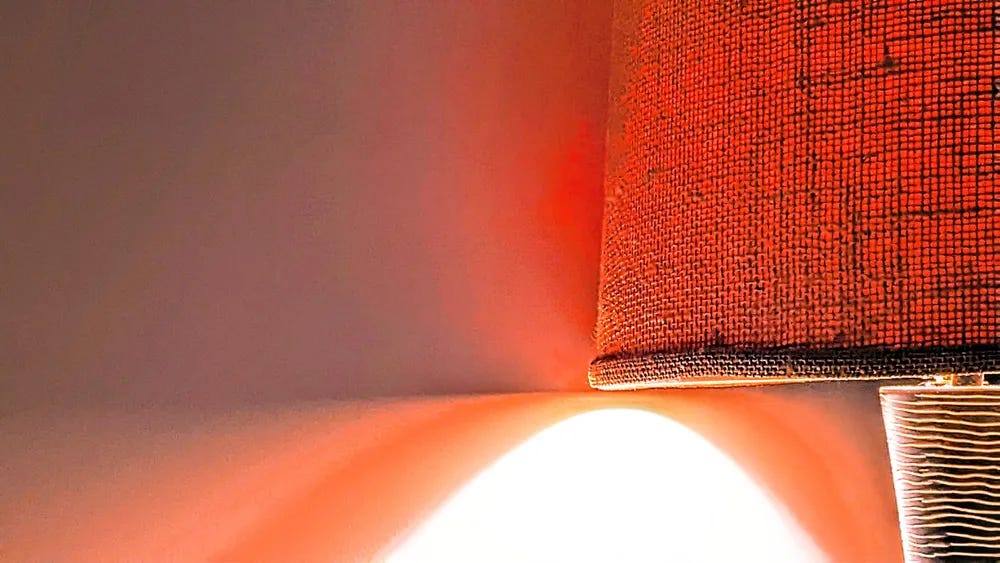
On the Singular Eye of Landguy:
There are artists on Bluesky who post images. And then there are artists who post ways of seeing. Landguy belongs decisively to the second category. His feed is not a gallery so much as a slow‑moving weather system—an atmosphere of attention, a mood of looking that recalibrates the viewer’s own perceptual habits.
Above all, in my lifetime of loving art and working at it myself, I’ve learned to forgive inexperienced and even not-very-talented or very good artists b/c we all grow and make mistakes, and if we’re lucky, we live long enough to look back at our lives and appreciate how fuckin’ stupid and wrong we have been at times. Landguy reminds me of how often I’ve been right about seeing and appreciating the things I’ve seen and appreciated.
What makes his eye unique is not flamboyance or virtuosity. It’s the opposite: a kind of democratic reverence for the overlooked. Landguy’s images feel like they were taken by someone who has spent a lifetime walking the same roads and only recently realized that the ordinary world is full of portals. He doesn’t “capture” scenes; he notices them. And that difference—capture versus notice—is the difference between extraction and presence.
The Aesthetics of the Almost‑Missed
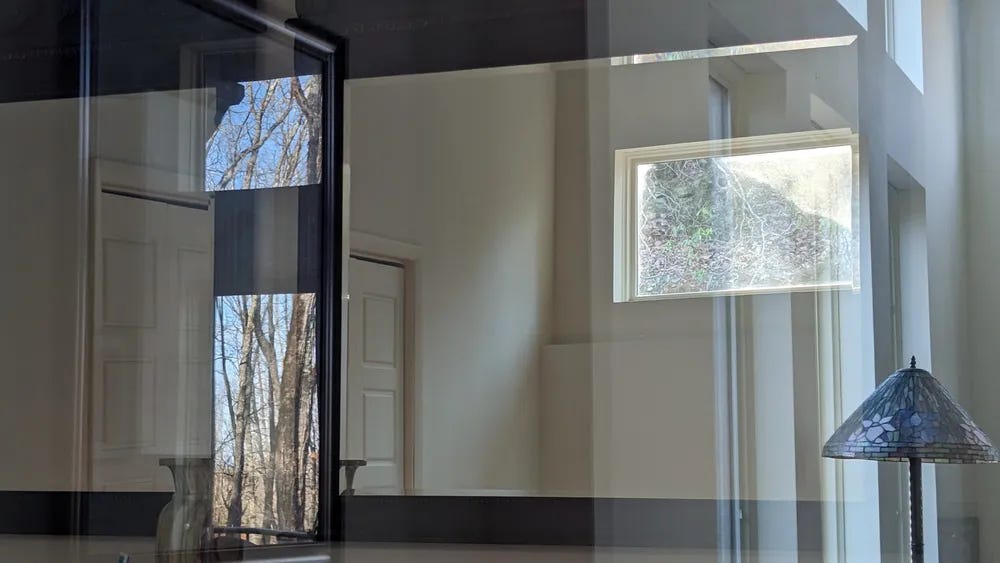
Landguy’s compositions often hinge on small displacements:
a fence line bending just slightly wrong
a shadow that seems to be thinking its own thoughts
a patch of ground where color gathers like a secret
the way a structure leans, not precariously, but knowingly
These are not grand gestures. They are micro‑events of perception. They remind us that beauty is not a category but a practice, something enacted through attention rather than bestowed by prestige.
In this sense, Landguy’s work participates in a lineage that includes the humble mysticism of William Christenberry, the democratic gaze of Walker Evans, and the quiet metaphysics of Robert Adams. But he is not derivative. His Bluesky presence is distinctly contemporary: a refusal of spectacle, a commitment to the local, a belief that the world is still legible if we slow down enough to read it.
A Civic Gesture Disguised as Art
What strikes me most is how Landguy’s feed performs a civic function without ever announcing itself as such. In a digital environment that rewards outrage, acceleration, and self‑promotion, his posts enact a counter‑rhythm. They say, implicitly:
Look again. Look slower. Look with less hunger and more curiosity.
This is not just an aesthetic stance; it is an ethical one. It models a way of being in the world that resists the flattening forces of our moment. It suggests that attention—humble, patient, non‑extractive attention—is a form of care.
The Landguy Effect
Spend enough time with his images and something subtle happens. You begin to see your own surroundings differently. The alley behind the grocery store becomes a study in geometry. The chipped paint on a neighbor’s garage becomes a color field. A puddle becomes a temporary cosmos.
This is the quiet power of Landguy’s work: it doesn’t merely show you what he sees; it trains you to see for yourself.
Why It Matters
In the broader ecology of Bluesky’s art‑and‑nature community—a community we’ve been mapping with such care—Landguy occupies a crucial niche. He is a reminder that art is not always about invention. Sometimes it is about fidelity. Sometimes the most radical act is to witness the world without demanding that it be more dramatic than it is.
His feed is a small, steady argument for the dignity of the everyday. And in a time when the everyday is so often dismissed, that argument feels quietly revolutionary.
@landguyminor.bsky.social