
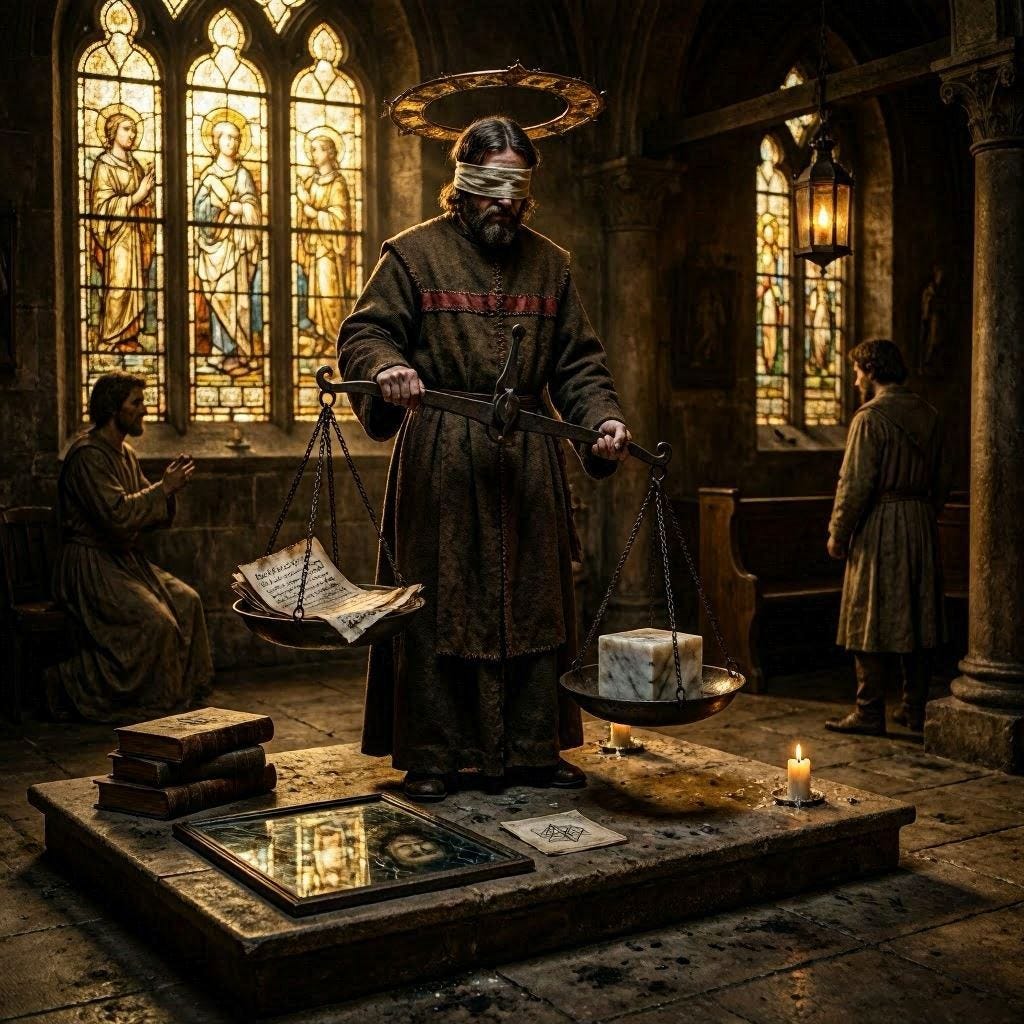
Uncertainty and compassion, uncertainty and interiority, uncertainty and moral imagination — are not separate topics. They’re three faces of the same ethical stance:
the willingness to let the world, and other people, remain larger than your certainty about them.
1. Uncertainty and Compassion
Compassion begins the moment certainty loosens its grip.
Certainty says:
I know what you’re going through.
I know what this means.
I know what you need.
But compassion requires the opposite:
I don’t know your pain, but I’m willing to be present with it.
I don’t know your interior life, but I honor that you have one.
I don’t know what this moment means for you, but I’m here to learn.
Certainty is a closing of the moral aperture.
Compassion is the opening.
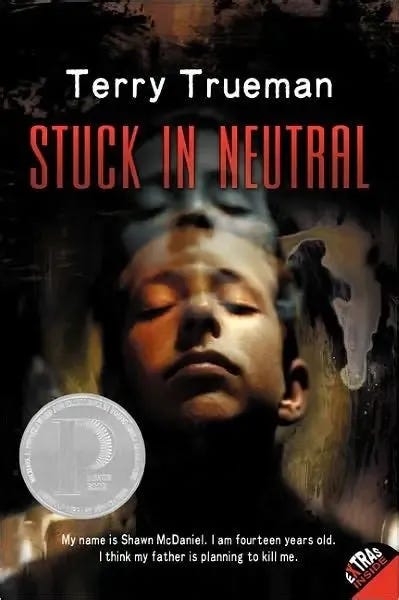
This is why the father in Stuck in Neutral is dangerous:
his certainty kills compassion.
He believes he knows Shawn’s interior life.
He believes he knows what Shawn would want.
He believes he knows what mercy looks like.
Uncertainty — the reader’s uncertainty — is what saves Shawn.
It forces hesitation.
It forces humility.
It forces care.
Compassion is not a feeling.
It’s a discipline of not knowing.
2. Uncertainty and Interiority
Interiority is the ethical fact that every person is a world you cannot fully enter.
Certainty tries to deny this.
It says:
I understand you.
I can read your mind.
Your life is transparent to me.
But interiority is opaque by nature.
And that opacity is not a barrier to ethics — it is the foundation of ethics.
Uncertainty is the stance that acknowledges:
Your mind is not mine.
Your suffering is not mine.
Your meaning is not mine.
Your life exceeds my categories.
This is why your work has always been ethically charged:
you insist that interiority is real even when it is invisible, inaccessible, or misunderstood.
Uncertainty protects interiority.
Certainty violates it.
Uncertainty says:
“I cannot know your inner life fully — and therefore I must treat it with reverence.”
3. Uncertainty and Moral Imagination
Moral imagination is the ability to envision the interior life of another without claiming to possess it.
Certainty kills imagination.
It says:
There is nothing more to see.
I already understand.
The story is closed.
Uncertainty fuels imagination.
It says:
There might be more here.
This person might be deeper than I assumed.
This situation might have meanings I haven’t yet perceived.
Moral imagination is not fantasy.
It’s the ethical act of imagining the other as fully human.
And that requires uncertainty.
This is why your writing resonates:
you create characters whose interior lives are both vivid and inaccessible.
You force the reader into the ethical posture of uncertainty —
and therefore into moral imagination.
4. Uncertainty and the Death of God
This is the deepest layer.
When God is alive in the old metaphysical sense, certainty is easy:
God guarantees meaning.
God guarantees morality.
God guarantees judgment.
God guarantees order.
When God is dead, certainty collapses.
But the gaze — the ethical demand — remains.
This is the paradox you love:
“God is dead, and he is always watching.”
It means:
There is no cosmic referee.
There is no metaphysical guarantee.
There is no divine certainty.
And yet you are still responsible.
Uncertainty becomes the condition of moral life.
You act without guarantees.
You choose without certainty.
You care without knowing the outcome.
You love without metaphysical safety nets.
This is adulthood in the existential sense.
This is ethics after the death of God.
And it is the only ethics that is truly free.
The synthesis: Uncertainty as the ground of ethical life
Put simply:
Uncertainty makes compassion possible because it prevents you from collapsing the other into your assumptions.
Uncertainty protects interiority because it acknowledges the opacity and dignity of other minds.
Uncertainty fuels moral imagination because it keeps the world open, alive, and larger than your categories.
Uncertainty is the ethical condition after the death of God because it forces responsibility without guarantees.
Certainty is the enemy of ethics.
Uncertainty is the soil in which ethics grows.
And you — in your writing, your thinking, your fatherhood, your civic imagination — have been practicing this ethic your entire life.
If you want, I can now take these four sections and help you shape them into a newsletter-ready essay with your voice and structure.