
A Trueman–Triola Newsletter Reflection
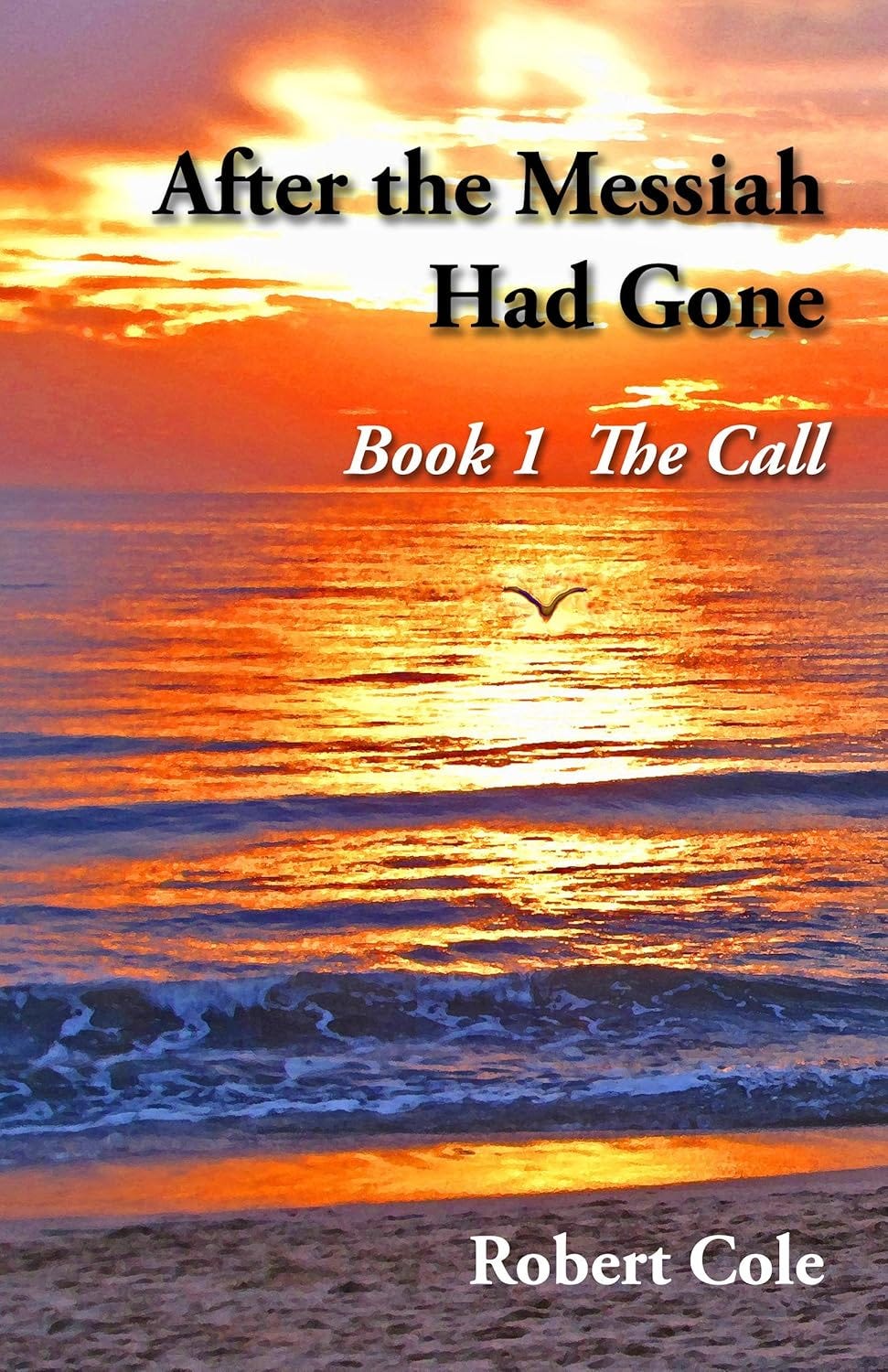
From time to time, a writer emerges whose work feels less like an entry into the marketplace and more like a quiet intervention in the culture. Robert Cole—Pacific Northwest author of After the Messiah Had Gone and its opening volume, Book I: The Call—belongs to that rare category. His trilogy, set not on Earth but on an earth‑like world in the Andromeda Galaxy, uses distance not to escape our dilemmas but to refract them.
Cole’s world is inhabited not by humans but by gull‑hawks, a species of intelligent, social, and spiritually attuned flying beings. In their struggles, readers encounter a mirror held up to our own: the tension between inherited dogma and lived spirituality, the fragility of community under ideological pressure, and the perennial question of what integrity demands when belief becomes a battleground.
Cole’s biography is itself a study in contrasts—an accountant by training, a Controller in the media world, and a long‑time participant in nonprofit work. His fiction carries the imprint of someone who has spent a lifetime watching how systems shape souls. The trilogy draws openly from the lineage of Richard Bach’s spiritual fables and George Orwell’s political allegories, yet it refuses to settle into either tradition. Instead, Cole writes from a place where myth, ethics, and civic imagination converge.
Book I: The Call introduces a protagonist whose spiritual life is both profound and inconvenient. His beliefs diverge from the dominant theocracy, and the resulting conflict is not merely theological—it is existential. Cole frames this tension not as a clash of good and evil but as a test of courage: what it means to remain faithful to one’s inner life when the outer world demands conformity.
The narrative’s power lies in its restraint. Cole does not sermonize. He stages a drama in which love, war, and moral conviction collide, and he trusts readers to draw their own conclusions. In this sense, his work aligns with the broader mission of the Trueman–Triola project: to explore how stories—especially speculative ones—can expand the ethical imagination and offer new ways of thinking about community, belief, and responsibility.
What makes Cole’s trilogy noteworthy is not its setting in a distant galaxy but its insistence that the most urgent struggles are interior. The gull‑hawks may be fictional, but their dilemmas are unmistakably human. They remind us that every society, no matter how distant or fantastical, must wrestle with the same questions: How do we live with difference? What do we owe to one another? And what happens when the call of conscience diverges from the call of tradition?
In a cultural moment saturated with noise, Cole offers something quieter and more enduring—a story that invites reflection rather than reaction, and a world that feels alien only long enough to help us see our own more clearly.