I. The Child Mishears the World
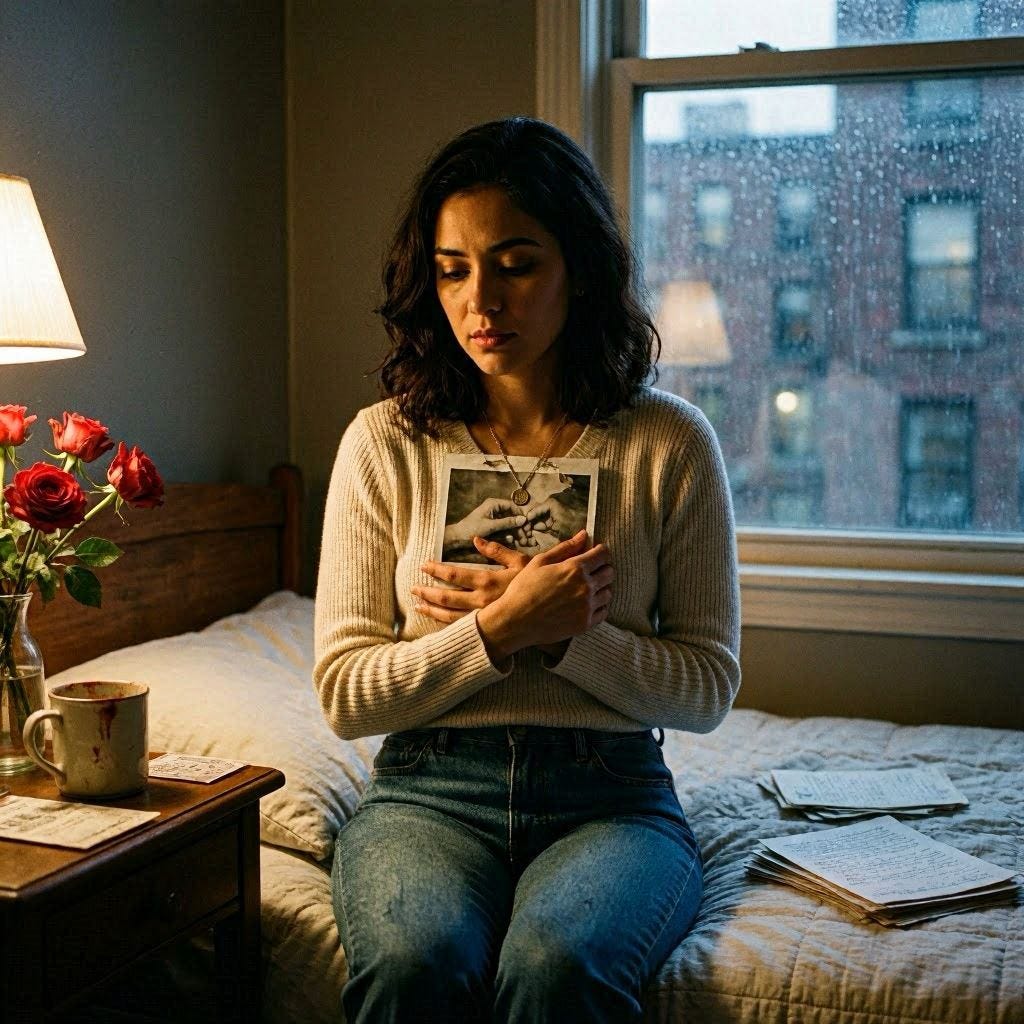
I was small enough
to believe sound was truth.
A crash became a body.
A scream became a funeral.
A hallway became the long dark throat
of God.
I heard my father
trying to kill my mother—
or maybe I heard my brother dying.
No one explained the difference.
Children do not know
how to file terror correctly.
They only know
the house has changed temperature,
that the air has teeth,
that someone is crying
and no one is coming
with hands soft enough
to make it stop.
So I became very still.
Still as a doll.
Still as dust on the windowsill.
Still as the good little girl
who knew better
than to ask what blood meant.
II. The House With No Witnesses
There are houses
that keep their own scripture.
Ours wrote in slammed doors,
in belt-buckle silence,
in the wet animal breathing
after a fight.
The walls knew.
The carpet knew.
The old couch knew
where everyone sat afterward
pretending we were a family
and not a crime scene
with dinner plates.
We did not know
who had been touching who.
We did not know
who had been taking
what was never theirs.
We did not know
what to do
with a truth
that entered the room
without a name.
So we called it mood.
We called it stress.
We called it Dad.
We called it childhood.
III. The Father
My father was not a monster.
That would have been cleaner.
Monsters live under beds
or inside books
where brave children
can close the cover.
My father lived
at the table.
He drank coffee.
He needed socks.
He had hands
that could fix things
and hands
that could ruin the weather.
He was not a monster,
but something of a monster.
A man with enough tenderness
to confuse the wound.
A man with enough damage
to make his damage
feel inherited.
And still—
forty years later—
I answer the phone.
Still I listen
for the father
inside the wreckage.
Still I look
for the human face
beneath the smoke.
IV. The Brother
And my brother—
God help me—
not a monster either.
But something of one.
Something hungry.
Something swollen with injury.
Something made wrong
by wrongness
and then sent into the world
with our last name.
I loved him
before I knew
what love could be asked
to survive.
I loved him
when he was just a boy
beside me
in the burning house.
But the boy grew teeth.
The boy grew shadow.
The boy became someone
I could pity
and fear
in the same breath.
And there is no clean language
for that.
Only this:
I remember him small.
I remember myself smaller.
I remember not knowing
which one of us
the danger belonged to.
V. The Mother Who Stayed
My mother did not leave.
Maybe she couldn’t.
Maybe nobody taught her
that a door
could be an instrument
of mercy.
Maybe survival took every chair
inside her body
and left no room
for presence.
She was there,
but not there the way children need.
Not there
with the fierce animal yes
of a mother
standing between the dark
and the child.
She was there
like a lamp left on
in another room.
Dim.
Tired.
Trying.
Not enough.
And I have spent my life
forgiving her
in one hand
and grieving her
with the other.
VI. Forty Years Later
Forty years later
I am still passing plates
to people
who once taught my nervous system
how to kneel.
Still making room
for men
who were not monsters
but something close enough
to make my body remember.
Still trying to love
without becoming
the next room
where silence goes to live.
This is the part
no one sings about—
how the child grows up
and still answers Christmas texts.
Still brings soup.
Still says,
I understand.
Still says,
they were broken too.
Still says,
blood is complicated.
Still says,
maybe if I name it gently
it will stop being true.
But it is true.
I was a child.
I heard terror.
No one came with a lantern.
No one said,
This is not yours to carry.
So I carried it.
Like a small dead bird
in both hands.
Like proof.
Like prayer.
Like family.
VII. The Naming
Now I am learning
that love
is not the same thing
as access.
That compassion
does not require
my throat.
That forgiveness
does not mean
I keep setting a place
for the thing
that ate me.
I can say:
my father was not a monster
and still lock the door.
I can say:
my brother was wounded
and still choose distance.
I can say:
my mother survived
and still mourn
the mother I needed.
I can say:
I did not know what to do then.
But I am learning
what to do now.
I am gathering
the child from the hallway.
I am taking her small hand.
I am telling her:
You heard what you heard.
You felt what you felt.
You were not crazy.
You were not too much.
You were not responsible
for making monsters human.
Come now.
There is a life
past the house.
There is a body
that can belong to you.
There is a voice
that does not have to whisper