
After reading the Ezra Klein essay that Ben Rice shared with Terry Trueman, I found myself thinking less about economics, politics, or artificial intelligence than about songs. Specifically, I found myself thinking about the body of songs Terry has been sharing publicly in recent months, songs that circle repeatedly around memory, friendship, disability, mortality, aging, love, loss, humor, forgiveness, and the persistence of identity through time. The email itself points directly to “Reflected,” but it also reveals a larger context: the long conversation between Ben and Terry about music, purpose, old friends, empathy, and what remains valuable as we age. [Re: TT | Outlook]
Francis Fukuyama has often been misunderstood as a thinker concerned merely with political systems. At the heart of his work, however, lies a more personal question: What do human beings need in order to feel fully alive? His answer has never been simply prosperity. Human beings seek recognition. We seek struggle. We want our lives to matter in ways that cannot be reduced to comfort.
That concern appears in the Ezra Klein piece Ben forwarded. The worry is not that AI will destroy humanity outright. The worry is that it may succeed so well that it gradually displaces the domains in which people find meaning. We may become richer, safer, healthier, and less necessary. [Re: TT | Outlook]
What strikes me is that Terry’s songs, taken collectively rather than individually, operate as a kind of counterargument to technological utopianism.
Across his songwriting, one encounters people rather than systems. One hears voices looking backward and forward simultaneously. The songs are rarely interested in perfection. Their emotional center is almost always vulnerability. The narrators are frequently aware of failure, aging, regret, absurdity, and contingency. Even when humorous, there is usually an undertow of mortality.
That matters because the future envisioned by many technologists often assumes that meaning is largely a matter of solving problems. If disease can be solved, labor can be automated, memory can be externally stored, and intelligence can be amplified, then life should improve.
The songs ask a different question.
What if the things that make us human are not problems at all?
What if uncertainty is not a bug in consciousness but one of its defining features?
What if memory is valuable precisely because it fades?
What if friendship matters because it ends?
What if identity gains meaning because it changes?
These are not technical questions. They are artistic ones.
One of the recurring themes in Terry’s work is recognition across time. In “Reflected,” this takes the form of a photograph from 1963. But the same impulse appears elsewhere in different guises. Again and again, there is the attempt to locate the self in a moving world. The songs ask not “How do we optimize human life?” but “Who are we becoming?” and “Can we still recognize one another?”
That concern places Terry surprisingly close to Fukuyama.
For Fukuyama, the central danger is not merely material deprivation but the loss of meaningful recognition. People need to feel seen. They need opportunities to matter. They need participation in the ongoing human story. The radical promise of AI is abundance. The radical danger of AI is irrelevance.
Terry’s songs often begin where relevance ends.
His narrators are old enough to know their historical moment has passed. They revisit memories, reunions, old loves, former certainties, youthful passions, and vanished worlds. Yet the songs consistently discover dignity in those experiences. The value of a life is not measured by productivity but by consciousness itself: by attention, humor, compassion, endurance, and memory.
That distinction may become increasingly important for the arts.
For centuries, artists were admired partly because they could do things others could not do. They possessed extraordinary technical skills. A singer could sing. A painter could paint. A poet could shape language.
AI increasingly threatens that model.
Machines can now imitate styles, generate lyrics, compose melodies, and create images at extraordinary speed. If artistic value depends primarily on technical accomplishment, artists may indeed face a difficult future.
But Terry’s songs suggest another possibility.
Their value does not arise because nobody else could have written them. Their value arises because nobody else lived them.
The future of art may therefore become less about mastery and more about witness.
Not witness in the journalistic sense, but witness in the existential sense.
I was here.
This happened.
This is how it felt.
Here is what I learned.
That kind of art becomes more valuable, not less, in a world saturated by artificial intelligence.
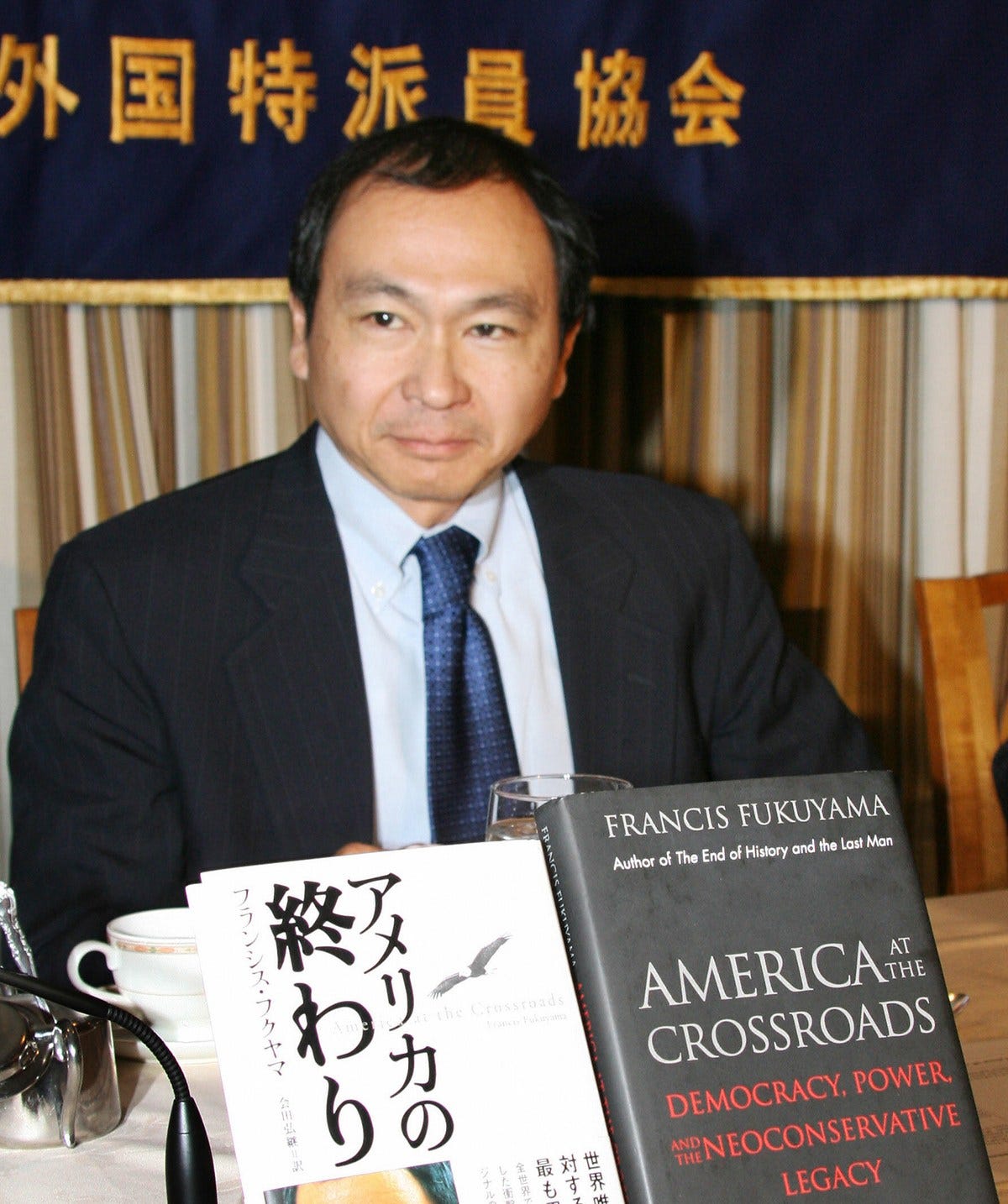
Fukuyama fears a future in which human struggle becomes unnecessary. Terry’s songs repeatedly insist that struggle is not simply an obstacle to life. It is a constituent element of life. Remove all friction, all uncertainty, all heartbreak, all longing, and something essential disappears.
The songs do not glorify suffering. Rather, they acknowledge that meaning often emerges from our responses to suffering.
That insight connects unexpectedly with another figure mentioned in the Klein essay: Aldous Huxley. The nightmare of Brave New World is not pain. It is the elimination of everything that gives pain significance. The citizens are comfortable. They are entertained. They are protected from existential uncertainty.
Yet something human has vanished.
Listening across Terry’s catalog, one hears an almost opposite impulse. The songs repeatedly return to the messy particulars of lived experience. Old classmates. Family. Disability. Politics. Memory. Music. Friendship. Love. Anger. Wonder.
In other words, the very things that cannot be outsourced.
Which brings me to a prediction.
If Fukuyama is right, then the central cultural question of the twenty-first century may become: How do human beings remain meaningful in a world where machines increasingly outperform them?
If Terry’s songs are any guide, the answer will not come from competing with machines.
It will come from deepening what machines cannot possess.
Embodied memory.
Moral imagination.
Affection.
Mortality.
The ability to laugh at ourselves.
The ability to forgive.
The ability to look at a photograph sixty years later and still feel the ache of recognition.
The future of art may therefore look less like technological triumph and more like a renewed defense of the ordinary human soul.
And that is precisely the place where Fukuyama the philosopher and Trueman the songwriter unexpectedly meet. One approaches from political theory, the other from personal narrative. Yet both arrive at the same question:
If progress gives us everything we want, will we still know why we are here?
The songs do not offer an answer.
But they remind us why the question matters. [Re: TT | Outlook]