Epigraph
“At a certain age, the future is no longer a promise or a threat. It is simply a smaller room.”
I. The Collapse of Direction
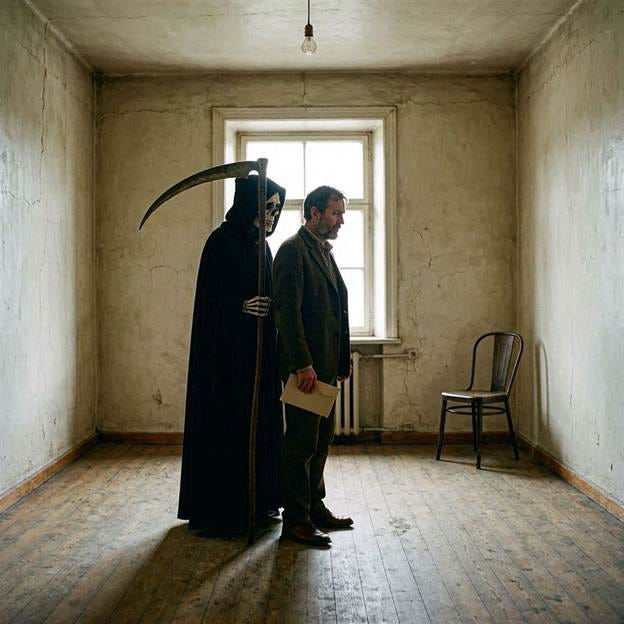
There comes a point in late life when the old metaphors of direction—toward death, away from death—lose their meaning. The horizon has already closed. The map no longer stretches forward into decades of imagined possibility. Instead, we find ourselves living inside a room.
The room is the room.
This is not a morbid realization. It is a structural one.
For most of life, we imagine ourselves on a timeline: childhood to adulthood, potential to achievement, health to decline, life to death. But in old age, the directional grammar collapses. You are not “approaching” death. You are with it. It has become a condition of being, not an event on the calendar.
And once that truth settles in, the idea of taking a “step toward” or “step away from” death becomes almost mathematically irrelevant. There are no steps. There is only the moment you inhabit.
II. When Risk Loses Its Moral Charge
In youth, every choice is freighted with the moral weight of the future:
Will this prolong my life
Will this endanger it
Am I protecting the decades ahead
But in late life, the future is no longer a vast field. It is a narrowing aperture. A fall, a diagnosis, a surgery—these are not deviations from the expected arc. They are simply part of the terrain.
The moral drama of “risk” dissolves.
The calculus shifts from duration to density.
The question becomes not How long will I live? But how fully can I inhabit the time that remains?
III. Death as Atmosphere, Not Destination
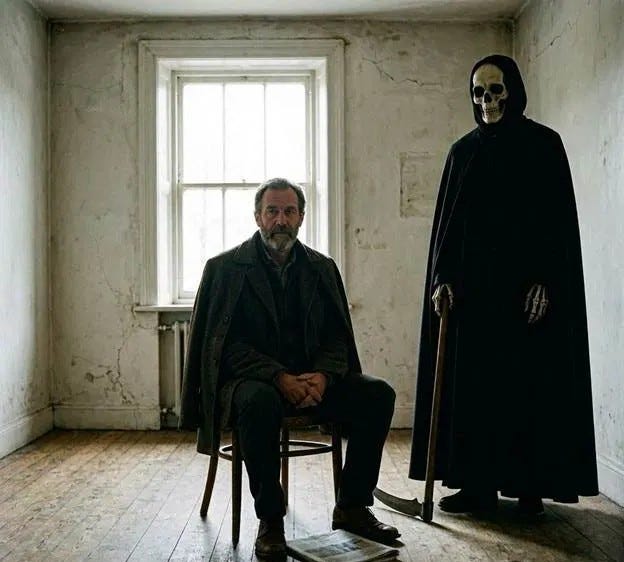
At a certain age, death is no longer a distant point on the horizon. It is the atmosphere of the room. A presence. A companion. A shadow that neither threatens nor demands, but simply is.
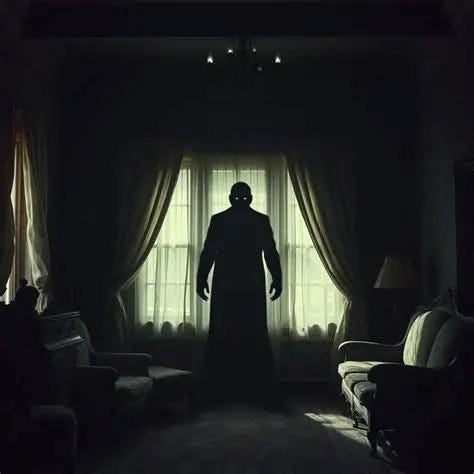
You cannot move toward or away from something already in the room with you.
You can only relate to it.
This shift—subtle, profound—frees the psyche from the exhausting project of survival and redirects attention toward meaning, coherence, and peace.
IV. The Question of Contribution
Late life sharpens a particular inquiry:
What have I contributed? What remains undone? What was the shape of my presence in the world?
Some discover that their contributions were quieter than they imagined—acts of kindness, small generosities, the steadying presence in someone else’s storm. Others see that their work, their art, their civic commitments formed a thread in the larger fabric of the world. Still others confront the ache of unrealized ambitions or the recognition that their life’s meaning was not in achievement but in witness.
But here is the liberating truth:
In the room of late life, contribution is no longer measured by scale. It is measured by honesty.
What mattered was not the size of the footprint but the integrity of the steps.
And even now—especially now—your presence continues to contribute.
Not through grand gestures, but through the clarity with which you see the world, the tenderness you extend, the wisdom you offer, the courage with which you inhabit your days.
Late life is not a verdict on one’s contributions.
It is the vantage point from which they can finally be seen.
SIDEBAR: On the Ethics of the Final Chapters
The Trueman–Triola Newsletter has long argued that ethical imagination is not a youthful project but a lifelong one. In late life, its stakes change:
Agency becomes interior rather than expansive.
Influence becomes relational rather than structural.
Meaning becomes distilled rather than accumulated.
The ethical question is no longer What will I build? but How will I be?
And this shift—quiet, unglamorous, deeply human—is itself a contribution to the civic imagination.
V. What Still Matters
If “toward” and “away” no longer matter, what does?
Presence — the ability to inhabit your own life without fear or pretense.
Clarity — the ability to see your life as a whole, not a project.
Freedom — the ability to choose how you meet the end, not when.
These are the real currencies of late life.
These are the contributions that continue, even now.
Closing Meditation
In the final chapters of life, death is not a threat. It is a companion. A reminder. A quiet teacher. And once you understand that, the directional metaphors fall away. You are not moving toward death. You are living in the final light of a life that has already been lived.
The question is no longer how to avoid the end, but how to inhabit the remaining time with honesty, courage, and grace.
And perhaps the deeper truth is this:
Your contributions—large or small, public or private—are already complete enough. The room you inhabit now is not a place of judgment. It is a place of understanding.