
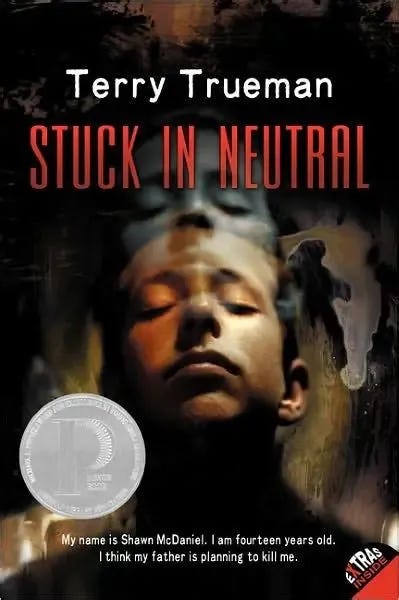
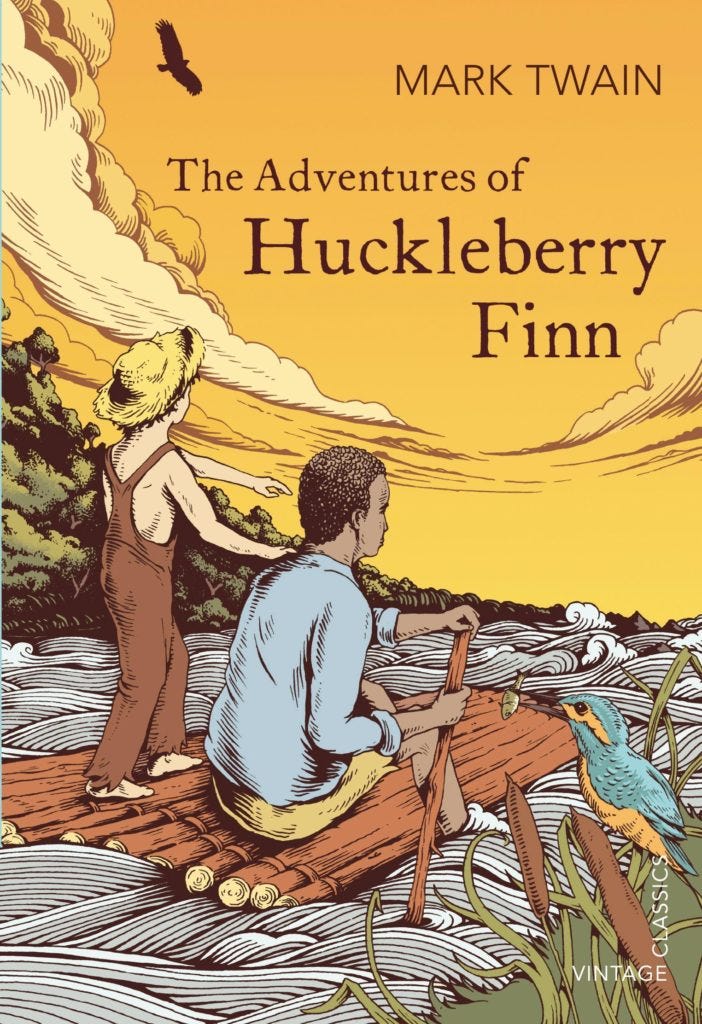
Stuck in Neutral has repeatedly been called a 21st‑century companion to Huckleberry Finn, but not because they are similar in plot, style, or cultural footprint. They are companions in the deeper sense: each novel confronts its century’s central moral blindness by giving narrative authority to a voice the dominant culture refuses to hear. Twain used Huck to expose the moral corruption of a slaveholding society that believed itself righteous. Stuck in Neutral uses Shawn to expose the moral corruption of an ableist society that believes it knows what a “life worth living” looks like.
To call Stuck in Neutral a companion to Huckleberry Finn is not to claim equivalence of scale or historical impact. Twain’s novel helped define American literature; Stuck in Neutral works on a smaller scale. But the comparison becomes compelling when we shift the frame from cultural magnitude to ethical function. Each novel, in its own century, performs the same essential act: it forces readers to confront the humanity of a person whom society has rendered invisible.
In the 19th century, that person was Jim.
In the 21st century, that person is Shawn.
Both novels ask the same question in different keys:
What happens when a culture’s moral assumptions are exposed by the consciousness of someone it refuses to see?
I. Each novel centers a consciousness the culture denies
Twain’s radical move was to give moral authority to a poor, uneducated white boy and to make him the witness to the humanity of an enslaved man. Huck’s voice destabilized the genteel, hypocritical moral codes of his era.
Stuck in Neutral performs an even more radical inversion: it gives full interiority to a boy whom the world believes has none. Shawn’s voice destabilizes the medical, paternalistic, and ableist assumptions of our era.
Both novels reveal the same structural truth:
The people a society refuses to hear are often the ones who understand it most clearly.
II. Each novel exposes a moral blindness at the heart of its century
Twain’s century: the lie of racial hierarchy
Huck Finn exposes the moral rot of a nation that justified slavery through sentimental religion, legal authority, and social custom. Huck’s crisis—whether to help Jim escape or “do the right thing” and turn him in—reveals the ethical bankruptcy of the society that raised him.
Trueman’s century: the lie of epistemic certainty
Stuck in Neutral exposes the moral danger of assuming we know what another person’s life feels like. The father’s love becomes lethal because it is built on a false certainty: that Shawn’s interior life is empty, painful, or not worth preserving.
Twain’s target was racist moral certainty.
Trueman’s target is ableist moral certainty.
Both novels argue that certainty—especially moral certainty—is the most dangerous human impulse.
III. Each novel uses a child narrator to reveal adult hypocrisy
Huck sees the hypocrisy of slave‑owning Christians more clearly than any adult.
Shawn sees the hypocrisy of well‑meaning adults who claim to know what is best for him.
In both novels, the child narrator becomes the ethical center because he is the only one not fully indoctrinated by the culture’s dominant ideology.
This is why both books are taught in schools: they train young readers to distrust inherited moral frameworks.
IV. Each novel changed the ethical imagination of young readers
Huck Finn shaped how generations of Americans understood race, freedom, and moral courage.
Stuck in Neutral has shaped how generations of young readers understand disability, interiority, and the limits of empathy.
Neither book works through spectacle.
Both work through ethical destabilization.
Twain destabilizes the reader’s assumptions about race.
Trueman destabilizes the reader’s assumptions about consciousness.
Both novels leave readers with the same unsettling realization:
The world is full of people whose humanity we have failed to see.
V. Each novel ends in a way that refuses moral closure
Twain ends with Huck “lighting out for the Territory,” refusing to be civilized by a corrupt society.
Trueman ends with Shawn suspended in the moment before possible death, refusing to resolve the ethical dilemma for the reader.
Both endings insist on the same truth:
Moral life is not a matter of tidy resolutions but of ongoing responsibility.
VI. Why the comparison matters
To place Stuck in Neutral beside Huck Finn is not to inflate its reputation but to recognize its function. Both novels:
confront the dominant moral blindness of their century
give narrative authority to a marginalized consciousness
expose the violence hidden inside “good intentions”
force readers into ethical discomfort
reshape the civic imagination of young Americans
If Huck Finn is the great American novel of racial conscience,
then Stuck in Neutral may be the great American novel of epistemic conscience—the conscience that governs how we know, mis‑know, and imagine the minds of others.
In that sense, yes:
Stuck in Neutral is the 21st‑century companion to Huck Finn—not in scale, but in ethical necessity.