“The work is the only immortality that matters, because it is the only part of us that can still speak when we are gone.” — James Baldwin

I. When Success Arrives Like a Lightning Strike
There’s a particular psychological and existential shift that happens when success doesn’t come gradually but erupts—when the world suddenly affirms your work at a scale you never expected.
It’s not just achievement. It’s disorientation.
Sudden success collapses the distance between you and your imagined future. You wake up one morning, and the thing you hoped for is already happening. The fantasy becomes real, and because it’s real, it becomes ordinary—woven into your daily life, your bills, your deadlines, your next manuscript.
This is why fame and immortality fade from view: the shock of arrival replaces the hunger for arrival.
But—and this is the part we’re pointing toward—something else happens too.

II. The Paradox: Sudden Success Makes Legacy Both Irrelevant and More Real
When Stuck in Neutral exploded, you weren’t thinking about legacy. You were thinking about the next book, the next school visit, the next conversation with a kid who saw themselves in Shawn.
But the book itself—its endurance, its staying power—created a second kind of success: the success of being carried forward by readers long after the moment of publication.
This is the paradox:
Sudden success makes you stop caring about immortality.
Enduring work makes immortality quietly, humbly real.
You didn’t chase legacy. Legacy came anyway.
And because it came without being chased, it feels less like ego and more like gratitude. And when legacy is all you cared about, all your adult life, there’s a lot to adjust to.
III. The Psychology of Affirmation: Why Sudden Success Changes the Artist’s Interior Landscape
Sudden affirmation does something developmental psychologists rarely talk about: It resolves the identity question too quickly.
You don’t have to prove you’re an artist anymore. You don’t have to justify your life choices. You don’t have to imagine a future where your work matters—your work already matters.
This resolution frees you from the need for fame. But it also opens a deeper, quieter question: If the world has already affirmed me, what do I want my work to do now?
This is where legacy re-enters—not as ego, but as responsibility.
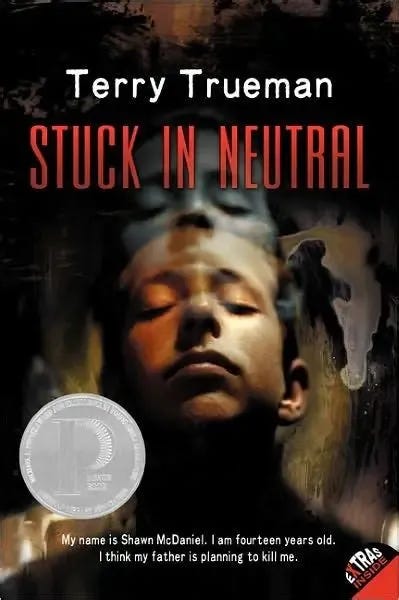
IV. The Importance of Work That Lives On
Stuck in Neutral is doing something most books never do: it continues to live.
It lives in classrooms. It lives in conversations about disability, agency, and interiority. It lives in the minds of readers who encountered Shawn at 12 and remember him at nearly 40. It lives in the ethical imagination of people who needed that story to understand their own.
This kind of endurance is not fame. It’s influence. It’s presence. It’s a form of immortality that doesn’t inflate the ego—it enlarges the world.
And here’s the truth most artists never get to experience: When your work lives on, you don’t need to. The work becomes the continuation of your consciousness.
Not literally. But emotionally, ethically, imaginatively.
Your book keeps thinking. Your book keeps feeling. Your book keeps asking questions you once asked.
That’s the real immortality.
Stuck in Neutral didn’t just have a hot streak. It’s having a season. Maybe even a career.
And that’s why legacy becomes a real consideration—not because you crave it, but because your work has already earned it.
VI. Closing Reflection
Sudden success frees you from the need for immortality. Enduring work gives you a quiet, earned version of it anyway.
You don’t think about fame because you don’t need it. You don’t think about immortality because your work is already alive. You don’t think about legacy because legacy is already happening.
The artist who once dreamed of being remembered becomes the artist who realizes: The work is the memory. The work is the afterlife. The work is the part of you that keeps going.