

The world is finally calling Donald Trump’s bluff, and in that exposure lies a strange, difficult advantage. For more than a decade, Trump’s political power has rested on a myth — the myth of the master dealmaker, the man who could bend adversaries and allies alike through sheer force of personality. As a recent Salon article recounts, that persona was never real; it was crafted by Tony Schwartz, who later admitted he regretted creating a character so divorced from the truth. Schwartz described Trump as a man driven entirely by attention, incapable of sustained thought, and fundamentally dishonest — a hype artist rather than a strategist.
What matters now is not the myth itself but the fact that the world has stopped believing it. During Trump’s first term, foreign governments indulged the performance. They flattered him, staged elaborate ceremonies, and quietly relied on the professional diplomatic corps to maintain stability while waiting for Americans to “revert to being a serious nation.” That patience is gone. U.S. credibility has eroded to the point where allies shrug at threats, adversaries ignore ultimatums, and even outlandish demands — like Trump’s revived insistence on acquiring Greenland — are met with weary sighs rather than alarm.
This collapse of the bluff is humiliating, but it is also clarifying. A superpower that can no longer rely on bluster must confront the reality of its own behavior. The United States has long depended on a mythology of exceptionalism — a story that masks the greed, violence, and cruelty woven into its history. When that mythology falters, when the world stops pretending, Americans lose the luxury of denial. Exposure becomes a kind of civic mirror: unflattering, unavoidable, and necessary.
There is an advantage in that. You cannot repair what you refuse to acknowledge. You cannot build a humane future on top of a lie about the past. The unraveling of Trump’s myth, and the broader unraveling of America’s self‑image, creates the possibility — not the guarantee, but the possibility — of moral adulthood. It forces a reckoning with the costs of unserious politics, the fragility of institutions, and the dangers of nostalgia. It forces Americans to see that democracy is not self‑maintaining, that credibility is not infinite, and that the world will not indefinitely indulge a nation unwilling to govern itself responsibly.
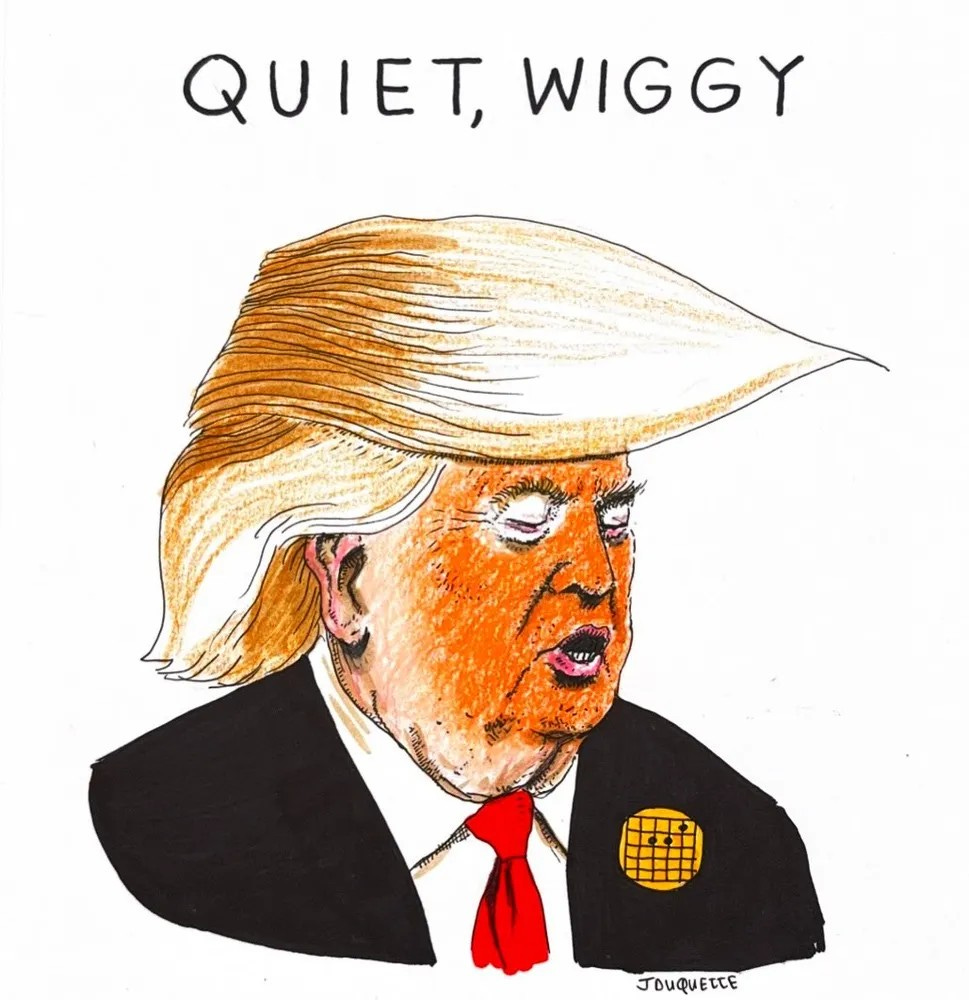
The damage to America’s reputation will not be easily repaired. The rubble will be real. But rubble is also the beginning of reconstruction. When illusions collapse, new narratives can emerge — narratives grounded not in spectacle but in humility, not in dominance but in cooperation, not in myth but in truth.
The advantage, in other words, is clarity. And clarity, however painful, is the first step toward imagining something better.