
Trueman–Triola Newsletter Edition
In recent years, Trueman and Triola have returned again and again to a central question of narrative ethics: What happens when the stories we inherit begin to inhabit us? Nowhere is this more visible—or more troubling—than in the way political and religious falsehoods seep into the body, reshaping how people experience weakness, fatigue, and even illness.
This is not metaphor. It is physiology braided with meaning.
The Stories That Tell Us How to Feel
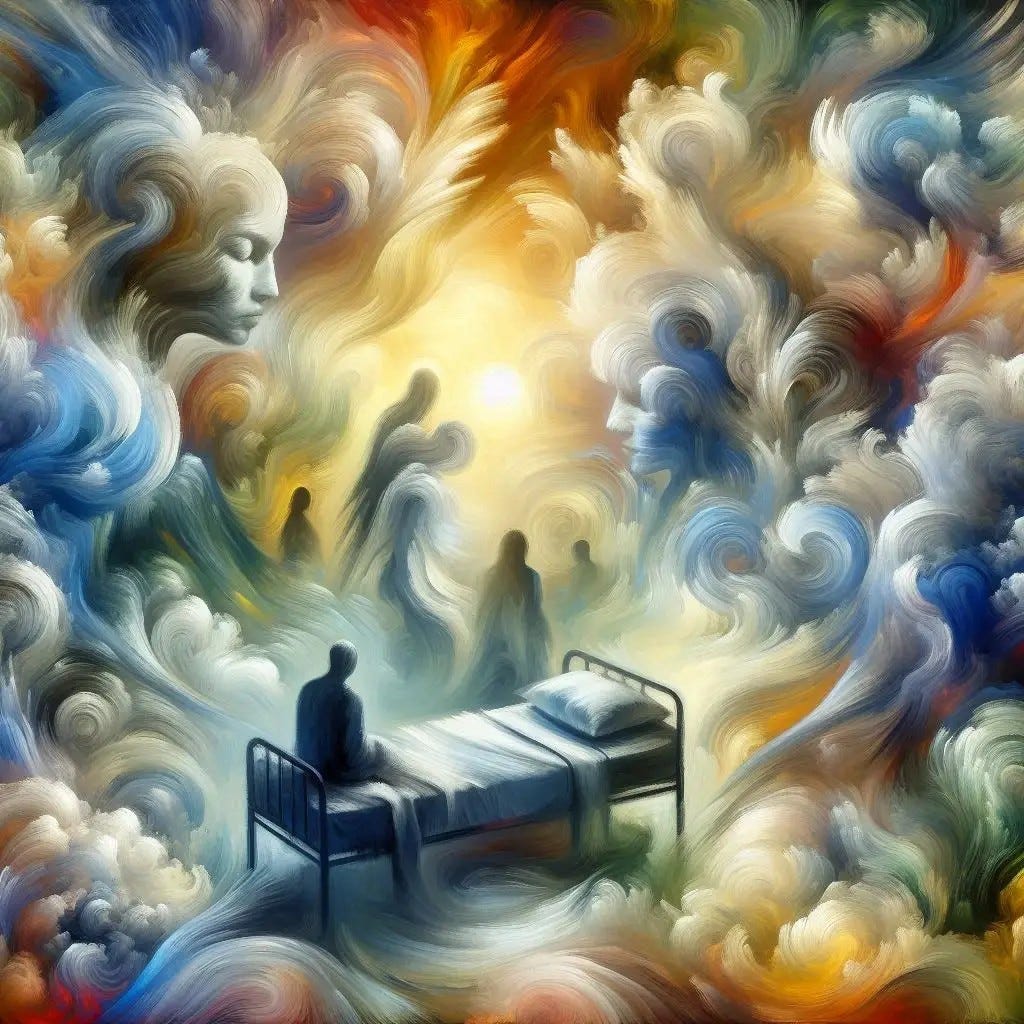
False narratives—especially those charged with fear, purity, persecution, or moral panic—do more than distort our understanding of the world. They alter how we interpret our own sensations. A mild headache becomes a sign of looming catastrophe. A moment of fatigue becomes evidence of spiritual failure or political doom. The body becomes the canvas on which misinformation paints its most intimate effects.
Triola has long argued that narratives of threat create “affective residues”—emotional aftershocks that linger even after the belief itself is corrected. Trueman’s fiction, in its own way, has shown how young people internalize the stories adults hand them, often carrying the weight in their muscles, breath, and posture. Put these insights together and a pattern emerges: the body remembers what the mind tries to forget.
Stress as a Narrative Artifact
Fear-driven stories—whether religious prophecies of punishment or political warnings of societal collapse—activate the stress response. Chronic activation produces real symptoms:
exhaustion
muscle weakness
digestive distress
lowered immunity
The body is not “imagining” anything. It is responding to a perceived threat, even when the threat is manufactured.
When Religion Harms
The Trueman–Triola readership knows well that religion can push religious narratives—those that frame illness as moral failure, impurity, or divine judgment—can deepen suffering. They transform neutral bodily sensations into evidence of sin or spiritual inadequacy.
In these moments, the story becomes heavier than the symptom.
Political Mythmaking and the Illness of Nations
Political movements, especially those built on grievance or decline, often craft narratives of contamination, invasion, or betrayal. These stories do not stay in the realm of rhetoric. They create what sociologists call illness identities: collective feelings of depletion, fragility, or being “under attack.”
A nation convinced it is dying produces citizens who feel unwell.
Why the Body Believes the Lie
Three mechanisms explain why these narratives strike so deeply:
Cognitive strain from holding contradictory or frightening beliefs
Identity fusion, where ideological threat feels like personal threat
Embodied emotion, the simple truth that fear and shame are physical events
The result is a body shaped by stories—sometimes stories that were never true.
The Ethical Task Before Us
For Trueman and Triola, the challenge is not merely to debunk falsehoods but to understand how they colonize the imagination. A harmful narrative does not need to be believed to be felt. It only needs to be repeated.
The work of this newsletter is to craft counter‑stories that restore agency, clarity, and ethical imagination. Stories that return people to themselves rather than pulling them away. Stories that remind readers that their bodies are not battlegrounds for someone else’s myth.