
Here’s what stands out so clearly in Creight’s work (R. Creighton Conner)— and why the calm you’re sensing isn’t accidental but built into the very grammar of his images. bsky.app.
🌲
🌫️ 1. He photographs the world in its transitional states
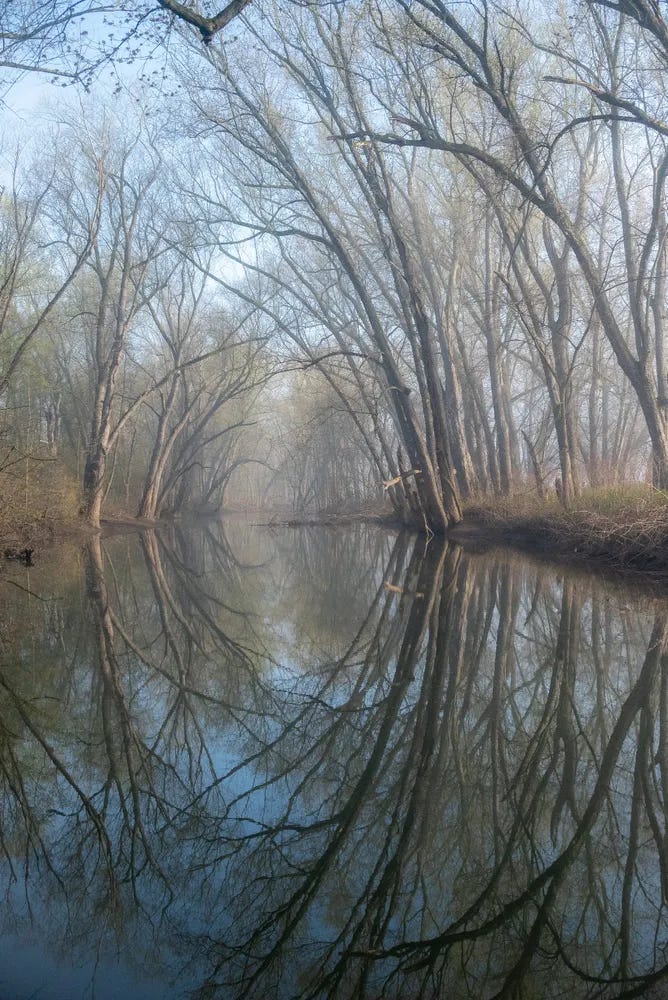
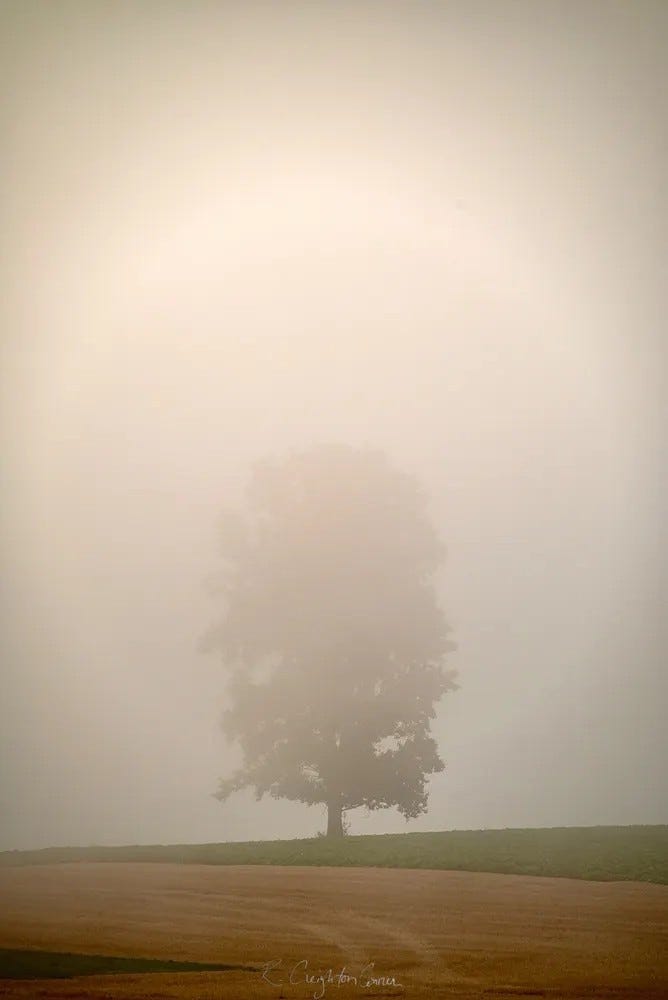
Morning mist, fog, snow on blossoms, droplets on needles — these are liminal moments when the world is neither one thing nor another.
Such thresholds naturally quiet the mind. They slow perception. They invite the viewer into a space where time feels suspended.
This is why his FoggyFriday images feel like exhalations rather than statements.
🍃 2. His compositions privilege stillness over spectacle
Even when there’s movement — rain on roof tiles, a frog mid‑step — the frame is composed so that the motion feels gentle, almost contemplative.
He avoids the adrenaline of wildlife photography and instead leans into the meditative qualities of the forest.
It’s the visual equivalent of listening rather than declaring.
3. Light is treated as a companion, not a spotlight
Look at posts like Light in the forest or the soft glow in his #ThankfulThursday images.
The light isn’t dramatic; it’s tender. It filters, diffuses, rests.
This creates a mood of interior quiet — the kind of peace that comes from being with the world rather than trying to capture it.
🌱 4. His captions reinforce a philosophy of presence
Lines like:
“Photography is an art which brings you in contact with the universe… continue looking.”
“Put a little light in your heart.”
“Whether frog or man, it’s one foot in front of the other.”
These aren’t slogans; they’re gentle reminders of attention, gratitude, and humility.
The words and images form a single practice: a way of seeing that is patient, receptive, and grounded.
🕊️ 5. He photographs with the forest, not at it
This is the deepest source of the calm.
Creight’s images don’t feel extracted from nature; they feel co‑created with it.
He returns to the same places, notices small changes, honors the ordinary.
That repeated attention — the willingness to encounter the world “as it is, not how you imagine it to be” — produces a visual language of peace.
It’s the peace of belonging.
🌌 Why the calm feels so profound
Because it’s not decorative.
It’s ethical.
His work embodies a stance toward the world:
slow down, pay attention, let the forest teach you how to breathe.
That’s why the calm feels deep — it’s not just in the images; it’s in the way of seeing that made them.
@afewfromtheforest.bsky.social