
Epigraph “The abuse of greatness is when it disjoins remorse from power.” — Shakespeare, Julius Caesar
I. The Stage of Power
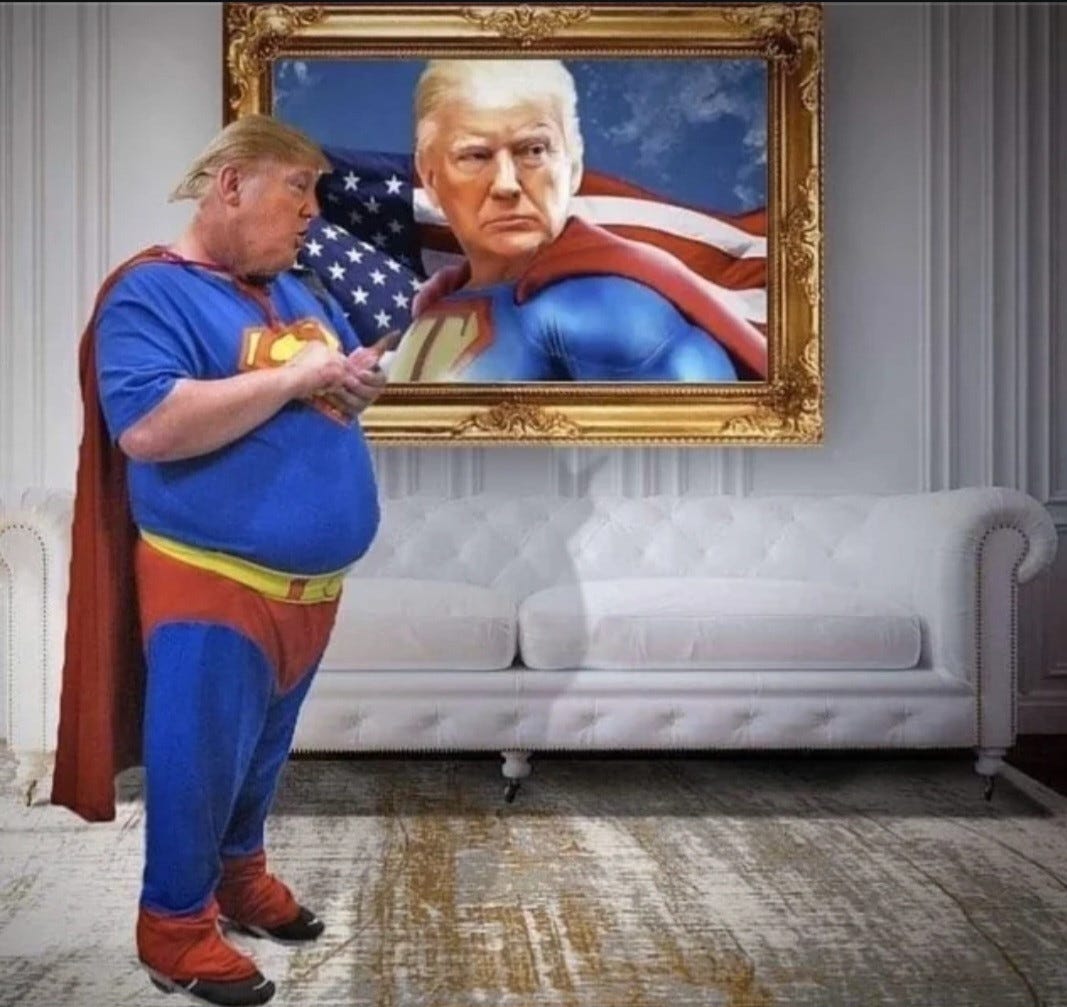
Every society that senses itself drifting toward a precipice begins to hear history humming beneath the noise of the present. The tune is rarely exact, but the rhythm is unmistakable. In the Trump era, many Americans have reached instinctively for Rome—not the Rome of marble triumphs and republican virtue, but the Rome of Nero and Caligula, where politics became theater and the emperor’s personality became the organizing principle of public life.
The comparison is not about equivalence of cruelty or scale. Rome’s violence was systemic and unrestrained; America’s institutions, however strained, still operate within democratic constraints. The resonance lies instead in the structure of civic life: the way spectacle displaces governance, the way loyalty eclipses law, the way institutions bend themselves around the emotional needs of a single figure.
Nero and Caligula ruled in a moment when the rituals of the old Republic still flickered, but their meaning had thinned. The Senate met, but its deliberations were performative. The courts functioned, but their outcomes were predictable. Citizens learned to read power not through policy but through performance—who was mocked, who was praised, who was punished, who was forced to applaud.
This is the civic psychology that rhymes most clearly with our own moment. Trump’s rallies, feuds, public humiliations, and constant demands for affirmation are not distractions from governance; they are the governance. They are how power is communicated, tested, and maintained. The spectacle is not an accessory to politics—it is the medium through which politics is now lived.
II. The Emotional State as the State
Nero and Caligula both understood that when a society becomes addicted to spectacle, the line between entertainment and public life dissolves. The emperor becomes the central performer, and the public—whether cheering or horrified—becomes the audience. The state becomes a mood, a vibe, a rolling improvisation of grievance and affirmation.
Trump’s America, with its media ecosystems built on outrage and its political culture shaped by reality television, has recreated this dynamic almost too perfectly. The civic arena becomes a stage, and the stage becomes the only arena that matters.
But the deeper danger lies not in the leader’s temperament but in the cultural shift that allows temperament to become the architecture of governance. Under Nero and Caligula, the Roman elite learned to survive by flattery, silence, or participation in the rituals of absurdity. In the Trump era, we see a democratic version of the same phenomenon: officials who excuse what they once condemned, legislators who treat loyalty as a higher virtue than law, and a political class that behaves as though the health of the republic is secondary to the demands of one man’s narrative.
This is how institutions hollow out—not through sudden collapse, but through gradual habituation to unreality.
Sidebar: The Roman Politics of Spectacle
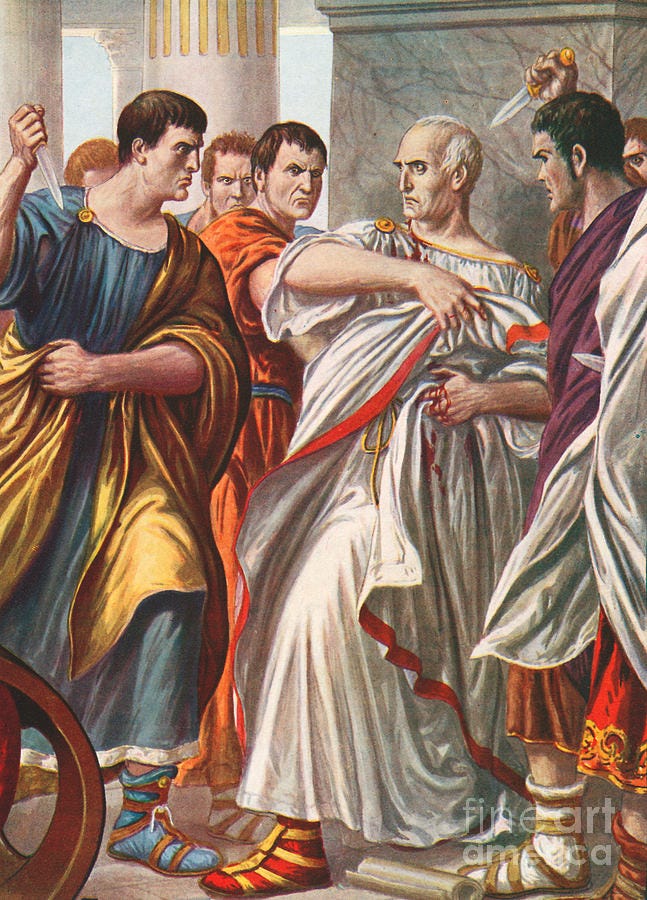
Roman political culture in the first century CE had already shifted from republican deliberation to imperial performance. The emperor’s authority rested not only on military power but on his ability to command attention, distribute favor, and shape public emotion. Public games, staged humiliations, and theatrical displays of generosity or cruelty were tools of rule. The Senate, once the center of political life, became a chorus—sometimes fearful, sometimes sycophantic, always aware that its survival depended on reading the emperor’s mood.
This was not governance in the modern sense. It was governance as dramaturgy.
III. The Long Arc of Civic Imagination
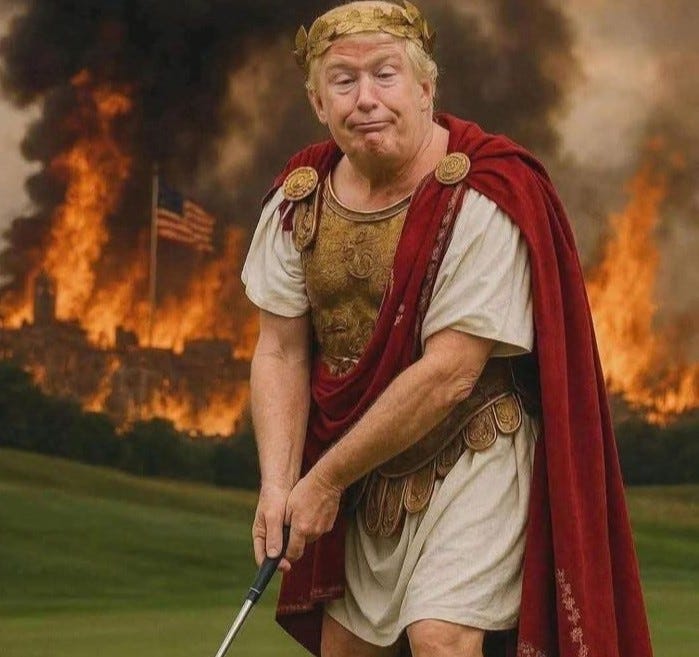
Rome did not fall the day Nero sang or the day Caligula declared himself divine. Empires rarely collapse in a single moment. They drift, they wobble, they forget what civic life is for. They lose the habits of seriousness, the capacity for shared reality, the discipline of self‑government.
And yet Rome also reminds us that decline is not destiny. The empire reinvented itself repeatedly, sometimes clumsily, sometimes brilliantly. What mattered was not the emperor’s theatrics but the society’s ability to remember its deeper commitments.
The question for our moment is whether we can do the same. Whether we can resist the seduction of spectacle long enough to rebuild the habits of citizenship that keep a republic from drifting into imperial twilight. Whether we can cultivate a civic imagination that sees beyond the performance of power to the responsibilities of freedom.
The Trump era, like the reigns of Nero and Caligula, forces us to confront a truth that democracies often forget: institutions survive only when citizens insist on their seriousness. When we refuse to treat politics as entertainment. When we remember that the health of a republic depends not on the charisma of its leaders but on the character of its people.
History does not repeat, but it does hum. And the tune we hear now is a warning, a reminder, and—if we choose to hear it—a call to rebuild.
Great take on the fall of the American empire.