
Trueman–Triola Newsletter

There are moments in late life when the future loosens its grip. Not because one has achieved serenity, or because the culture has suddenly become wiser about mortality, but because the mind itself begins to reorganize its priorities. Neuroscientists now describe this as a shift in temporal orientation: the brain, sensing finitude, draws us toward the immediacy of experience. The horizon narrows, but the present deepens.
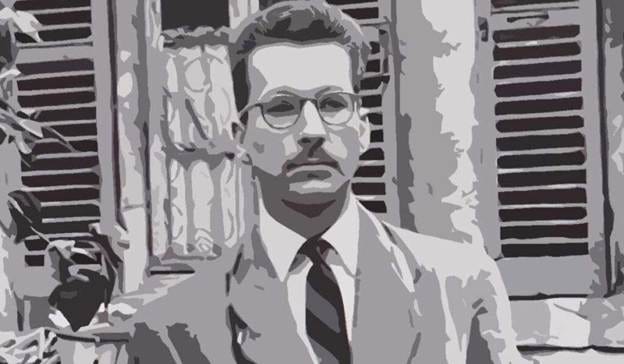
It is a quiet counterpoint to Ernest Becker’s The Denial of Death, published in 1974, which argued that human beings spend their lives constructing elaborate symbolic defenses against the terror of nonexistence. Becker saw culture—its hero systems, its moral codes, its national myths—as a vast architecture built to keep death at bay. He wasn’t wrong. But half a century later, the psychology of dying has grown more subtle, more empirical, and in some ways more hopeful.
What has changed is not the fact of death anxiety but our understanding of how people actually live with it.
I. The Culture of Denial, Updated
Becker’s central claim—that modern societies repress death through distraction, achievement, and heroic self‑inflation—has only intensified. The contemporary West, with its cult of youthfulness and its faith in technological control, has perfected the art of pretending the body is optional. Aging is treated as a failure of maintenance; dying, as a medical error.
Yet psychologists now note something Becker could only intuit: denial is not a static defense but a dynamic cultural practice, reinforced by institutions, markets, and the aesthetics of digital life. The more we extend life, the more intolerable death becomes. The more we curate our identities, the more fragile they feel.
This is not cowardice. It is the predictable consequence of a culture that treats vulnerability as a design flaw. https://trueman-triola.stories.email/p/when-suffering-gets-treated-like
II. The Turn Toward Presence
And yet, in the midst of this cultural machinery, something else is happening—something Becker did not fully anticipate.
As people age, their psychological time horizon naturally contracts. This is not resignation but reorientation. Research on aging and temporal perception shows that older adults often experience a heightened sense of the present: a shift from accumulation to attention, from striving to savoring. The future no longer demands constant rehearsal. The past softens. What remains is the felt texture of now.
This “eternal present” is not mystical. It is neurological. The brain recalibrates its priorities, favoring emotional meaning over abstract ambition. The result is a kind of existential clarity: not denial, but a gentler form of acceptance.
In this sense, aging itself becomes a quiet teacher—one that loosens the grip of Becker’s heroic compulsions.
III. The New Psychology of Dying
Since 1974, the field has moved from grand theory to lived experience. Hospice and palliative care have reframed dying as a relational, psychological, and ethical process rather than a purely medical one. Grief research has shifted from stages to meaning‑making, from detachment to continuing bonds. Cultural psychology has shown that death anxiety is not universal but shaped by community, ritual, and story.
Most strikingly, studies of consciousness near the end of life reveal that many people experience a softening of the self—a loosening of the boundaries that once felt so essential. Time becomes nonlinear. Identity becomes porous. The fear of annihilation gives way, in some cases, to a sense of coherence that is not dependent on permanence.
This is not denial. It is transformation.
IV. What Becker Missed
Becker believed that humans could never face death directly, that we required symbolic immortality to function. But contemporary psychology suggests a more nuanced truth: people can face death when they are supported, accompanied, and allowed to inhabit the present without pressure to perform courage.
The antidote to denial is not heroism. It is attention.
Not the attention of surveillance or self‑optimization, but the kind that artists, caregivers, and the dying themselves often model: a patient, unhurried presence that refuses to turn away.
This is where aging, neuroscience, and cultural critique converge. The mind, when freed from the tyranny of future‑self construction, becomes capable of a different kind of life—one that is not defined by the fear of its ending.
V. A Civic Imagination for Mortality
If Becker diagnosed the problem, our era must imagine the remedy. A culture that cannot face death cannot face injustice, climate collapse, or the fragility of democratic life. Denial breeds cruelty; presence breeds responsibility.
To cultivate a civic imagination adequate to our moment, we must learn from the psychology of dying:
that vulnerability is not a defect but a shared condition
that meaning is constructed, not inherited
that the present is not an escape from the future but its ethical foundation
In this sense, the eternal present is not merely a neurological shift in late life. It is a political and moral possibility: a way of living that resists the frantic, denial‑driven culture that Becker warned us about.
Closing Note
The work of aging—psychological, ethical, civic—is not to defeat death but to unlearn the habits of denial that keep us from living fully. Neuroscience now confirms what poets and the dying have long known: that presence is not a consolation prize but a form of wisdom.
If Becker gave us the architecture of fear, the last fifty years have given us the beginnings of a practice—one that invites us, gently, into the depth of the moment we are already in.
— Trueman & Triola
SIDEBAR A: The Neuroscience of Temporal Narrowing
What the aging brain knows that the culture forgets
Neuroscientists studying late‑life cognition have observed a striking pattern: as people age, the brain gradually shifts its emphasis from future‑oriented planning to present‑oriented meaning. This is not cognitive decline; it is cognitive reprioritization.
Three mechanisms stand out:
Socioemotional Selectivity
The brain becomes more selective about where it invests attention. Emotional richness takes precedence over novelty. The present becomes the most valuable temporal real estate.Reduced Future Discounting
Younger adults often sacrifice the present for a hypothetical future self. Older adults, sensing finitude, reverse the equation. The result is a more grounded, less anxious orientation toward time.Integration Over Accumulation
Memory systems shift from acquisition to synthesis. The goal is no longer to gather experiences but to understand them.
Taken together, these changes create what psychologists call temporal narrowing—a gentle, neurological drift toward the now. It is not escapism. It is a form of wisdom the culture rarely honors: the recognition that presence is not a consolation but a culmination.
SIDEBAR B: Digital Culture and the New Hero Systems
How the internet perfected Becker’s architecture of denial
If Becker argued that culture builds “hero systems” to protect us from the terror of death, then digital culture has built the most efficient hero factory in human history.
Three features define the new terrain:
Perpetual Performance
Social platforms reward visibility, not interiority. The self becomes a project of continuous display—an endless audition for symbolic immortality.Metrics as Meaning
Likes, shares, and followers function as micro‑credentials of significance. They offer the illusion of permanence in a medium defined by ephemerality.Algorithmic Immortality
The digital trace—the archive of posts, photos, and interactions—promises a kind of afterlife. But it is a brittle one: searchable, surveilled, and stripped of context.
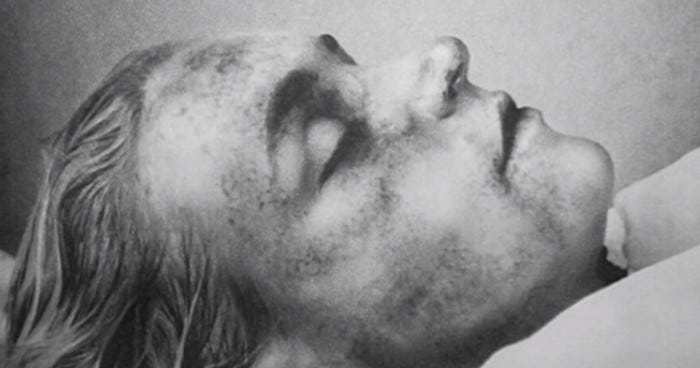
Think Marilyn Monroe, dead—in image, memory, and most of all, in reality and truth.
In this environment, denial becomes ambient. The culture whispers that if we can stay visible, we can stay alive. But the cost is steep: attention fractures, presence thins, and the quiet work of aging—reflection, integration, relinquishment—becomes harder to access.
“CANDLE IN THE WIND, my ass.”
Digital hero systems do not eliminate death anxiety. They monetize it.