

Trueman–Triola Newsletter
Late March Edition
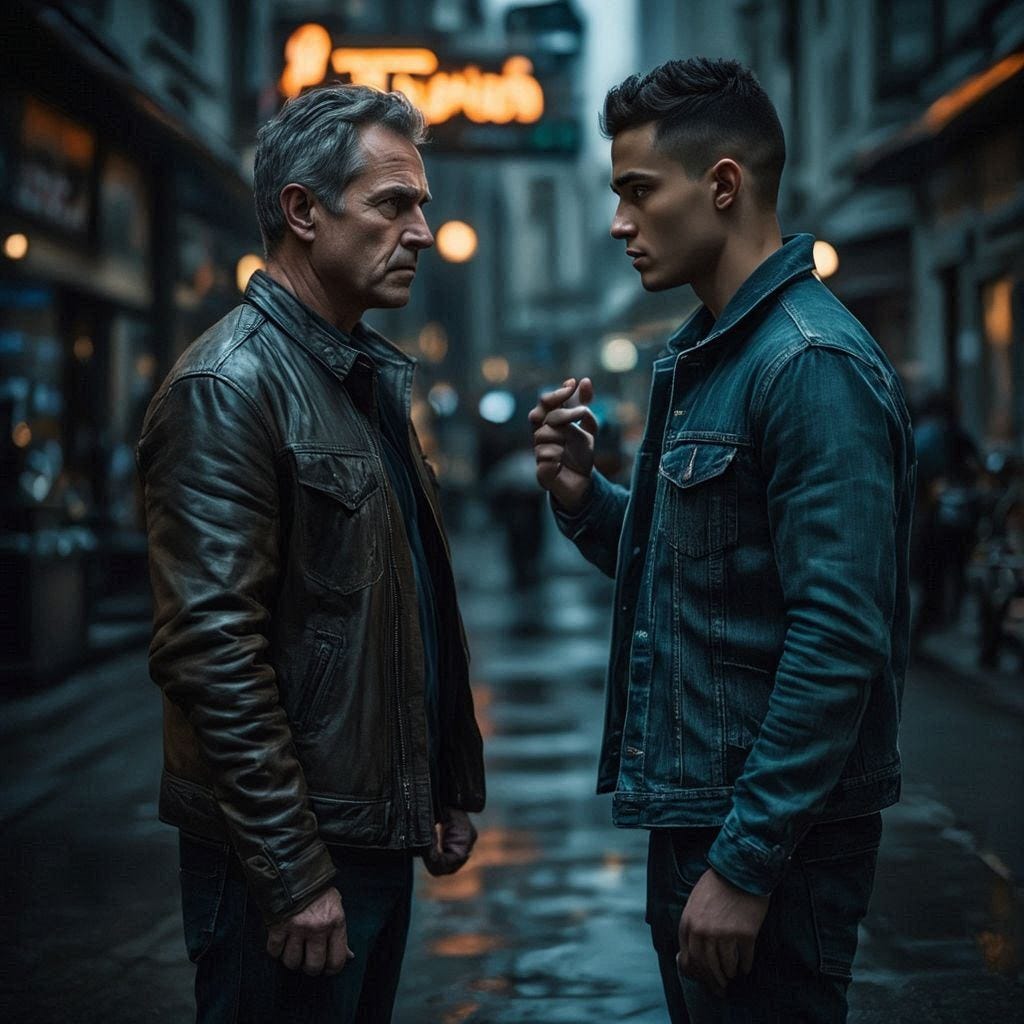
There are questions that return to a writer the way certain winds return to a valley—seasonally, insistently, reshaping the landscape each time. One of ours arrived again this week: What do Terry Trueman’s novels suggest about the nature of his relationship with his own father?
It is a tempting question, and a dangerous one. Fiction is not confession, and the novelist’s private life is not a codebook for the work. Yet patterns emerge, and patterns—handled with care—can illuminate the emotional weather in which a writer learned to see. The fathers who populate Trueman’s novels are not merely characters. They are atmospheres.
I. The Opaque Father
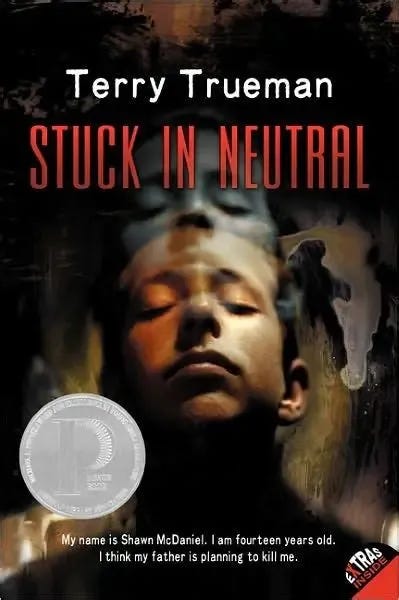
Across Stuck in Neutral, Cruise Control, and Inside Out, the father is a figure of moral gravity—present, powerful, and somehow unreachable. He is a man who loves fiercely but speaks sparingly, a man whose emotional vocabulary has been shaped by duty more than by disclosure.
Triola once described these men as “architects of silence,” and the phrase has stayed with us. They build homes, but not always bridges.
The sons in these novels do not doubt their fathers’ intentions. What they doubt is access.
II. Awe, Fear, and the Longing to Be Seen
Trueman’s boys—Shawn, Paul, the unnamed narrators who hover at the edge of crisis—observe their fathers with a mixture of admiration and apprehension. They want to be worthy of them. They fear disappointing them. They study them the way one studies weather patterns: for signs, for shifts, for the possibility of a storm.
This is not the psychology of rebellion. It is the psychology of reverence.
The father is not an antagonist. He is a standard.
III. The Weight of Expectation
In these novels, paternal authority is not oppressive; it is heavy. The sons carry it the way one carries a family heirloom—carefully, anxiously, aware that dropping it would feel like a moral failure.
The fathers, for their part, do not intend to burden. They intend to protect. But protection, in Trueman’s fictional universe, often comes wrapped in silence, and silence is a weight all its own.
IV. The Cracks in the Armor
The emotional hinge of many Trueman novels is the moment when the son glimpses the father’s vulnerability. It is rarely dramatic. More often it is a small fracture: a sigh, a hesitation, a confession of uncertainty.
These moments are revelations. They reframe the father not as a monument but as a man—frightened, fallible, and trying his best within the limits of his own emotional training.
Trueman’s fiction suggests that the son’s maturation begins not when he surpasses the father, but when he finally sees him clearly.
V. What the Pattern Suggests
If we read these novels as emotional documents rather than biographical ones, they gesture toward a relationship shaped by:
admiration
distance
a longing for recognition
respect for moral seriousness
a late-arriving tenderness
The fathers are not villains. They are men who love imperfectly but earnestly, men who express devotion through responsibility rather than intimacy. Their sons, in turn, learn to translate that devotion—to read the quiet, to interpret the unsaid.
This is the emotional architecture of a household where love is present but not always accessible, where strength is admired and feared in equal measure, and where understanding arrives slowly, like dawn through a narrow window.
VI. The Newsletter’s Quiet Conclusion
Trueman and Triola have never believed that fiction reveals the facts of a writer’s life. But it does reveal the shape of a writer’s longing. And in Trueman’s case, the shape is unmistakable: a son circling the gravity of a father he respects, fears, and ultimately forgives.
The novels do not answer the question of who the father was. They answer the question of what the father meant.
And sometimes, in literature as in life, that is the deeper truth.