Epigraph “The wound is the place where the light enters you.” — Rumi
There is a quiet symmetry between Buddhism’s First Noble Truth and Erik Erikson’s final psychosocial stage, though they arise from different intellectual climates and historical moments. One is a monastic insight from ancient India; the other a developmental theory from mid‑century psychology. Yet both, in their own ways, describe the same human predicament: how to live meaningfully in a world where suffering is not an aberration but a condition.
Buddhism begins with dukkha, the recognition that life is marked by a fundamental unsatisfactoriness. Not merely pain, though pain is included. Dukkha is the friction between desire and impermanence, the way even joy carries the seed of loss, the way every attachment trembles with the possibility of change. This truth is not pessimistic; it is diagnostic. It names the human condition with clarity so that liberation becomes possible.
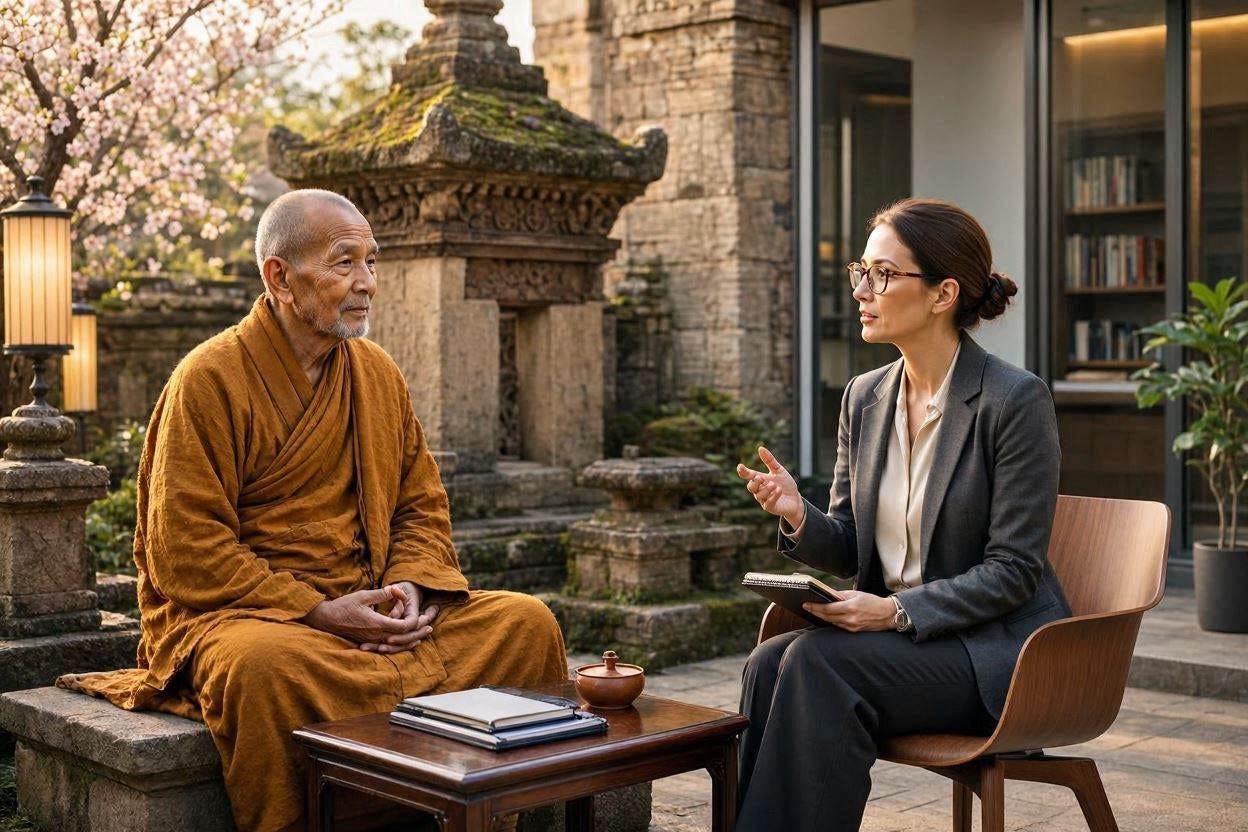
What Buddhism names as its First Noble Truth and what Erik Erikson describes in his final psychosocial stage often appear, at first glance, to belong to different intellectual worlds. Yet when you sit with them long enough, they begin to speak to one another like two elders on a porch at dusk, each describing the same horizon in a different vocabulary.
Meditation: Why Naming Suffering Liberates

Most of us do not suffer only from pain itself. We suffer from the stories we tell about pain — that it shouldn’t be here, that it means we failed, that it means life has betrayed us, that it marks us as uniquely unlucky or uniquely flawed. These stories are heavy. They distort our perception and narrow our imagination. They keep us fighting battles that cannot be won: the battle to make life permanent, predictable, controllable.
The First Noble Truth cuts through this fog. It says: This is the structure of existence. Not because life is bleak, but because life is impermanent, relational, and vulnerable. When suffering is named as universal, it stops being a private indictment. It becomes a shared condition. And in that shift — from shame to recognition — the mind relaxes. It stops resisting what is already true.
Clarity is liberating because illusion is exhausting.
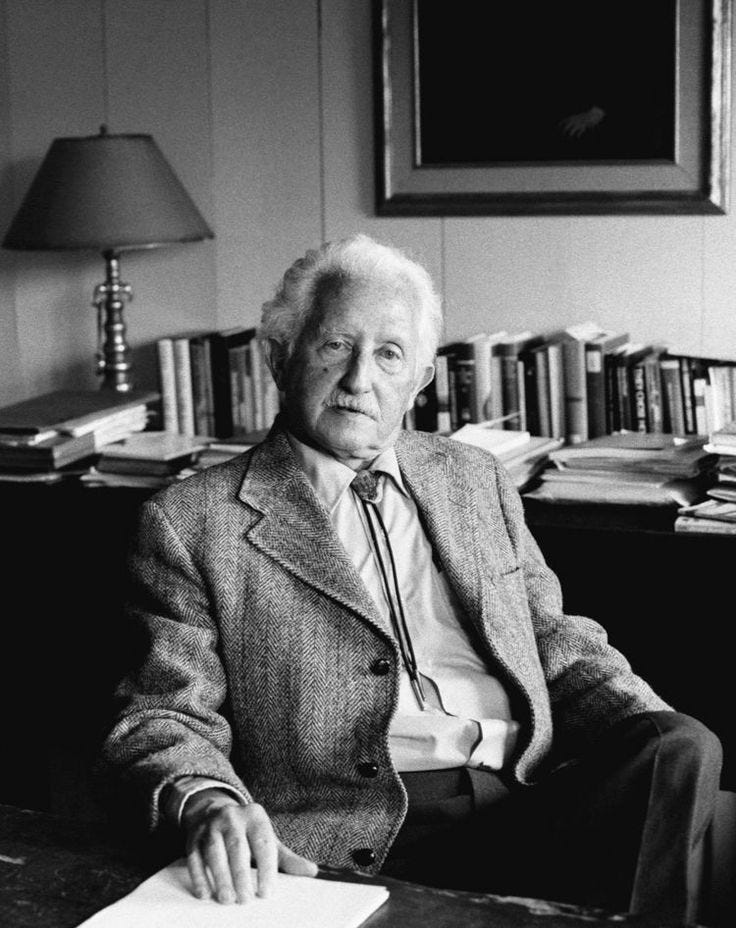
Erikson’s ego integrity is built on the same insight. Late in life, the person who achieves integrity does so by naming their own story truthfully. Not the curated version, not the defensive version, not the version edited to protect pride. Integrity is the willingness to see one’s life without distortion — the triumphs, the failures, the betrayals, the loves that changed shape, the dreams that never materialized. When the story is seen clearly, despair loosens its grip. Wisdom becomes possible.
Detached concern — Erikson’s elegant phrase — is simply what clarity feels like when it ripens. It is the ability to care without clinging, to act without illusion, to love without demanding permanence. It is the psychological echo of Buddhist non‑attachment.
Detached Concern and Non‑Attachment
Erikson’s phrase detached concern describes the paradoxical stance of late-life wisdom: caring deeply for the world while simultaneously loosening one’s grip on it. Detached concern is not withdrawal. It is not apathy. It is the ability to love without grasping, to act without the fantasy of control, to remain present without demanding permanence.
This is, of course, profoundly Buddhist.
The Buddhist practitioner cultivates non‑attachment not as a rejection of life but as a way of inhabiting it more fully. To love without clinging. To act without illusion. To accept impermanence not as a threat but as the condition that makes beauty possible.
Detached concern is the psychological analogue of this spiritual posture. It is what happens when a lifetime of experience ripens into perspective.
Where They Diverge
The differences matter. Buddhism is ultimately oriented toward liberation from the cycle of suffering altogether; Erikson is oriented toward the healthy completion of a single human lifespan. Buddhism offers a cosmology; Erikson offers a developmental sequence. Buddhism asks us to see suffering as universal; Erikson asks us to integrate suffering as personal.
But both traditions understand that suffering is not an obstacle to meaning — it is the medium through which meaning is formed.
Closing Reflection
Both frameworks ultimately prepare the mind for death. Not as catastrophe, not as failure, but as culmination. The Buddhist practitioner releases attachment; the Eriksonian elder releases the need for life to have been otherwise. Both arrive at a kind of spaciousness — a gentle, non‑defensive acceptance of fragility.
Wisdom, in both traditions, is not the elimination of suffering but the transformation of our relationship to it. It is the ability to hold life lightly and lovingly, to see its impermanence clearly without collapsing into despair. It is the recognition that a full life is not one in which suffering is avoided, but one in which suffering is understood, integrated, and finally released.