
Racism and the Unfinished Work of American Conscience
Trueman–Triola Newsletter Edition
Epigraph
“The opposite of injustice is not innocence. It is repair.”
— Anonymous, Reconstruction-era sermon fragment
Author’s Note
I post this not as an abstract observer but as someone shaped by the contradictions of this country. I was born in the Jim Crow South, raised by a Southern father whose world was structured by the racial hierarchies of his time. And I am the father of a mixed‑race son whose very existence exposes the absurdity and cruelty of those hierarchies. My life spans the arc from segregation’s evil acceptance to the fragile, unfinished work of a more just future.
I. The Wound We Still Refuse to Name
Racism in America is often described as a political problem, a cultural divide, or a historical inheritance. But before it is any of those things, it is a moral wrong—a violation of the basic obligations human beings owe one another. It is a wound that has never fully healed, in part because the country has never fully acknowledged its depth.
What makes racism so corrosive is not only the cruelty of those who act with explicit malice, but also the quieter, more pervasive harm done by those who simply do not see. Ignorance, when it protects the privileged and endangers the vulnerable, becomes its own form of violence. The moral stakes do not diminish just because the harm is unintended.
At its core, racism is the belief—sometimes whispered, sometimes encoded in policy—that some lives are more valuable than others. Everything else flows from that poisoned assumption.
II. The Unfairness That Structures a Nation
Racism is unfair in the most literal sense: it distributes opportunity, safety, and dignity according to an irrelevant trait. It determines who is presumed innocent and who is presumed dangerous. It shapes which neighborhoods receive investment and which are left to decay. It influences whose children attend well‑funded schools and whose do not.
These are not abstractions. They are the daily mechanics of American life.
And because these inequities accumulate over generations, racism becomes a kind of moral gravity—pulling some people down no matter how hard they climb, lifting others without their even noticing the lift.
To call this unfair is almost too mild. It is a betrayal of the nation’s professed ideals.
III. The Moral Cost of Selective Empathy
Perhaps the deepest harm of racism is the way it distorts empathy. It teaches a society to grieve selectively, to extend compassion unevenly, to see suffering through a racial lens. Some tragedies become national mourning; others barely register.
A society that cannot extend empathy across racial lines cannot claim to be just. It cannot claim to be whole. It cannot claim to be free.
Even those who do not consciously harbor racist beliefs may still participate in this selective empathy through inattention, avoidance, or the comfort of not knowing. Ignorance becomes a shield that protects the privileged from confronting the suffering of others—and that protection is itself a form of harm.
IV. Why Intent Doesn’t Erase the Injury
One of the most persistent myths in American life is that racism is only a matter of intention. If someone “didn’t mean it,” the thinking goes, then the harm is somehow less real.
But moral philosophy, developmental psychology, and lived experience all tell us otherwise: harm does not require hatred.
A system built on unequal treatment continues to injure people whether or not any individual actor consciously wills that injury.
Ignorance may soften the ego of the perpetrator, but it does nothing to soften the blow to the person harmed.
V. The Unfinished Moral Work
Racism is not simply one problem among many. It is the underlying logic that organizes inequality across American life. It shapes who gets opportunity, who is protected, who is believed, who is punished, and who is allowed to thrive.
To confront racism is not merely to address a social issue. It is to engage in the moral repair of a nation that has long avoided looking directly at its own reflection.
The work is uncomfortable because it must be.
The work is necessary because the alternative is moral decay.
The work is urgent because the harm continues every day we delay.
America cannot become what it claims to be until it confronts what it has allowed itself to become.
🧩 Why racial prejudice is foundational—not peripheral—to what’s broken
1. Racial discrimination still systematically restricts access to opportunity
Research from the White House Council of Economic Advisers shows that racial bias continues to affect housing, employment, and access to capital, even when applicants are identical except for race. This includes identical résumés receiving different responses depending on the applicant’s name, and unequal access to mortgage or business loans despite equivalent qualifications. These barriers reduce the well‑being of those targeted and diminish economic activity for the entire country. bidenwhitehouse.archives.gov
When the basic building blocks of economic mobility—where you live, where you work, and whether you can build wealth—are shaped by prejudice, the consequences ripple outward into nearly every social problem.
2. Racial inequality in labor markets is not an artifact of skill or education
Studies of labor markets show persistent wage and unemployment gaps between Black and White workers even when education levels are the same. In fact, a White worker with only a high‑school degree has an unemployment rate similar to a Black worker with a college degree. These gaps have not closed over time; in some cases, they have widened. books.core-econ.org
This means racial prejudice isn’t just a moral failing—it’s an economic inefficiency that wastes talent, suppresses productivity, and entrenches poverty.
3. Public perception itself reveals the depth of the problem
Pew Research Center data shows that large majorities of Americans acknowledge discrimination against Black, Hispanic, and Asian people, though the degree of recognition varies sharply by race and political affiliation. Black Americans overwhelmingly report experiencing “a lot” of discrimination, while White Americans are far less likely to perceive it. Pew Research Center
This divergence in perception is itself a symptom of racial prejudice: those who benefit from the system often do not see the barriers it creates.
🔗 How prejudice becomes the root of broader national dysfunction
A. It distorts democratic participation
When communities face unequal access to education, wealth, and safety, their political power is weakened. Prejudice undermines equal representation and erodes trust in institutions.
B. It fuels social fragmentation
Racial bias creates parallel Americas—different schools, neighborhoods, health outcomes, and life expectancies. A society fractured along racial lines struggles to build consensus or shared purpose.
C. It weakens economic growth
Discrimination reduces national productivity by preventing qualified people from contributing fully. Economists estimate that closing racial gaps in wages, education, and investment would add trillions to the U.S. economy.
D. It perpetuates cycles of poverty and criminalization
When prejudice shapes policing, sentencing, and incarceration, it reinforces economic inequality and destabilizes families and communities.
🧠 The core argument, distilled
Racial prejudice is not one problem among many—it is the structural logic that organizes inequality across American life.
It shapes who gets opportunity, who is protected, who is believed, who is punished, and who is allowed to thrive. Because these dynamics touch every major institution—schools, courts, labor markets, housing, healthcare—racial prejudice becomes a root cause of broader national dysfunction.
Sidebar: The Psychology of Unintentional Harm
Psychologists have long understood that people can cause harm without intending to. In fact, unintentional harm is often more persistent because it is harder to recognize and therefore harder to correct.
Three dynamics are especially relevant:
1. Moral Blind Spots
People tend to overlook injustices that do not affect them directly. This is not malice; it is a failure of attention. But the consequences are real.
2. The Comfort of Innocence
Many prefer to believe they are “not racist,” which becomes a shield against examining the ways they may still participate in or benefit from racial inequality.
3. The Myth of Neutrality
Institutions often claim neutrality while perpetuating disparities. When systems are unequal, neutrality is not fairness—it is complicity.
Understanding these dynamics is not about assigning blame. It is about recognizing the psychological mechanisms that allow injustice to persist even among people who consider themselves good.
Closing Reflection
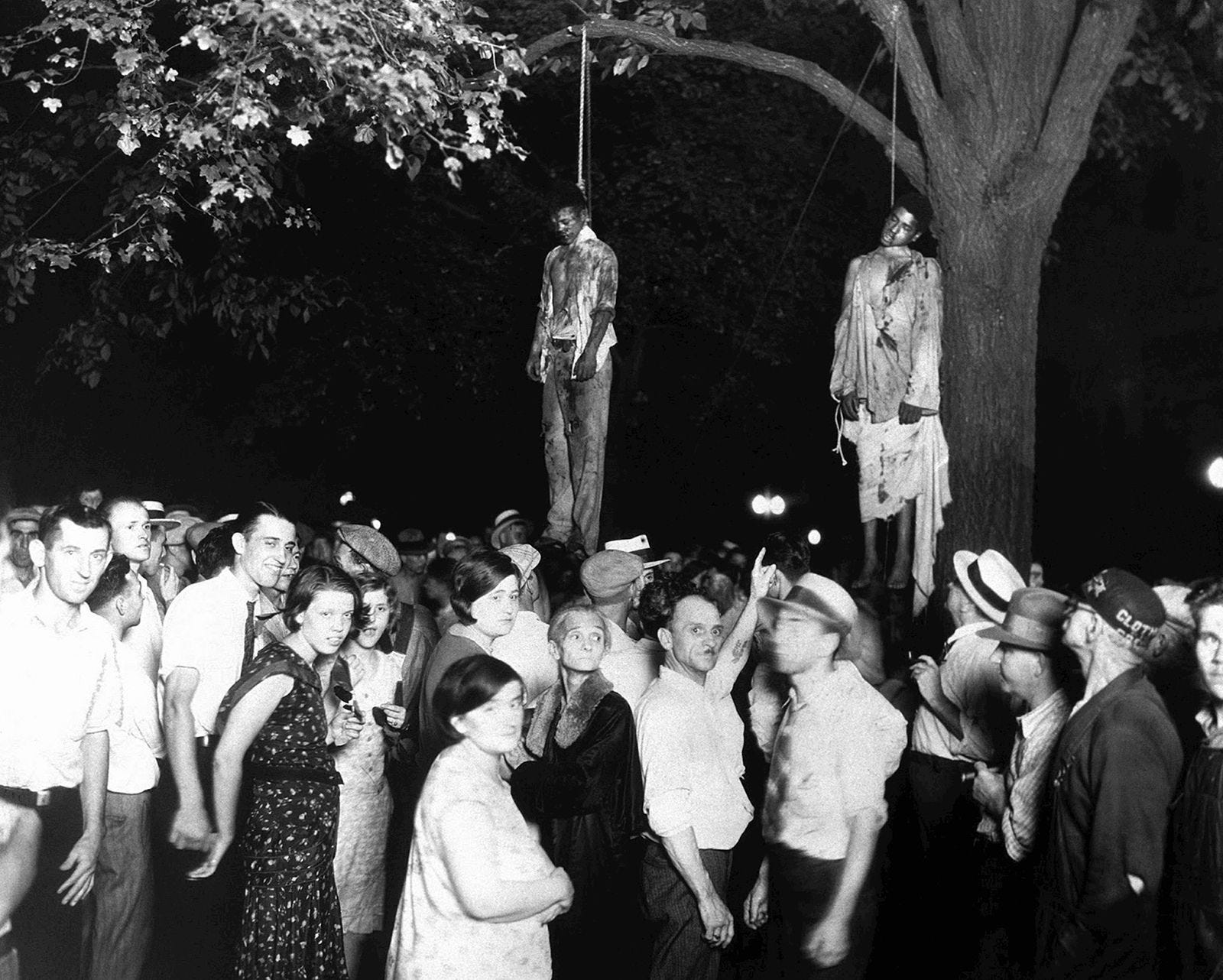
Racism is not a historical artifact or a partisan talking point. It is a moral wound that continues to shape American life. The question is not whether individuals feel personally guilty. The question is whether we, collectively, are willing to do the work of repair.
Repair begins with attention.
It deepens through empathy.
It becomes real through action.
And it remains unfinished until every life is treated as equally grievable, equally valuable, and equally worthy of the full promise of American democracy.