
For the Trueman–Triola Newsletter
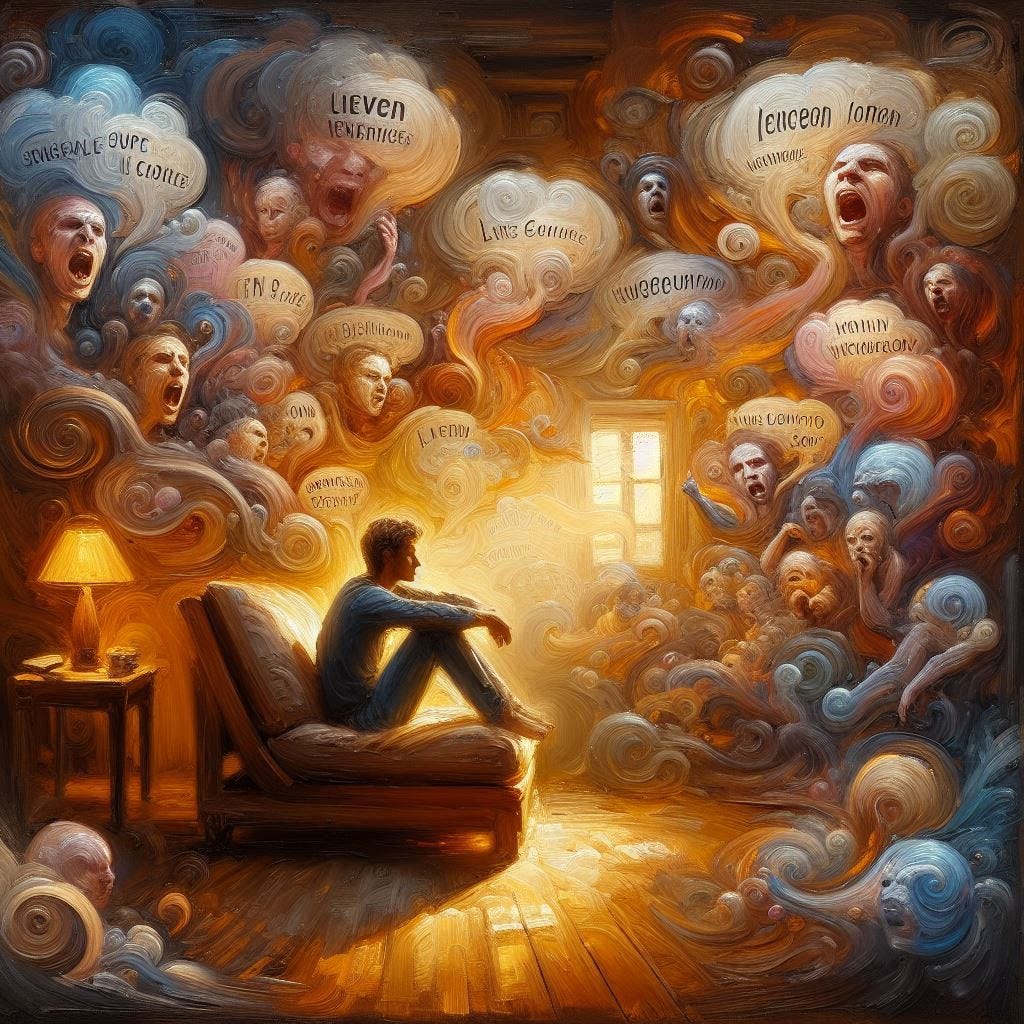
There is a quiet irony in the modern information age: never has so much knowledge been available to so many, and yet never has the path to genuine understanding felt so perilously thin. One sees it most clearly in the way people increasingly rely on the loudest voices—the polemicists at the far edges of the political spectrum—believing that intensity is a substitute for insight. It is a habit that promises clarity but delivers only distortion.
In the shared intellectual terrain that Trueman and Triola have spent years mapping—one through the intimate interiority of fiction, the other through the analytic precision of social critique—there is a recurring theme: the world is rarely as simple as the extremes insist. Human beings, institutions, and histories resist the neat binaries that outrage merchants depend upon. And yet, the extremes thrive precisely because they offer what complexity cannot: certainty, moral purity, and the seductive feeling of being on the right side of a cosmic struggle.
The mechanism is almost literary in its construction. Extreme-left and extreme-right sources curate reality the way a propagandist edits a novel—removing chapters, exaggerating villains, and flattening every character into a symbol. What remains is not a portrait of the world but a caricature of it. The reader, believing they are becoming informed, is instead being ushered into a narrow corridor where only the most sensational fragments of truth survive.
Triola has often written about how systems—economic, political, cultural—become dangerous when they collapse nuance into absolutes. Trueman’s fiction, in its own way, shows the human cost of such collapse: young people navigating worlds that refuse to see them in their full complexity. The extremes operate with the same blindness. They do not illuminate; they inflame. They do not broaden perspective; they constrict it. They do not cultivate citizenship; they cultivate allegiance.
And beneath it all lies a quieter, more troubling transformation. When a person consumes only the most radical interpretations of events, they begin to mistake emotional intensity for intellectual depth. Outrage becomes a form of identity. Fear becomes a kind of loyalty. The self contracts around a single narrative, and the capacity for empathy, curiosity, or doubt begins to erode.
To be informed—truly informed—is something altogether different. It requires the patience to sit with complexity, the humility to accept uncertainty, and the courage to listen beyond one’s tribe. It demands an imagination wide enough to hold competing truths without collapsing into cynicism or fanaticism. It is, in the end, an ethical practice as much as an intellectual one.
This newsletter has long argued that flourishing—personal, civic, democratic—depends on resisting the seductions of simplicity. The extremes will always offer a faster route to certainty. But the middle spaces, the ones where Triola’s analyses and Trueman’s narratives so often linger, are where understanding actually lives. They are harder to inhabit, less dramatic, less gratifying to the ego. But they are the only places where a citizen can see the world as it is, rather than as the loudest voices insist it must be.
In an age of noise, choosing nuance is an act of quiet rebellion.