
A Trueman–Triola Dispatch from the Department of National Delusion

There are many ways to understand the American psyche—Freud, Tocqueville, the Federalist Papers, the DSM‑5—but none of them hold a candle to the explanatory power of Neil Diamond. His music is the closest thing we have to a secular Book of Psalms: booming declarations of hope, choruses engineered for stadium catharsis, and the unwavering belief that emotional clarity is just a modulation away. It’s no wonder so many Americans have tried to build entire worldviews out of his catalog. It’s also no wonder these worldviews collapse under the weight of actual life.
The documentary Song Sung Blue gives us the purest case study yet: a Milwaukee couple who take Diamond not merely as an influence but as a cosmology. They don’t just sing the songs—they inhabit them, like tenants in a rent‑controlled emotional universe. And for a while, it works. Diamond’s music gives them purpose, identity, and the intoxicating illusion that life is a series of crescendos waiting to happen.
🎵 The seduction of the Diamond worldview
Diamond’s songs promise that:
feelings are simple,
longing is noble,
and triumph is inevitable if you just belt the bridge loudly enough.
This is the American dream in rhinestones: sincerity as salvation, volume as virtue. The couple in Song Sung Blue embrace this with the fervor of true believers. Onstage, they are radiant. Offstage, they are radiant-adjacent. Diamond gives them a way to feel larger than their circumstances, which is, of course, the entire point of American culture.
🎭 Where the worldview cracks like a cheap mirror ball
The trouble begins when life refuses to follow the script. Diamond’s emotional architecture—clean, symmetrical, and forever ascending—has no room for:
medical bills,
bad luck,
or the slow, grinding entropy of ordinary disappointment.
The couple’s devotion to Diamond becomes a kind of emotional bubble wrap: comforting, protective, and ultimately insufficient. Their lives contain the kind of randomness that no key change can redeem. The myth is beautiful, but it is also brittle.
This is the central flaw of the Diamond worldview: it assumes life is a musical, when in fact it is a municipal budget meeting.
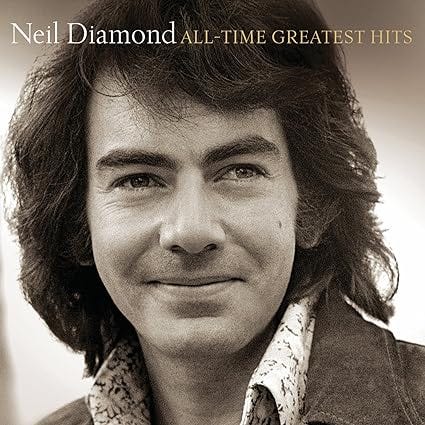
🎬 The documentary’s gentle but unmistakable indictment
Song Sung Blue never mocks its subjects; it simply lets the contrast speak for itself. Onstage, they inhabit Diamond’s world of certainty. Offstage, they inhabit Wisconsin. The gap between these two realities is the entire story.
The film’s quiet thesis is that borrowed myths—no matter how beloved—cannot carry the weight of a human life. Diamond’s songs can elevate, console, and electrify, but they cannot explain. They are emotional fireworks: dazzling, uplifting, and gone in thirty seconds.
🌟 Success, American‑style
In the end, the couple’s success is not measured in fame or stability but in their refusal to surrender the myth that sustains them. This is, in its own way, profoundly American. We are a nation that believes in reinvention, even when reinvention is just repetition with better lighting.
Diamond’s music becomes both sanctuary and trap: a place to rest, but not a place to live. The couple’s devotion is touching, absurd, heroic, and heartbreaking—exactly the combination that defines American self‑mythology at its most sincere and most delusional.
A Neil‑Diamond‑based worldview, as revealed through Song Sung Blue, becomes a way of seeing the world that is emotionally sincere, musically generous, and deeply aspirational—but also narrow, fragile, and ultimately unable to account for the full complexity of life. The documentary’s portrait of Mike and Claire Sardina—Lightning & Thunder, a Milwaukee couple who perform Neil Diamond tributes—shows how Diamond’s music can be both a sustaining mythology and a limiting one. Wikipedia
🎤 The emotional power of the Diamond worldview
Diamond’s songs offer a ready‑made emotional architecture: big feelings, big crescendos, big declarations of hope. For Mike and Claire, this music becomes a life‑organizing principle.
It gives them a sense of purpose and identity.
It offers a vocabulary for love, longing, and resilience.
It creates a community around them—bars, festivals, fans—where they feel seen.
This is the strength of the Diamond worldview: it is warm, accessible, and emotionally legible. It lets ordinary people feel extraordinary for a few minutes onstage.
🎭 Where that worldview becomes limiting
The documentary also shows how living inside someone else’s myth—especially a myth as polished and triumphant as Neil Diamond’s—can flatten the harder truths of real life.
Diamond’s songs promise uplift, but the Sardinas’ lives include financial precarity, personal tragedy, and emotional volatility that the music cannot resolve.
The couple’s devotion to performance becomes a kind of emotional armor, a way to avoid confronting deeper wounds.
Their identity is so tied to Diamond’s music that they struggle to imagine a self outside it.
The film’s emotional arc makes clear that Diamond’s worldview is too symmetrical, too triumphant, too neatly resolved to hold the messiness of their lived experience.
🎬 How the film exposes the gap between myth and life
Song Sung Blue juxtaposes the couple’s soaring stage personas with the fragility of their offstage lives.
Onstage, they inhabit Diamond’s world of certainty and emotional clarity.
Offstage, they face the randomness and cruelty of real life—accidents, disappointments, and the slow erosion of dreams.
This contrast reveals the central limitation: Diamond’s music can elevate life, but it cannot explain it. The myth is sustaining, but it is not sufficient.
🌟 What the film ultimately says about success
The Sardinas’ story reframes success away from fame, money, or stability.
Their success lies in devotion, not achievement.
In perseverance, not triumph.
In the stubborn insistence that art—however derivative, however small the stage—can still be a lifeline.
This is where the Diamond worldview both shines and falters. It gives them the courage to keep going, but it also blinds them to the possibility of redefining success on their own terms.
🧭 The deeper insight
A Neil‑Diamond‑based view of the world is a beautiful illusion: emotionally rich, musically generous, and full of hope. But Song Sung Blue shows that when a worldview is borrowed rather than built, it can’t fully hold the weight of a real human life. The film becomes a meditation on the difference between performing meaning and living meaning.
In the movie What About Bob, Bill Murray’s character describes the reason for his divorce as a difference in opinion regarding Neil Diamond. Why did the writers make this reference?
The line works because it’s doing three things at once—comic misdirection, instant character‑sketching, and a sly cultural wink that audiences in 1991 immediately recognized. Nothing in the sources suggests an official explanation from the writers, but the meaning becomes clear when you look at the film’s tone and the cultural context of Neil Diamond’s reputation at the time.
🎭 Why the Neil Diamond joke lands so well
It’s an absurdly trivial reason for a divorce, which is exactly the point. Bob Wiley is a man whose anxieties are enormous, but whose self‑explanations are bizarrely small and misplaced. Saying his marriage ended over Neil Diamond signals instantly that Bob’s inner logic is… not quite aligned with reality.
Neil Diamond was a culturally loaded reference in 1991. He was hugely popular, but also polarizing—beloved by many, mocked by others as sentimental, middle‑of‑the‑road, or uncool. Saying “there are two types of people in this world: those who like Neil Diamond and those who don’t” was a familiar cultural shorthand for a harmless but oddly passionate divide.
The writers needed a joke that was funny without being mean. Choosing a musician with a big, devoted fan base—and an equally big group of skeptics—lets the film poke fun at Bob without insulting any vulnerable group. It’s a safe, silly, instantly recognizable cultural marker.
🧠 What it reveals about Bob as a character
He externalizes everything. Instead of acknowledging his own issues, he frames the divorce as a matter of musical taste.
He uses pop culture as a coping mechanism. The line shows how he reduces complex emotional realities to simple binaries.
He’s unintentionally charming. The joke makes him endearing rather than pitiable, which is crucial for the film’s balance.
🎬 Why the writers chose this kind of reference
It fits the film’s rhythm of gentle, character‑based humor rather than punchlines.
It gives the audience a quick, memorable hook for understanding Bob’s worldview.
It’s a joke that ages well because it’s about taste, not topical events.
It adds a sly extra layer because the joke isn’t just about Bob Wiley’s psychology—it also plays off Neil Diamond’s unusual place in American musical culture. The line works precisely because Diamond is both immensely talented and widely mocked, a duality that made him perfect shorthand in 1991 for a taste divide that felt passionate but harmless.
🎵 What the line implies about Neil Diamond’s talent
Neil Diamond’s career is objectively formidable. He is one of the best‑selling musicians in American history, with more than 56.5 million U.S. records sold and ten No. 1 singles on major Billboard charts, including Cracklin’ Rosie, Song Sung Blue, and America. en.wikipedia.org
He has also been honored at the Songwriters Hall of Fame, the Rock and Roll Hall of Fame, and received the Grammy Lifetime Achievement Award. en.wikipedia.org
Using him as a punchline only works because audiences already knew he was hugely successful, prolific, and culturally ubiquitous. The joke isn’t punching down; it’s referencing someone whose stature is secure.
🎤 …and what it implies about his lack of talent (or perceived lack)
At the same time, Diamond has long been a lightning rod for taste debates. His music—lush, emotional, theatrical—has been embraced by millions and dismissed by others as sentimental or uncool. By 1991, he had become the kind of artist people had strong, binary opinions about, which is exactly the dynamic the film exploits.
The joke relies on this cultural split:
To some, Diamond is the “Jewish Elvis,” a master entertainer with a deep catalog of beloved songs. Grunge
To others, he represents a kind of middle‑of‑the‑road schmaltz that’s easy to tease.
The writers didn’t need to explain any of this; the audience already understood the shorthand.
🎬 Why this dual reputation makes the joke perfect
The line lands because it uses Diamond as a symbol of harmless but passionate disagreement. It’s funny that Bob’s marriage supposedly collapsed over something so trivial, but it’s even funnier that the “trivial” thing is an artist who inspires such oddly intense reactions.
It also subtly reinforces Bob’s character:
He reduces complex emotional realities to simple binaries.
He externalizes blame.
He uses pop‑culture taste as a proxy for deeper issues.
Diamond’s polarizing reputation gives the writers a way to show all of that in a single, throwaway line.
Conclusion:
Hey Neil and Neil fans: America today is a culture living in an imaginary world of power and importance that are lies, and that may very soon be shown for the mad, dangerous delusion that it is.