
A Trueman–Triola Newsletter Edition
Epigraph
“Attention is the rarest and purest form of generosity.”
—Simone Weil
I. The World That Looks Back
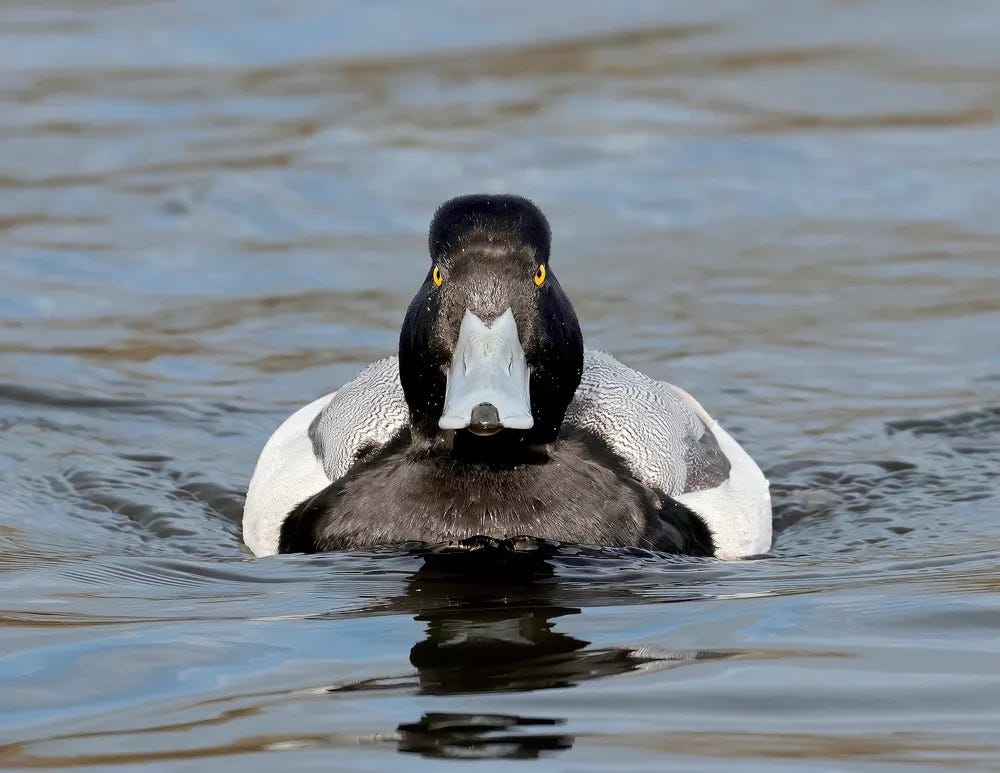
There are artists who seek to astonish, and then there are artists who seek to attend. Darren Chapman belongs firmly to the latter lineage. His nature photographs—unhurried, unforced, and quietly observant—remind us that the world is not waiting to be improved by us so much as noticed by us.
Pull‑Quote:
Chapman’s photographs are not trophies; they are invitations.
Trueman has often said that the camera, in the right hands, becomes a tuning fork—vibrating sympathetically with whatever it’s pointed toward. Chapman’s images carry that vibration. They are not triumphs of technique so much as evidence of a relationship: a man, a landscape, and the creatures who move through it with no need for our approval.
Triola, ever the diagnostician of contemporary mood, sees in Chapman’s work a counterweight to the psychic abrasion of modern life. These photographs do not flatter us. They do not ask us to “like” them. They simply show a world that is busy being itself. And in that simple fact lies a kind of repair.
II. The Discipline of Seeing
Chapman’s practice is built not on novelty but on return. He walks the same marshes, the same hedgerows, the same winter fields. He does not arrive as a conqueror but as a participant. His photographs carry the residue of that relationship: the patience of someone who knows that nature does not perform on command, and the gratitude of someone who understands that beauty is not rare—only rarely noticed.
Pull‑Quote:
Attention, properly directed, becomes a form of citizenship.
This is where his work becomes more than documentation. It becomes instruction.
Attention as a civic virtue
In a culture that monetizes distraction, the simple act of looking closely becomes a form of resistance.
Humility as a mode of perception
The birds do not acknowledge him. They do not need to. Their indifference is a reminder that the world is not organized around our anxieties.
Wonder as a renewable resource
A bird turning its head at the exact moment the light shifts is not a miracle. It is a moment. But moments, properly attended to, can widen the interior life.
III. What the Birds Teach
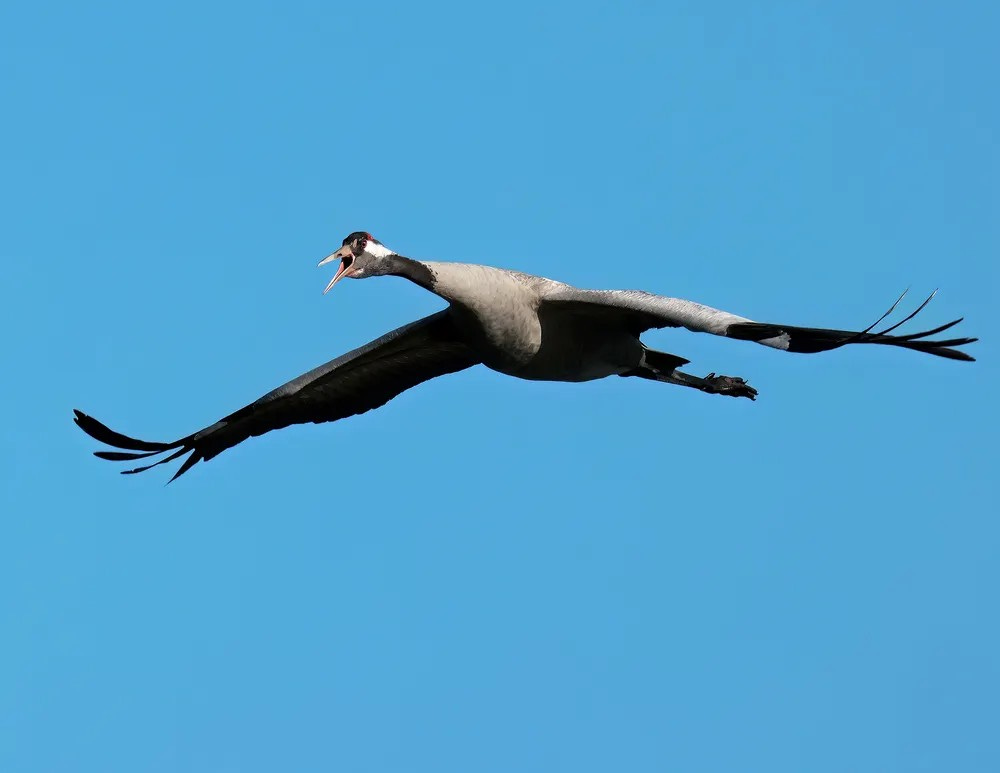
There is a quiet drama in Chapman’s images—not the melodrama of nature documentaries, but the steady work of survival. A bunting feeding against the wind. A shrike balancing on a thin branch. An owl scanning the horizon with the patience of a creature that has never known a calendar.
These scenes remind us that resilience is not heroic. It is ordinary. It is shared across species. And it is enacted daily, without audience or applause.
Pull‑Quote:
Chapman’s lens returns us to the world by returning us to ourselves.
In this way, his photographs become a kind of secular liturgy. They call us back to the world, not as consumers of beauty but as participants in a shared, fragile, ongoing life.
Sidebar: On the Ethics of Attention in the Age of Distraction
We live in a time when attention is both currency and prey. Every platform, every device, every algorithm competes for the same finite resource: the human gaze. In such a landscape, the act of looking—really looking—becomes ethically charged.
1. Attention is not passive; it is a choice.
To look at a bird in winter light is to decline, however briefly, the invitation to be elsewhere.
2. Attention is relational.
When we look with care, we enter into a conversation with the world—one that does not center us.
3. Attention is reparative.
The mind, frayed by noise, finds coherence in the steady rhythms of the nonhuman world.
Chapman’s photographs are not merely images. They are reminders that attention, properly directed, can restore the ethical imagination.
Closing Note
In the end, Chapman’s lens does what the best art always does: it returns us to ourselves by returning us to the world. His photographs ask nothing of us except that we slow down, look closely, and remember that we are part of something older, steadier, and more intricate than our private concerns.
The birds do not know they are being admired. They do not need to. Their existence is enough. And perhaps, if we let it, that truth can be enough for us as well.
—Trueman & Triola