
Epigraph
“Attention is the rarest and purest form of generosity.” — Simone Weil
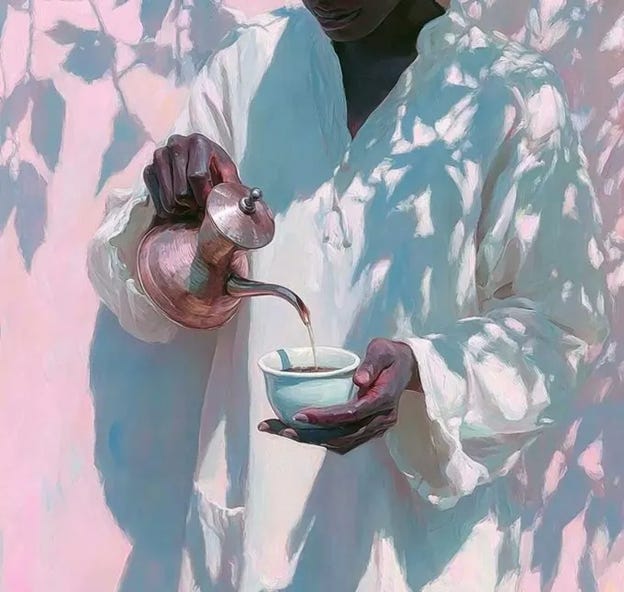
There is a particular rhythm to the Bluesky Discover feed these days — a kind of civic whiplash. One moment, a constitutional argument or a geopolitical warning; the next, a GIF of a rabbit in an Easter basket; then a protest photo from Missouri; then a thread about the failures of political leadership. The feed is a chorus of urgency, outrage, grief, and analysis. It is the sound of a society trying to metabolize itself in real time. bsky.app
And yet, woven through that noise — almost shyly — are the posts that do a different kind of work.
A frog, offered without irony: “Today’s frog is the ornate burrowing frog.”
A street mural from Spain, shared simply as #StreetArt.
A jumping spider rescued from a dog’s water dish, drying its legs in the sun.
A young artist confessing doubt, then noticing that strangers still care enough to like their drawings.
A swimmer slipping into clear water, body and world briefly in agreement. bsky.app
These are not the loud posts. They are not the ones designed to win arguments or score points. They do not demand allegiance. They do not insist on being right. They simply offer something — a moment of beauty, a gesture of care, a reminder that the world is not only crisis.
They are, in their own way, a form of resistance.
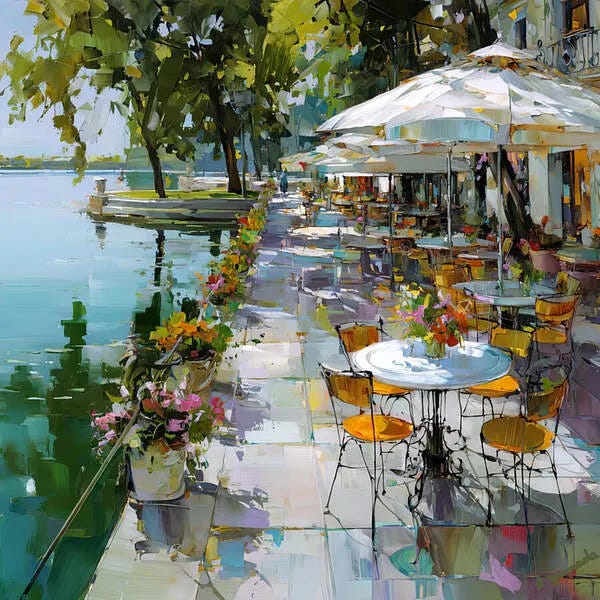
The Countercurrent
What these art‑and‑nature accounts create is a countercurrent inside the digital river. They remind us that attention can be an act of stewardship, not just consumption. They model a way of being online that is:
humble rather than performative
observant rather than reactive
generous rather than extractive
In a feed dominated by political heat, these small offerings of beauty act like oxygen. They keep the emotional ecosystem from collapsing under the weight of its own intensity.
The frog, the spider, the mural, the swimmer — they are not distractions. They are recalibrations. They return us to the sensory world, the embodied world, the world that continues whether or not the news cycle approves.
🎨 The Artist’s Doubt, the Community’s Reply
One post in particular stands out: an artist admitting that they feel slow, stagnant, empty — and then noticing that people still respond to their work. “People do like my art and I’m not a failure,” they write. bsky.app
This is the quiet miracle of creative life: the way a single gesture — a drawing, a photograph, a moment of vulnerability — can ripple outward and return as affirmation. Not applause. Not fame. Just the simple human recognition that your attention created something worth attending to.
In a culture obsessed with metrics, this is a different kind of accounting.
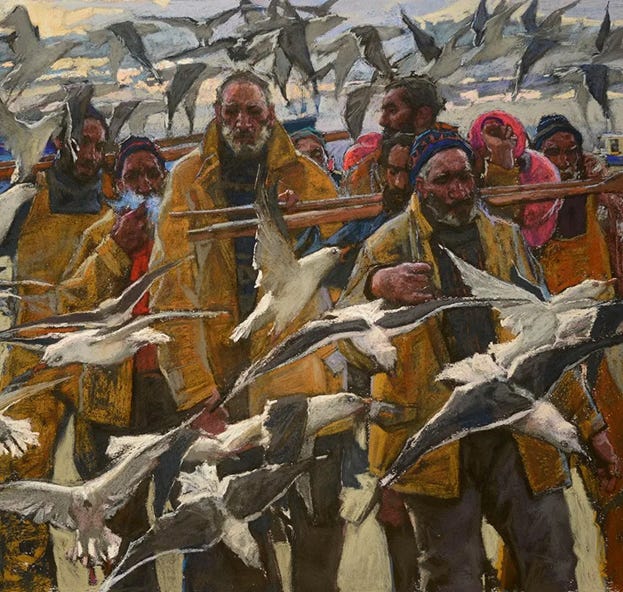
🌊 The Civic Function of Beauty
It’s tempting to think of these posts as ornamental, as the soft edges of a hard world. But that misses the point. Beauty is not a luxury; it is a stabilizing force. It keeps us from becoming brittle. It keeps us from collapsing into cynicism. It keeps us capable of imagining futures that are not merely extensions of our fears.
In this sense, the art‑and‑nature posters on Bluesky are doing civic work — not by arguing, but by re‑humanizing the conditions under which argument becomes meaningful.
They remind us that the world is still here, still strange, still beautiful, still worth the trouble.
Closing Note
If the political posts are the pulse of the moment, these small offerings of beauty are the breath. And a society that forgets to breathe cannot think, cannot imagine, cannot hope.
In the end, the frog matters.
The spider matters.
The mural matters.
The swimmer matters.
The hesitant artist matters.
Because each of them says, in its own quiet way:
There is still something here worth paying attention to.
And attention, as Weil reminds us, is a form of love.
Images in this piece all from @capecodfairytales.bsky.social