
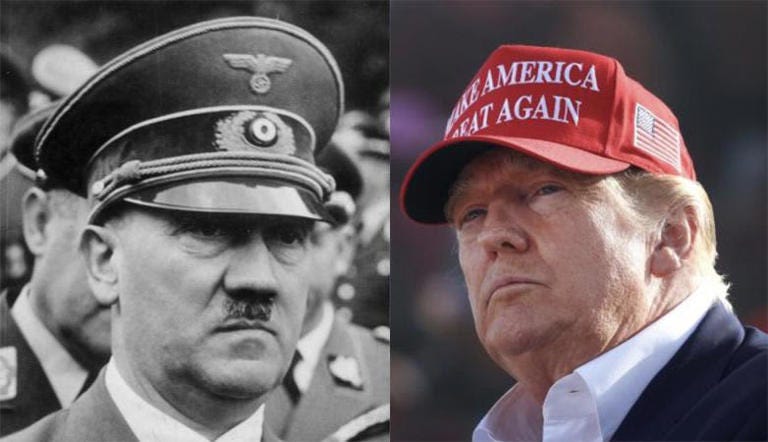
Reflecting on the ways that Trumpian/MAGA abuse of language in the pursuit of propaganda has harmed words as a way of understanding life, ethics, values and meaning.
Epigraph: “Where language loses its meaning, people lose their freedom.” — Hannah Arendt
The Trump/MAGA era has not merely politicized language; it has weaponized it. What we have witnessed is not the ordinary rough-and-tumble of democratic rhetoric but a systematic corrosion of the very medium through which Americans understand life, ethics, values, and meaning. Words—our oldest civic technology—have been bent, blunted, hollowed out, and hurled back at us as instruments of domination rather than understanding.
This is not a matter of partisan preference. It is a matter of linguistic ethics. And it is a matter of cultural survival.
I. The Devaluation of Meaning
Wittgenstein’s insight—meaning is use—becomes a kind of forensic tool here. Trumpian language does not describe reality; it performs allegiance. Words like fake, rigged, enemy, patriot, freedom, truth no longer point to shared experiences or shared standards. They function as signals of tribal belonging. Their meaning is not in what they denote but in whom they rally.
This shift has consequences. When words cease to be descriptive, they cease to be accountable. A word that does not correspond to reality cannot be falsified, corrected, or improved. It can only be repeated. And repetition is the lifeblood of propaganda.
II. The Collapse of Ethical Vocabulary
Ethical life depends on distinctions: harm vs. help, truth vs. lie, courage vs. cruelty. Trumpian rhetoric blurs these distinctions until they dissolve. Cruelty becomes “strength.” Lies become “alternative facts.” Corruption becomes “smart.” Accountability becomes “witch hunt.”
The ethical vocabulary that once allowed Americans to evaluate conduct is replaced by a vocabulary that rewards spectacle. The question is no longer Is it right? but Does it own the libs?
This is not merely a degradation of political discourse. It is a degradation of moral imagination—the capacity to see another person as real, to understand consequences, to recognize obligations.
III. The Erosion of Civic Meaning
Democracy depends on shared meanings. Without them, we cannot deliberate, negotiate, or disagree productively. Trumpian/MAGA language fractures this shared space. It replaces civic meaning with performative antagonism.
Words that once anchored democratic life—vote, law, justice, press, truth—are recast as partisan weapons. The result is a public square where communication becomes impossible because meaning itself has been sabotaged.
IV. The Spiritual Harm
Einstein believed that truth was not merely a scientific value but a spiritual one—a commitment to the coherence of reality. When language is abused, that coherence is violated.
Trumpian rhetoric does not simply distort facts; it distorts the conditions under which facts can matter. It creates a world where sincerity is naïve, expertise is suspect, and reality is optional. This is not just political harm. It is spiritual harm. It is a wound to the human capacity for meaning.
Sidebar: The Mechanics of Linguistic Propaganda
1. Flooding the Zone Propagandists overwhelm the public with contradictory claims, making discernment exhausting. Confusion becomes a political resource.
2. Semantic Inversion Words are flipped: corrupt becomes victim, violent becomes patriot, lie becomes truth. The inversion destabilizes moral judgment.
3. Emotional Hijacking Language is engineered to provoke outrage rather than understanding. Outrage bypasses reflection; it creates reflexive loyalty.
4. Reality Minimization Facts are not refuted; they are drowned in noise. The goal is not persuasion but exhaustion.
5. Identity Encoding Words become badges of belonging. Meaning is irrelevant; repetition signals loyalty. This is how language becomes tribal rather than communicative.
Closing Reflection
The Trump/MAGA abuse of language is not simply a political phenomenon. It is a cultural and ethical crisis. It has damaged our ability to use words as instruments of understanding—of life, of ethics, of values, of meaning.
Repairing this damage will require more than fact-checking. It will require a renewed devotion to reality, a recommitment to shared meaning, and a cultural insistence that words matter because people matter.