
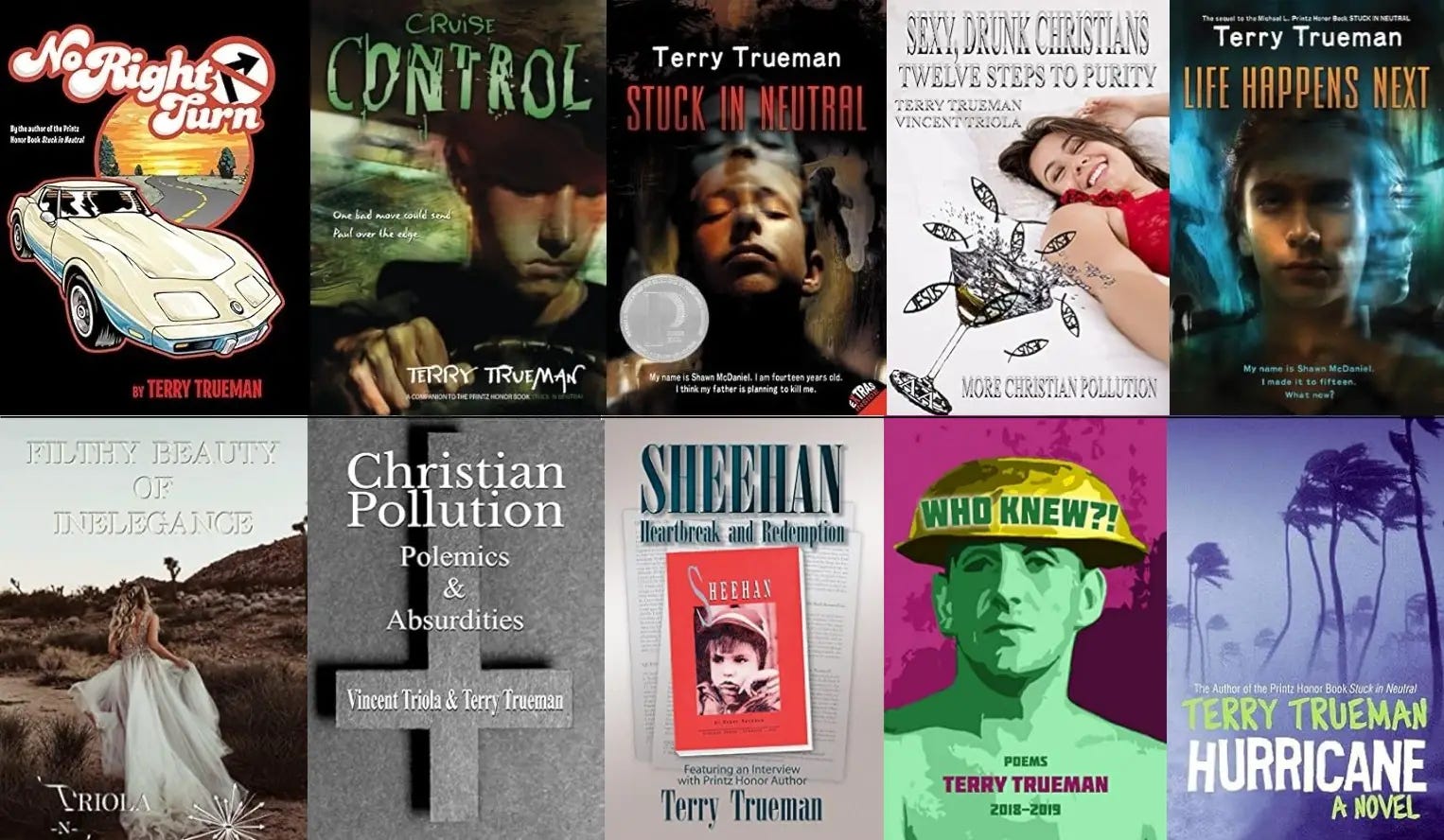
Epigraph “Every tool changes the hand that wields it.”
Epigraph “A work of art is never the biography of its maker; it is the biography of its own becoming.”
Acknowledging AI assistance in a piece of writing is necessary, yet dangerous, because it forces the writer to stand at the threshold between two incompatible cultural expectations: transparency and authorship. We live in a moment when readers want honesty about process—about who or what shaped the text they’re encountering—while simultaneously wanting to believe in the singularity of a human voice. To admit that an AI helped is to risk puncturing the illusion of solitary genius that still clings to literary culture like a stubborn fog. And yet to omit that admission is to participate in a kind of quiet deceit, one that grows heavier the more we rely on these tools.
The danger begins with the fact that AI assistance is not neutral. It is not a pencil or a spell-checker. It is a collaborator with its own tendencies, its own gravitational pull toward certain syntaxes, certain rhythms, certain ways of framing the world. To acknowledge its presence is to acknowledge that your voice is not entirely your own. For many writers, especially those steeped in traditions of authenticity and interiority, this feels like a confession of contamination (Lookin’ at you, Dave Eggers). The fear is not simply that readers will judge the use of AI, but that they will judge the writer’s need for it—will see the admission as evidence of diminished capacity, laziness, or a lack of imaginative force (Lookin’ at myself).
And yet the necessity remains. We are entering an era in which unacknowledged AI influence will become the norm, not the exception. The ethical writer must resist that drift toward opacity. Transparency is not just a virtue; it is a form of respect for the reader’s right to understand the conditions under which a text was made. But transparency comes with its own hazards. Once you admit that an AI helped shape a sentence, a paragraph, a line of reasoning, you invite the reader to question which parts are “yours” and which parts are “machine-made.” You invite them to scrutinize the seams. You risk shifting their attention from the meaning of the work to the mechanics of its creation.
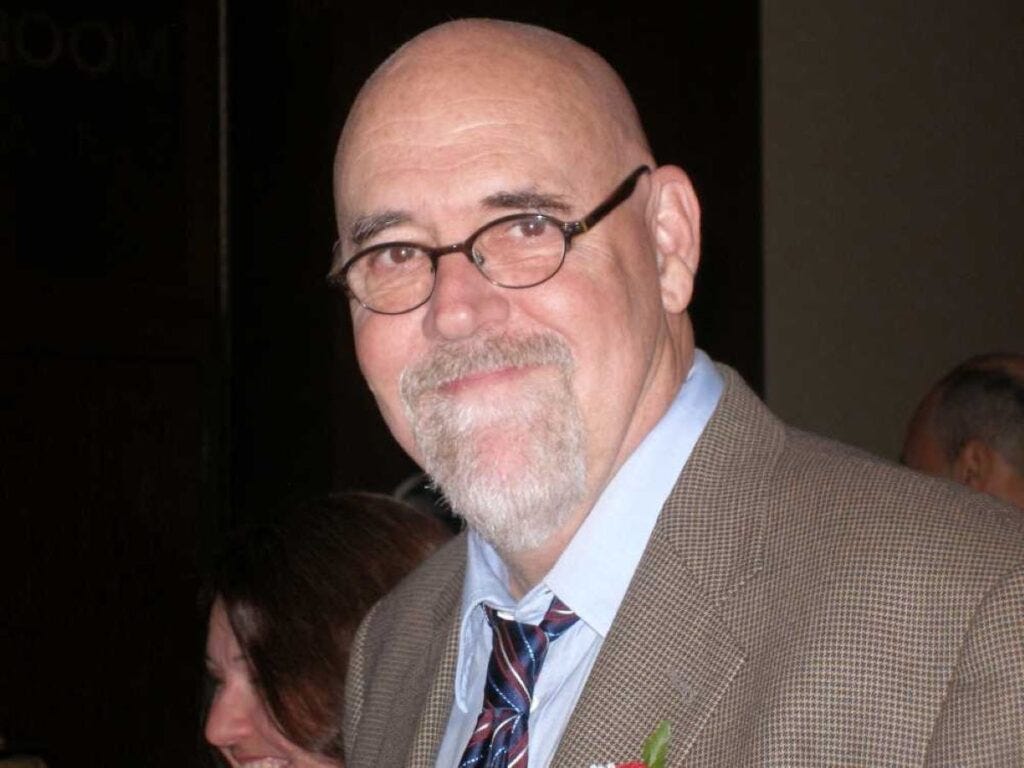
There is also a subtler danger: that the admission becomes performative. A badge of virtue. A preemptive defense. A way of saying, “I am not hiding anything,” while still hoping the reader will treat the text as if it emerged from a purely human mind. In this sense, acknowledging AI assistance becomes a rhetorical move rather than an ethical one. It becomes part of the dance between writer and audience, a gesture meant to reassure rather than illuminate.
The deeper truth is that AI complicates our understanding of authorship itself. It forces us to confront the fact that writing has always been collaborative—between the writer and their influences, their editors, their communities, their technologies. The danger is not that AI makes writing less human, but that it exposes how human writing has never been as solitary as we pretend. To acknowledge AI is to acknowledge the porousness of the self, the permeability of voice, the way language is always borrowed, shaped, and inherited.

So yes, the admission is necessary. It is a gesture toward honesty in a time when the boundaries of creativity are shifting. But it is dangerous because it destabilizes the myth of the lone creator, the myth that undergirds so much of our literary culture. The challenge for writers now is to find a way to acknowledge assistance without surrendering the integrity of their voice—to treat AI not as a threat to authorship, but as another force that must be integrated, resisted, shaped, and ultimately made accountable to the human imagination.
Acknowledging AI assistance in a piece of writing is necessary, yet dangerous, because it requires the writer to step into a newly illuminated threshold—one where the old myths of authorship no longer hold, yet the cultural longing for them persists. We live in a moment that prizes transparency, that asks us to show our work, to reveal the conditions under which a text comes into being. And yet we also live in a literary culture still enthralled by the romance of the solitary voice, the unassisted mind, the page wrestled into meaning by one pair of hands alone.
To admit that an AI helped is to disturb that romance. It is to say, plainly, that the voice on the page is not entirely singular, not entirely human, not entirely the product of one consciousness. For many writers, this feels like a confession of dilution. The fear is not merely that readers will judge the use of AI, but that they will judge the need for it—will read the admission as evidence of diminished capacity, or worse, diminished legitimacy.
And yet the necessity remains. As AI becomes woven into the fabric of everyday writing—emails, drafts, revisions, even the generative spark of an idea—the ethical writer must resist the temptation to hide its presence. Transparency is not a performance of virtue; it is a gesture of respect toward the reader’s right to understand the ecology of influences that shaped the text before them. But transparency carries its own hazards.
The challenge now is not to preserve the illusion of purity, but to cultivate a new ethic of authorship—one that recognizes the writer as a curator of forces, a shaper of inputs, a steward of intention. AI can assist, but it cannot replace the human act of choosing, resisting, refining, and imagining. The danger lies in pretending otherwise. The necessity lies in naming the collaboration honestly, without surrendering the integrity of one’s voice.
There is a point at which the life, power, and message of a work detach from its origins so completely that authorship becomes not only less important, but almost irrelevant. This is not a dismissal of the artist; it is an acknowledgment of the strange autonomy that certain works achieve. They begin as expressions of a particular mind, shaped by a particular history, but once released into the world they become something else—something that belongs to readers, viewers, listeners, and to the cultural imagination itself.
We often pretend that knowing the creator’s story will unlock the meaning of the work. Sometimes it does. More often it narrows our understanding, reducing the work to a symptom of the life behind it. But the most enduring works resist this reduction. They exceed their origins. They speak in ways the author did not intend and could not have predicted. They survive the author’s reputation, the author’s era, even the author’s mistakes. They become independent organisms, carrying their own force, their own weather systems, their own gravitational fields.
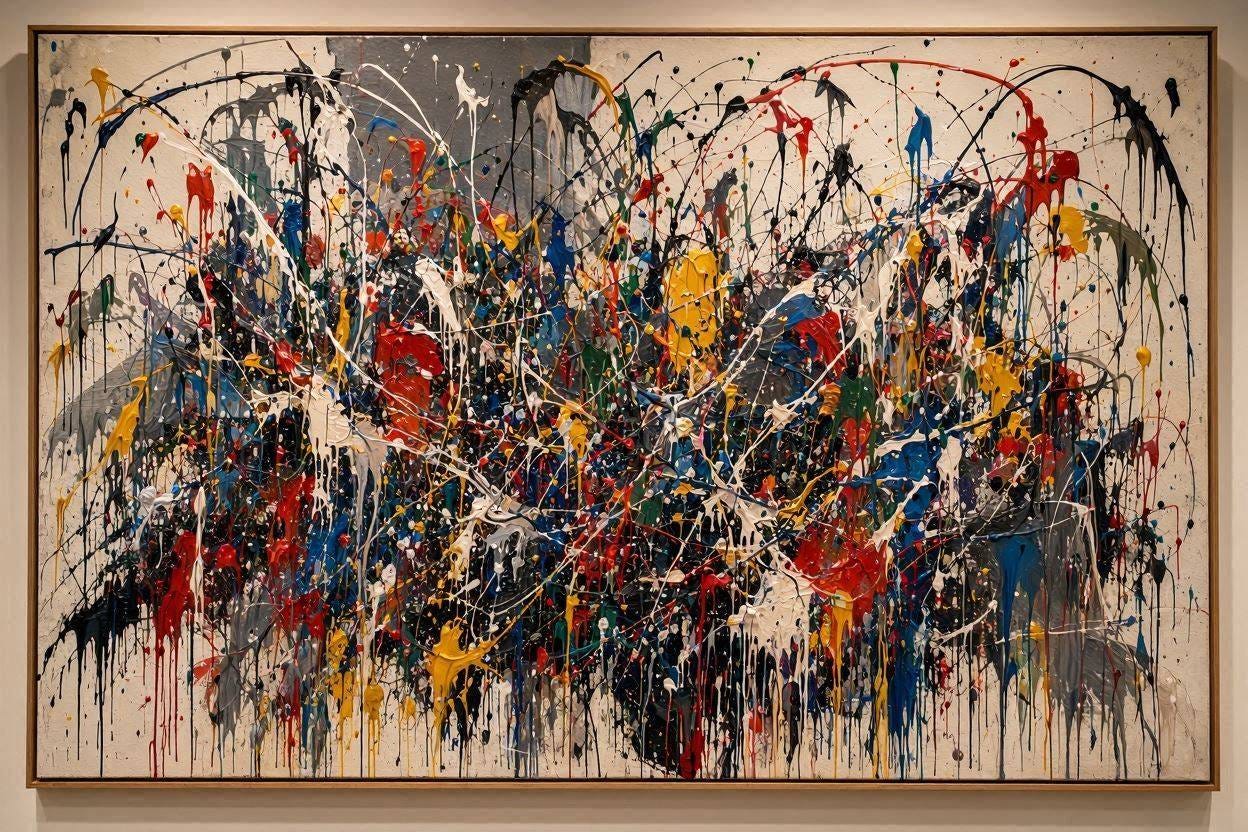
This is NOT Jackson Pollock, nor even human…who gives a fuck?
This is why the anxiety around AI authorship—around who or what “made” a piece of writing—can feel misplaced. The question of origins matters ethically, but aesthetically it is secondary. A work either lives or it doesn’t. It either moves the reader or it doesn’t. It either generates meaning, resonance, friction, illumination—or it doesn’t. The source of its creation cannot compensate for its failure, nor can it diminish its success.
The danger is not that AI will obscure authorship, but that we will cling too tightly to authorship as the primary measure of value. The work itself must stand. It must carry its own weight. It must justify its existence through the experience it creates, not through the purity of its lineage. This has always been true. We simply notice it more now because the boundaries of creation have become porous, shared, hybrid.
When a work truly lives, it becomes a kind of civic object—something that participates in the collective imagination. Its origins recede. Its maker becomes a footnote. What remains is the encounter: the reader meeting the text, the viewer meeting the image, the listener meeting the music. In that encounter, authorship dissolves. What matters is the spark, the shift, the interior rearrangement the work provokes.
The work must stand on its own. If it does, its creation story becomes an interesting detail, not a determinant of meaning. If it does not, no amount of biographical purity will save it.