
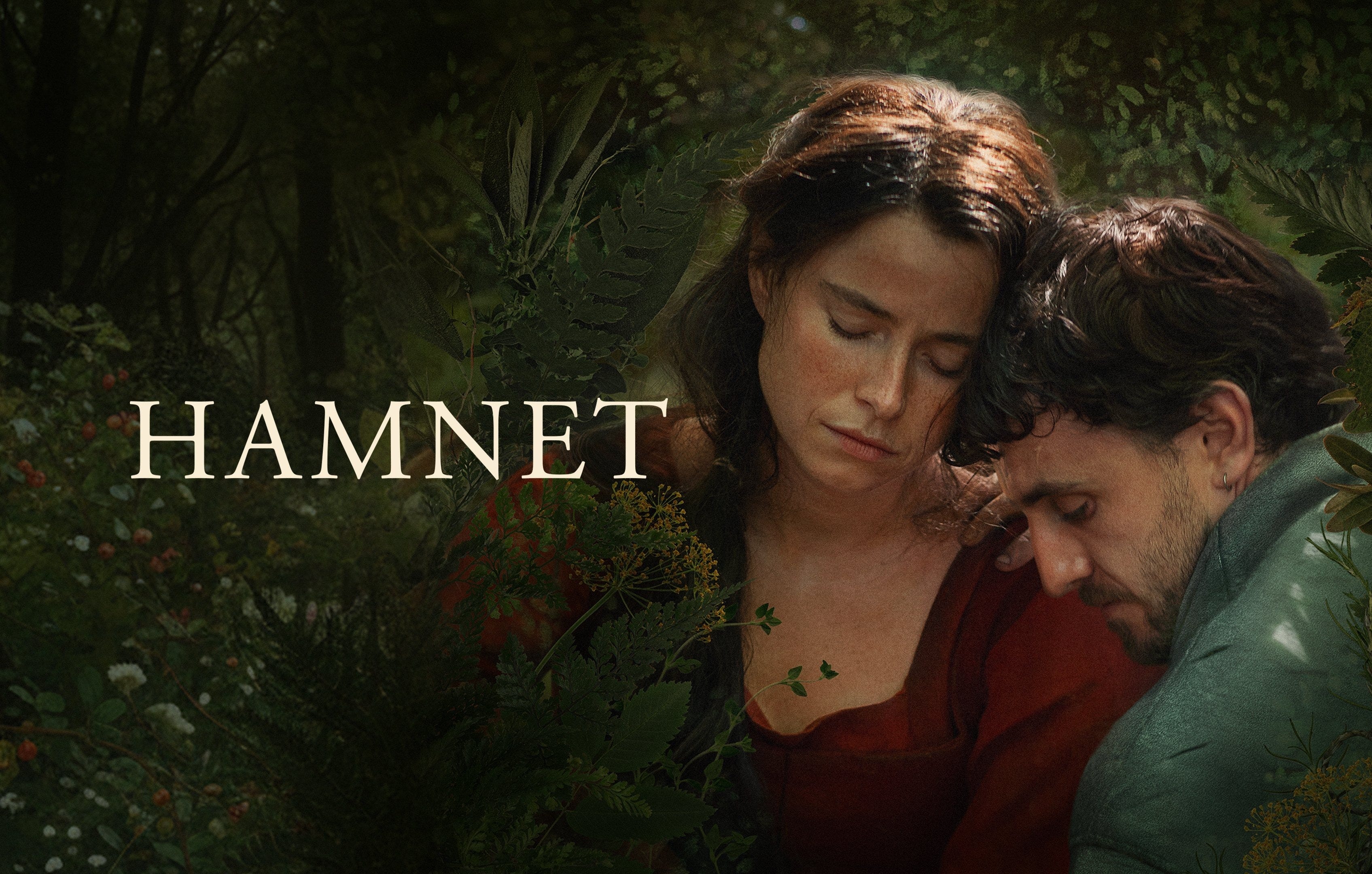
“Give me that man / That is not passion’s slave.” — Hamlet
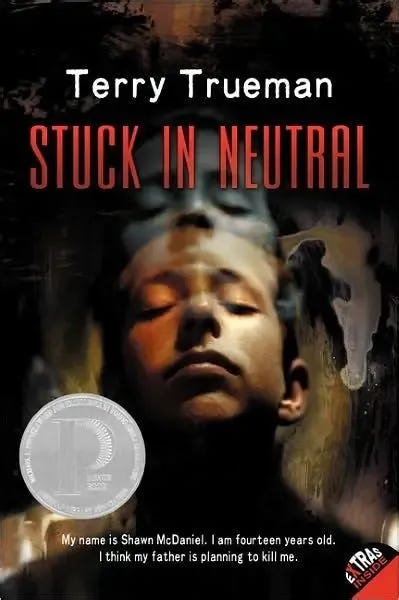
“People think they know my life because they can see my body.” — Stuck in Neutral
I. Two Authors, Two Boys, One Question
Across four centuries, Shakespeare and Terry Trueman each created a young male protagonist who becomes the vessel for the author’s deepest fears. Hamlet and Shawn McDaniel are not simply characters; they are ethical experiments, emotional confessionals, and mirrors in which their creators test themselves.
Shakespeare, writing in a world of plague, political suspicion, and religious upheaval, pours his own anxieties about doubt, duty, and moral paralysis into Hamlet. Trueman, writing as the father of a son with severe cerebral palsy, pours his fears about misjudgment, mercy, and the fragility of parental love into Shawn.
Both authors choose a boy who cannot act freely. Both choose a boy whose interior life is misunderstood by the people who claim to love him. Both choose a boy whose father’s shadow is so large it threatens to erase him.
And both ask the same question: What happens when love becomes dangerous?
II. Fathers, Sons, and the Burden of Being Seen
Hamlet is crushed beneath the ghost of King Hamlet, a father whose command—“Remember me”—is less a plea than a moral subpoena. The prince’s crisis is not simply grief; it is the terror of failing a father whose expectations are absolute.
Shawn McDaniel faces a different kind of paternal weight. His father is alive, loving, and convinced that Shawn’s life is unbearable. The danger is not a ghost demanding revenge but a parent contemplating mercy killing.
In both stories, the father’s gaze becomes lethal.
Shakespeare channels his own complicated paternal role—actor, playwright, public figure, grieving father of Hamnet—into a son who cannot escape the demands of lineage. Trueman channels the fear of misreading his own child into a son whose life depends on whether his father’s interpretation of suffering is correct.
The overlap is stark: a father’s certainty becomes the son’s greatest threat.
III. Paralysis as Biography
Hamlet’s paralysis is intellectual. He doubts, rehearses, delays. His mind is so active it immobilizes him. Shakespeare uses this paralysis to dramatize a new kind of consciousness—self-aware, skeptical, painfully reflective. It is Shakespeare’s own fear of overthinking, of being trapped inside moral ambiguity.
Shawn’s paralysis is literal. His body cannot move or speak, yet his mind is vivid, funny, perceptive. Trueman flips Shakespeare’s structure: instead of a character whose interior life is revealed through soliloquy, we get a character whose interior life is revealed only to the reader while everyone around him remains blind.
Hamlet is misread by the court; Shawn is misread by his family.
Both boys are stuck in neutral—one psychologically, one physically—and both authors use that stuckness to explore their own anxieties about agency, identity, and the impossibility of being fully known.
IV. Death, Mercy, and the Ethics of Ending Pain
“To be, or not to be” is not just Hamlet’s question; it is Shakespeare’s. The playwright lived in a culture obsessed with salvation and damnation, where suicide was both sin and temptation. Hamlet’s meditation on death is Shakespeare’s own unease about whether ending suffering is ever morally permissible.
Stuck in Neutral places that question in the hands of a father. Shawn’s dad believes euthanasia might be mercy. The suspense of the novel is not simply whether he will act, but whether his understanding of Shawn’s suffering is accurate.
Hamlet fears that death might be worse than life. Shawn’s father fears that life might be worse than death.
Both works refuse resolution. Hamlet dies in a tangle of accidents and half-choices. Stuck in Neutral ends on a knife’s edge of ambiguity. Shakespeare and Trueman share a commitment to discomfort: they do not preach; they confess uncertainty.
V. Art as a Diagnostic Tool
Hamlet stages “The Mousetrap” to expose truth through performance. Shakespeare uses theater inside the play to reveal what ordinary speech cannot.
Stuck in Neutral is itself a kind of Mousetrap. Trueman invites readers into Shawn’s interiority so that they can feel the shock of realizing how wrong external judgments are. The novel becomes a test: once you know Shawn’s mind, can you still believe euthanasia is mercy?
Both authors use fiction as a laboratory for moral inquiry. Both trust art more than argument. Both believe that narrative can reveal truths that ordinary life obscures.
VI. The Ghosts Behind the Boys
Shakespeare’s biography is shadowy, but the outlines matter: a dead son, a precarious profession, a world of plague and suspicion. Hamlet’s obsession with death and doubt feels like Shakespeare processing his own era’s instability.
Trueman’s biography is clearer. He has spoken openly about his son, about love and fear intertwined, about the terror of misreading a child whose interior life is inaccessible. Shawn’s voice is Trueman’s act of imaginative justice—a way of granting interiority to children the world refuses to see.
Hamlet carries Shakespeare’s fear of doubt. Shawn carries Trueman’s fear of mercy gone wrong.
Both boys are sacrificial. They are offered up so their authors—and we—can look more honestly at the ethical knots we inhabit.
VII. Closing: Why These Two Belong Together
Hamlet and Stuck in Neutral are not simply literary artifacts; they are meditations on the ethics of perception. They ask what it means to love someone whose interior life you cannot fully know. They ask how easily care becomes control. They ask how doubt can save us or destroy us.
For a newsletter devoted to ethical imagination, civic attention, and the interior lives of art, these two works belong together. They remind us that the stuck ones—the doubters, the silent, the misread—often carry the deepest truths.
And they remind us that every act of interpretation, whether in literature or in life, is a moral act.