
Trueman–Triola Newsletter — Issue No. 14
By the time a writer becomes known for one thing, it’s often too late to remind readers that the work was always larger than the label. Edward Averett is a case in point. For many, he is the author of psychologically rich YA novels—stories of vulnerable teens navigating mental health, fractured families, and the quiet storms of adolescence. But Averett’s non‑YA fiction reveals a writer whose range is broader, stranger, and more philosophically daring than his reputation suggests.
In this issue, we turn our attention to a few of the adult novels—ones that slipped past mainstream attention but deserve a place in the ongoing conversation about Northwest literature, ethical imagination, and the interior lives of ordinary people.
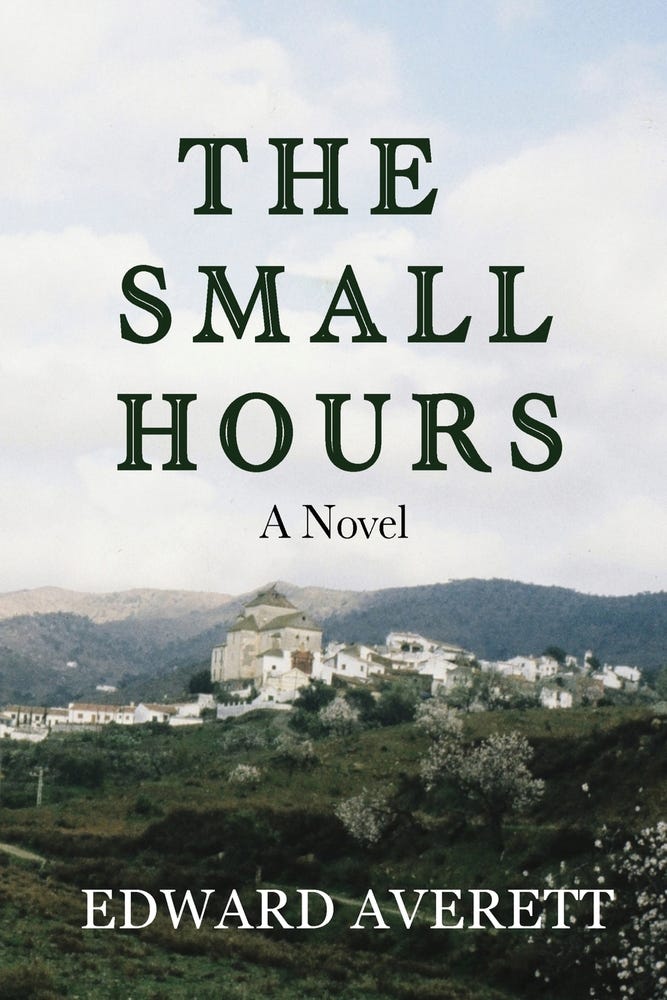
The Small Hours (2025):
Grief as a Narrative Architecture
If The New Prosperity Museum is Averett’s metaphysical novel, The Small Hours is his psychological one. The story follows Michael Virtue, a man undone by grief after the death of a close friend and the dissolution of his family. The narrative unfolds in fragments—memories, regrets, half‑formed attempts at meaning—mirroring the way trauma rearranges time.
Averett uses fragmentation not as an aesthetic trick but as a structural truth. Michael’s mind is not linear; his grief is not orderly. The novel’s form becomes its argument: that adulthood is not a stable plateau but a shifting terrain of loss, responsibility, and unresolved longing.
Reference:
Averett, Edward. The Small Hours. Wellborn Books, 2025.
The New Prosperity Museum (2023):
A Metaphysics of Place
Averett’s The New Prosperity Museum introduces readers to Henry James George, a Boomer whose life is shaped by a mysterious force known as Skookumchuck—a Chinook term for turbulent waters, repurposed here as a metaphysical presence. The novel is not magical realism, nor is it folklore. It is something quieter and more unsettling: the suggestion that the Pacific Northwest itself is sentient, shaping the lives of those who grow up in its shadow.
Averett writes with a restraint that allows the uncanny to seep in at the edges. The result is a novel that feels both grounded and otherworldly, a meditation on fate, generational identity, and the invisible forces that shape a life.
Reference:
Averett, Edward. The New Prosperity Museum. Wellborn Books, 2023.
Dark Hobby (2015):
Writing for Adults About Youth
Averett’s contribution to the anthology Dark Hobby: Guns and Teenagers offers a bridge between his YA and adult work. Writing for an adult audience about the vulnerabilities of youth, he avoids moralizing and instead leans into complexity—an approach that has always distinguished his fiction.
Reference:
Averett, Edward. “Dark Hobby.” In Taking Aim: Power and Pain, Teens and Guns, edited by Michel Cart, 2015.
What Averett’s Adult Fiction Reveals
1. A Shift from Formation to Reckoning
His YA protagonists are learning who they are.
His adult protagonists are learning how to live with who they became.
2. A Willingness to Let the Uncanny Speak
Skookumchuck is not metaphor; it is presence.
Averett’s adult novels allow the strange to enter the room without apology.
3. A Broader Social and Generational Lens
Boomers, the American West, intergenerational trauma—Averett widens the aperture.
4. A More Experimental Narrative Form
Fragmentation, nonlinear memory, metaphysical intrusion—these are tools YA rarely permits but adult fiction welcomes.
Why Averett Belongs in the Newsletter’s Ongoing Conversation
The Trueman–Triola Newsletter has always been a home for writers who resist easy categorization—writers who trust readers to sit with ambiguity, interiority, and ethical complexity. Averett’s adult fiction belongs squarely in that lineage.
His work reminds us that the Pacific Northwest is not just a setting but a consciousness; that adulthood is not a solved equation; and that the uncanny is often just another name for the parts of ourselves we have not yet learned to face.
In a literary culture that rewards noise, Averett offers quiet.
In a moment obsessed with certainty, he offers ambiguity.
In a world that flattens experience, he insists on depth.
That alone makes him a writer worth reading—and rereading.