
A “third wave” of Trumpism would likely be a post‑Trump Trumpism—more systematized, more professionalized, less dependent on Trump’s personality, and more focused on institutionalizing the movement’s worldview rather than improvising it. Think of it as Trumpism after Trump, not without him.
1. What distinguishes a “wave” in Trumpism
If we treat Trumpism as a political‑cultural formation rather than a single man’s brand, the waves look something like:
First wave (2015–2020):
Insurgent, chaotic, charismatic, anti‑establishment, fueled by affect and grievance. Trump as the irreplaceable center of gravity.Second wave (2020–2026):
Institutionalization begins—policy blueprints (Heritage’s Project 2025), legal strategies, state‑level power consolidation, media ecosystems hardened. Trump still the indispensable symbol, but the movement now has cadres, lawyers, think‑tankers, influencers.
A third wave would emerge when the movement no longer needs Trump’s presence to reproduce itself.
2. The likely features of a third wave
A. Ideological hardening
Trumpism becomes less improvisational and more doctrinal.
Not a coherent ideology, but a stable set of instincts:
Nationalism over globalism
Executive power over bureaucratic constraint
Loyalty over expertise
Cultural grievance as political fuel
Distrust of pluralistic institutions
A friend–enemy worldview
This is Trumpism without the showman, but with the same emotional architecture.
B. A new generation of Trumpist politicians
Third‑wave figures would not imitate Trump’s voice; they would imitate his method:
Performative combativeness
Media dominance
Anti‑institutional rhetoric
Personal loyalty networks
A politics of humiliation and spectacle
But they would be smoother, more disciplined, more fluent in policy and bureaucracy.
Think “Trumpism with a law degree.”
C. Bureaucratic capture as strategy, not improvisation
Second‑wave Trumpism experiments with this; third‑wave Trumpism would perfect it.
Civil service purges
Loyalist appointments
Executive‑branch centralization
Regulatory rollback as a governing philosophy
Use of state power to reward allies and punish enemies
This is where Trumpism becomes a governing system rather than a personality cult.
D. A fully developed media‑attention economy
Third‑wave Trumpism would not rely on Trump’s personal charisma.
Instead, it would rely on:
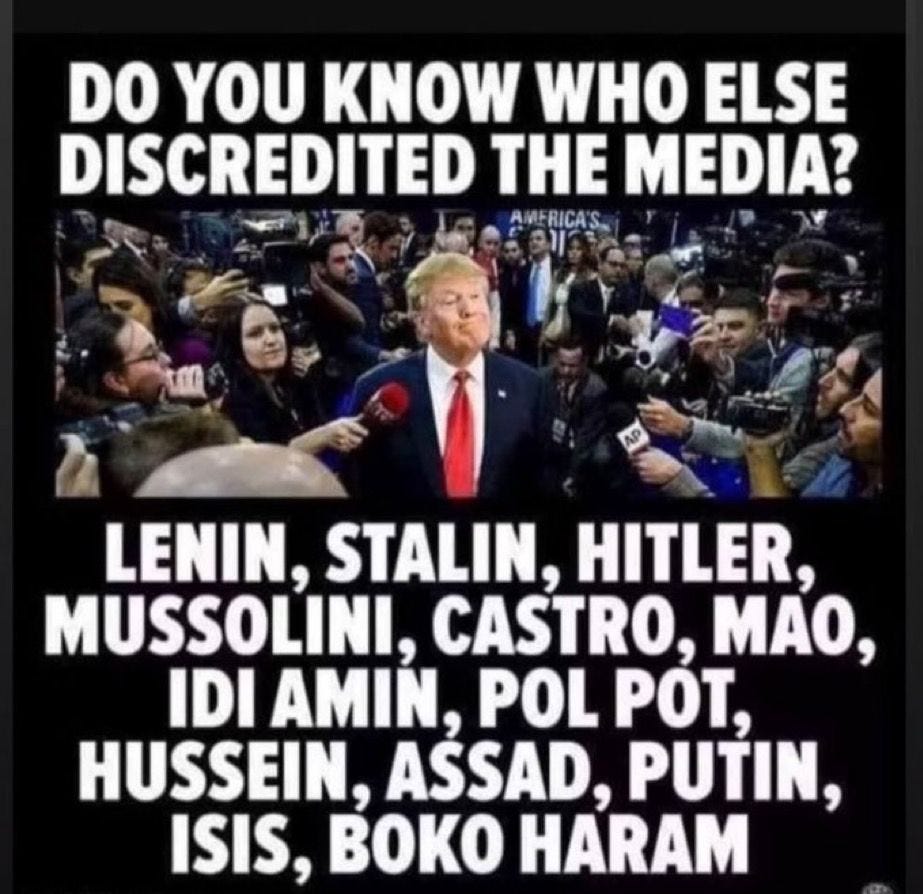
A permanent outrage‑content pipeline
Influencer‑politicians
Alternative information ecosystems
Algorithmic identity politics
The movement becomes a self‑sustaining media organism.
E. Normalization
Perhaps the most important shift:
Trumpism becomes a normal option within American political life, not an aberration.
This is how waves work: the radical becomes familiar, then becomes infrastructure.
3. What would distinguish it from Trump himself?
Less improvisation, more planning
Trump governs by impulse; third‑wave Trumpists would govern by blueprint.
Less personal grievance, more structural grievance
Trump’s enemies are whoever offended him.
Third‑wave Trumpism’s enemies are institutions: universities, media, federal agencies, courts.
Less showmanship, more efficiency
Trumpism without the entertainer becomes more like a machine.

4. The deeper civic question
A third wave of Trumpism would signal that the movement is no longer about one man’s charisma but about a transformation in American political psychology:
A desire for simplicity in a complex world
A longing for strong authority
A politics organized around resentment rather than aspiration
A collapse of trust in shared institutions
A shift from democratic negotiation to existential conflict
In other words:
Trumpism becomes a civic mood, not a candidate.