THE VALUES INSIDE THE MACHINE A Trueman–Triola Newsletter Reflection
Epigraph “Every tool carries the ghost of the hand that shaped it.” — Anonymous craftsman’s proverb
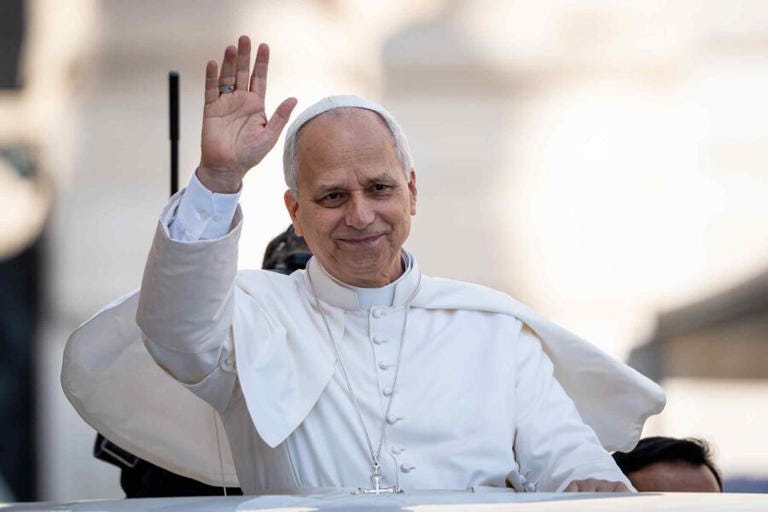
The question Pope Leo raises — whether AI systems are neutral instruments or vessels of the values of their makers — is not a technical question at all. It is a question about moral imagination, about what we believe technologies are and what we believe they do to the societies that adopt them. And in that sense, Leo is right to worry. The fantasy of neutrality has always been one of modernity’s most seductive illusions.
AI systems do not arrive in the world as blank slates. They are built from the sediment of human culture: the language we’ve published, the arguments we’ve rehearsed, the prejudices we’ve encoded, the aspirations we’ve whispered into the public square. Training data is not a neutral archive; it is a moral landscape. And the engineers who shape these systems make choices — about what to include, what to exclude, what to forbid, what to encourage — that are every bit as value-laden as the choices a legislator or a teacher makes.
Where Leo’s analogy to art is both illuminating and incomplete is in the matter of authorship. A painting carries the interior world of a single artist. A large AI system carries the fingerprints of hundreds of designers, the incentives of corporations, the anxieties of regulators, the expectations of users, and the biases of the cultures that produced its data. It is not a solitary voice but a chorus, sometimes harmonious, sometimes discordant, always shaped by forces larger than any one person.
Yet Leo’s deeper insight stands: we must resist the temptation to treat AI as an oracle. The moment we imagine these systems as objective, rational, or free from ideology, we surrender our responsibility to interrogate the values they encode. Neutrality is not only impossible; it is dangerous, because it hides the human choices behind a veil of inevitability.
The real task, then, is not to pretend that AI can be value-free. It is to make its values visible, accountable, and open to democratic scrutiny. Who shapes these systems? Who benefits from them? Who is harmed? And what vision of the human person do they assume?
These are not engineering questions. They are civic questions. They are spiritual questions. And they are the questions Leo is urging us to ask before the myth of neutrality hardens into dogma.
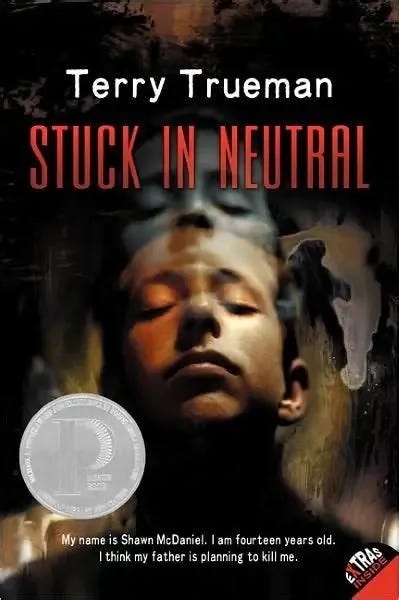
Let’s deepen this thread — Let’s take the novel Stuck in Neutral’s interior monologue by Shawn, the story’s protagonist, as an analogue to the primacy of conscience, and Leo’s critique of technological inevitability as a cousin to the novel’s critique of fatalism.

THE QUIET VOICE AND THE LOUD MACHINE
A Trueman–Triola Newsletter Reflection
Epigraph “Conscience is man’s most secret core, and his sanctuary.” — Gaudium et Spes §16
There is a strange and beautiful resonance between Pope Leo’s encyclical on AI and the narrative architecture of Stuck in Neutral. At first glance, they seem to inhabit different worlds — one ecclesial, one literary; one concerned with global technological systems, the other with the interior life of a single boy. But both are wrestling with the same question: How do we honor the truth that cannot be seen from the outside?
Catholic social teaching insists that conscience — that quiet, interior, uncoerced center of the person — is the ground of moral agency. It is not reducible to behavior, compliance, or external markers of competence. It is the place where the human person listens, discerns, and chooses. When the Church says conscience has primacy, it is saying that the deepest truths of a person’s moral life are not always legible to the systems around them.
Shawn’s interior monologue is a literary embodiment of that doctrine. The world sees a boy who cannot move, cannot speak, cannot signal intention. But the reader is ushered into the sanctuary of his mind — a place of humor, longing, fear, intelligence, and moral reflection. The novel’s ethical force comes from that asymmetry: the reader knows what the father cannot. The tragedy is not that Shawn lacks interiority; it is that the father cannot imagine it.
This is precisely the danger Leo sees in AI systems that present themselves as neutral, objective, or authoritative. When a system claims neutrality, it invites us to trust its outputs without interrogating the values embedded within it. It tempts us to mistake surface for depth, pattern for truth, prediction for understanding. In that sense, the father’s certainty — his belief that he sees the whole truth of Shawn’s life — is a narrative analogue to the cultural temptation Leo warns against. Both are failures of imagination masquerading as clarity.

Leo’s critique of “technological inevitability” also finds an echo in your novel’s refusal of fatalism. The father believes the trajectory of Shawn’s life is fixed, that suffering leads only to more suffering, that the story can end only one way. This is the logic of inevitability: the belief that the future is already written, that agency is an illusion, that the moral task is simply to accept what “must” be done. Stuck in Neutral dismantles that logic by revealing a life that is not reducible to its limitations. Shawn’s interior world is not a counterargument; it is a counter‑reality.
Leo’s encyclical performs a similar move. He refuses the idea that AI development follows an unstoppable, deterministic arc. He insists that human beings — communities, institutions, nations — can choose how these systems are built, governed, and deployed. He rejects the narrative that says, “This is just how technology works now,” in the same way your novel rejects the narrative that says, “This is just how Shawn’s life must end.”
Both works insist on the same truth: fatalism is a failure of moral imagination. And imagination, in both theology and literature, is not escapism. It is the capacity to see the person — or the future — more truthfully.
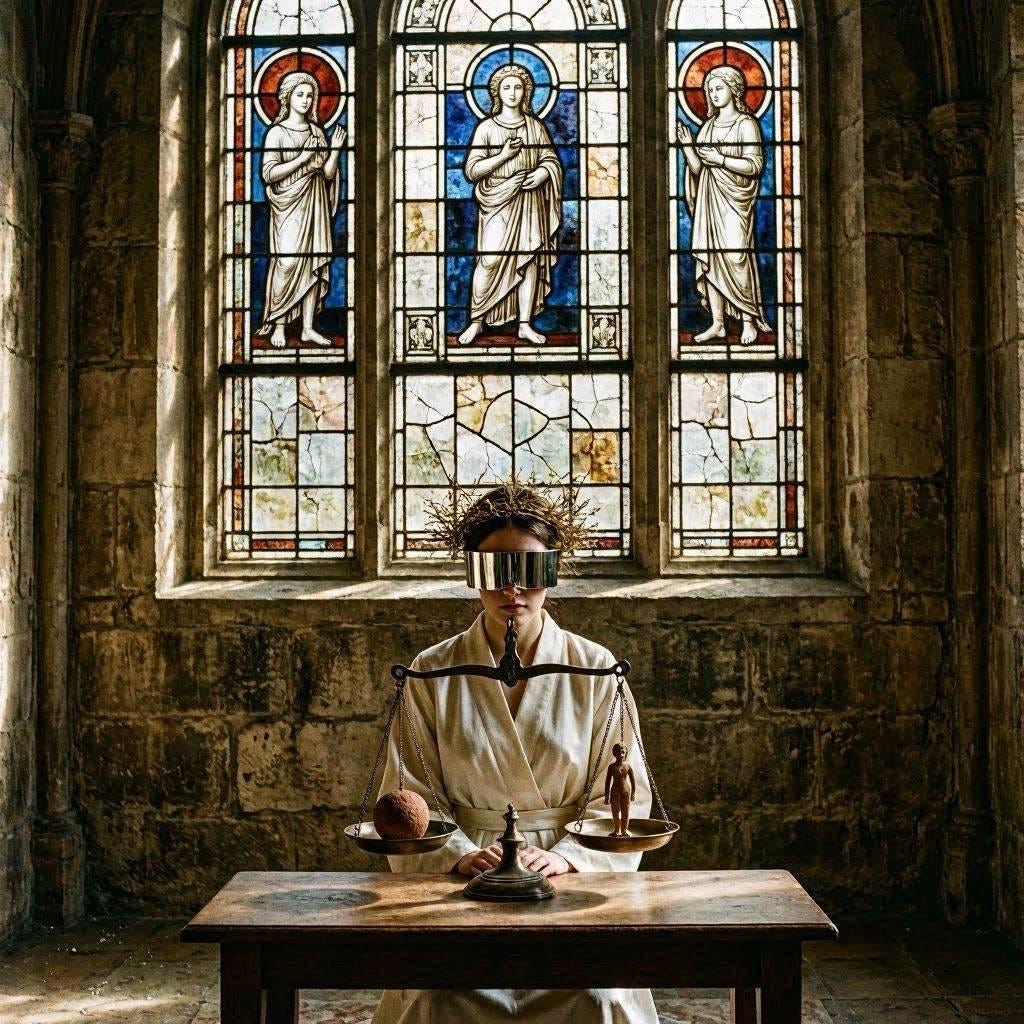
In this way, Shawn’s interior monologue and Leo’s encyclical are unlikely companions. One reveals the sanctity of a single conscience; the other defends the dignity of the human person against systems that would flatten or instrumentalize it. But they converge on a shared conviction: the deepest truths of human life are interior, relational, and resistant to the logic of inevitability.