

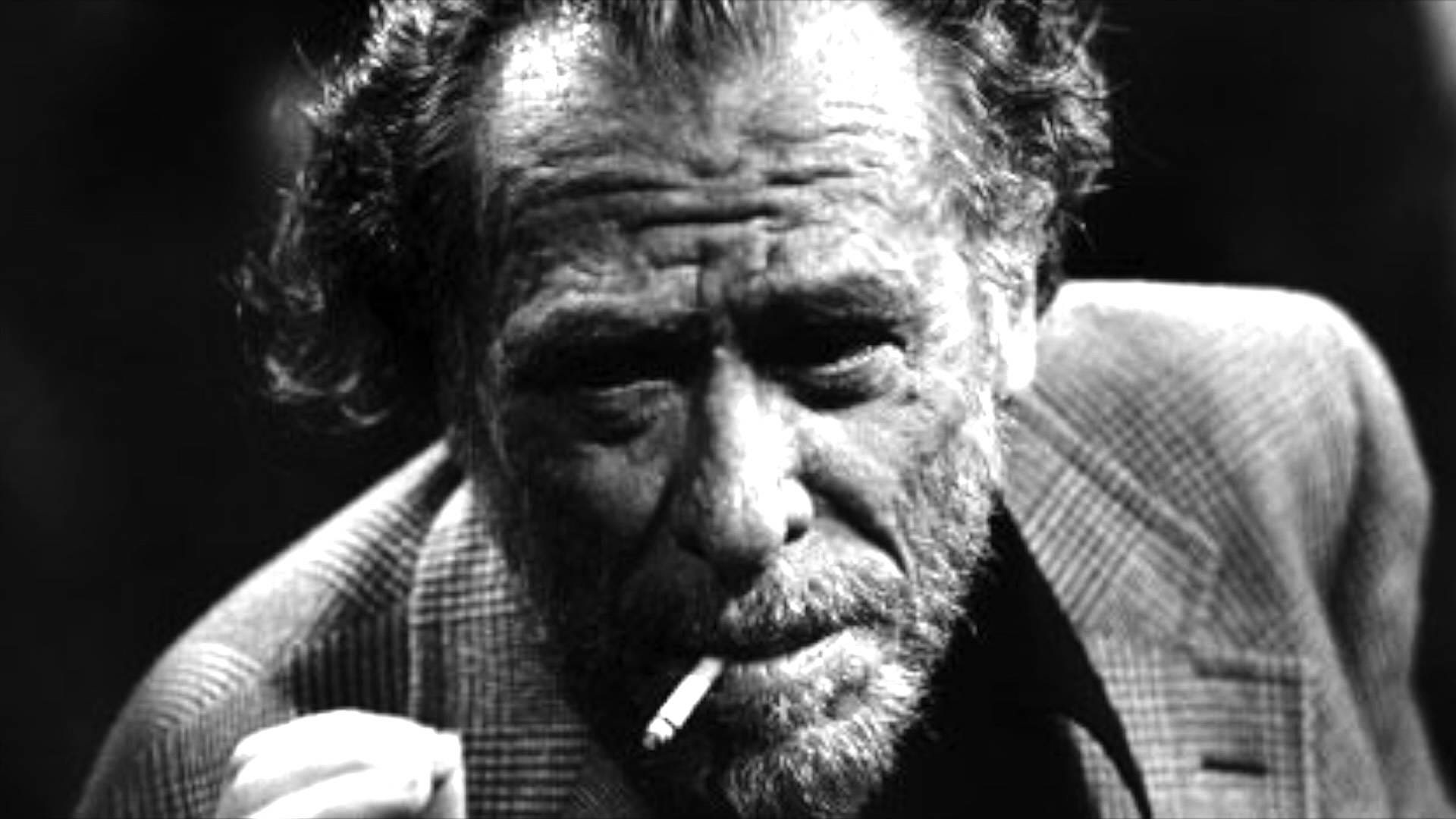
The claim that Charles Bukowski is the greatest American writer after Mark Twain becomes most persuasive when framed not as a provocation but as a recognition: Bukowski is the only major post‑Twain writer who continued—and completed—Twain’s democratic project. What Twain did for the frontier, Bukowski did for the late‑industrial city; what Twain did for the American vernacular, Bukowski did for the American underclass; what Twain did for the myth of innocence, Bukowski did for the myth of success.
This argument gains force when presented as a reflection on American literary lineage rather than a ranking. Twain and Bukowski form a dyad: two writers separated by a century but united by a commitment to clarity, honesty, and the unvarnished national voice.
Twain’s revolution was linguistic. He broke American prose free from European affectation and insisted that literature speak in the rhythms of the people. Bukowski inherits this revolution at the moment when American life has shifted from riverboats and frontier towns to factories, racetracks, cheap apartments, and dead‑end jobs.
Both writers understood that the American story is not told from the top down but from the barstool up.
Twain’s vernacular was the Mississippi; Bukowski’s was the skid row bar.
Twain’s characters drifted downriver; Bukowski’s drifted from job to job, woman to woman, poem to poem.
Twain exposed the hypocrisy of a nation claiming virtue while practicing cruelty; Bukowski exposed the hypocrisy of a nation promising opportunity while delivering exhaustion.
In both cases, the language is the argument. The plain style becomes a moral stance.
Style as Moral Clarity
Bukowski’s sentences, like Twain’s, are deceptively simple. They are stripped of ornament not because the writer lacks sophistication but because he refuses to lie. The plain style becomes a form of ethical hygiene.
Twain used humor to reveal the rot beneath American innocence. Bukowski used cynicism to reveal the tenderness beneath American despair. Both understood that the truth is often funniest when it hurts and most beautiful when it’s ugly.
This is why their voices are instantly recognizable. They are not styles so much as stances—ways of seeing the world that cannot be faked.
The Myth of America, Rewritten Twice
Twain’s America was a nation expanding outward, inventing itself through motion and myth. Bukowski’s America was a nation collapsing inward, numbed by work, alcohol, loneliness, and the slow erosion of dreams. Yet both writers saw the same thing: a country defined by its contradictions.
Twain’s Mississippi is a moral geography where freedom and cruelty coexist.
Bukowski’s Los Angeles is a moral geography where hope and futility coexist.
Each writer created a landscape that became symbolic shorthand for the American condition. Each turned a region into a metaphor. Each revealed the distance between the nation’s promises and its realities.
Cultural Reach Beyond the Literary World
Bukowski, like Twain, is read by people who do not read. His poems circulate like folk songs. His novels are passed hand‑to‑hand among the disaffected, the young, the working poor, the lonely, the curious. His voice has become a cultural idiom—quoted, misquoted, tattooed, mythologized.
This is not a measure of popularity but of penetration. Greatness in American literature has always included the ability to escape the academy and enter the bloodstream of the culture. Twain did it. Bukowski did it. Few others have.
A Lifelong, Coherent Project
Both writers produced enormous bodies of work—novels, stories, essays, letters, poems—unified by a single, unmistakable voice. Both created alter egos (Huck Finn, Henry Chinaski) who became national archetypes. Both wrote with a consistency of vision that makes their work feel less like a career and more like a single, lifelong book.
Bukowski’s project, like Twain’s, was to tell the truth about America as he saw it. Not the official truth, not the respectable truth, but the lived truth.
Why Bukowski Belongs Beside Twain
The argument resolves into a simple claim: Bukowski is the only major American writer after Twain who matched Twain’s combination of stylistic innovation, cultural reach, moral clarity, and democratic voice.
Not because he was polite—he wasn’t. Not because he was respectable—he wasn’t. But because he understood, as Twain did, that the job of the American writer is not to flatter the nation but to reveal it.
Bukowski revealed the America of the 20th century with the same unblinking honesty Twain brought to the 19th. In doing so, he became Twain’s truest heir—and perhaps the greatest American writer to follow him.
If you want to deepen this into a paired meditation on the two writers’ moral visions—Twain’s satire of innocence and Bukowski’s satire of aspiration—I can expand the argument in that direction.