A Trueman–Triola Newsletter Edition
Epigraph
“Cruelty is the attempt to simplify another person.” — James Baldwin (attributed)

I. Cruelty’s False Logic
Cruelty rarely presents itself as cruelty.
It presents itself as sense.
It claims to be the adult in the room, the one who understands how the world “really works.” It dresses itself in the language of necessity, efficiency, and realism. It says:
This is just how things are.
Someone has to make the hard choices.
Don’t be sentimental.
Cruelty’s power lies in its ability to masquerade as clarity. It offers a worldview in which complexity is weakness, interiority is irrelevant, and empathy is a liability. It thrives on the idea that human beings are interchangeable units in a system too large to question.
But cruelty’s logic is a façade.
It collapses the moment we slow down enough to see the person in front of us as a full human being.
Undoing cruelty begins with that slowing.
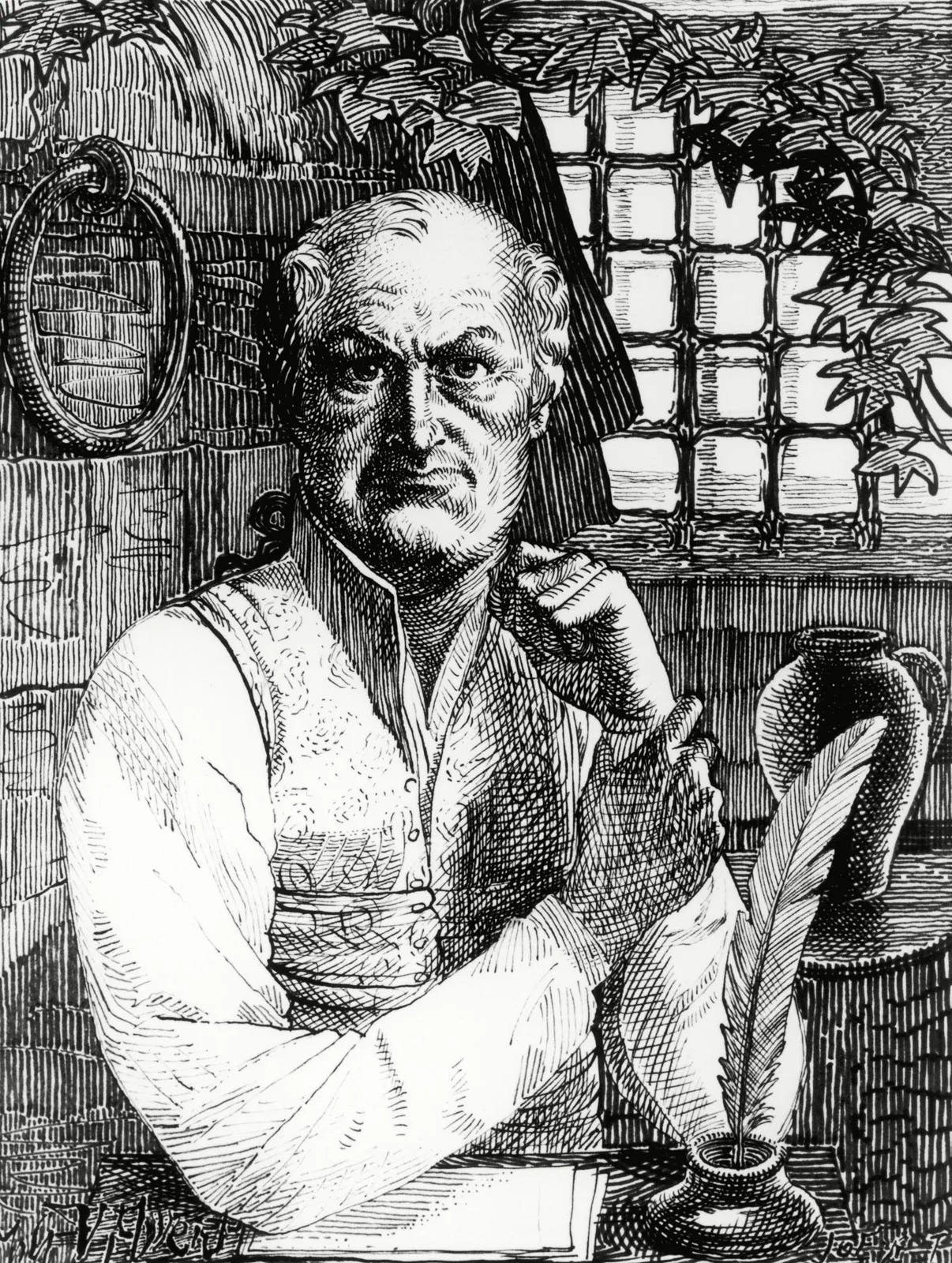
Marquis-de-sade
II. How Cruelty Sustains Itself
Cruelty is not maintained by villains.
It is maintained by habits.
Abstraction — turning people into categories, cases, or “types.”
Distance — ensuring the harmed remain unseen or unnamed.
Speed — moving fast enough that attention becomes impossible.
Certainty — insisting that one’s view of the world is complete.
These habits create a moral atmosphere in which harm feels inevitable. Once a person’s interior life is dismissed, anything can be justified. Cruelty becomes a kind of administrative convenience.
This is why cruelty so often hides behind procedure.
It prefers forms to faces.
Undoing cruelty requires interrupting these habits—reintroducing friction, attention, and doubt.
SHAPE \* MERGEFORMAT
III. The Counter‑Logic: Attention as Resistance
The most radical act in a cruel world is to insist that every person has an interior life as rich and ungovernable as your own.
Attention is not passive.
Attention is a form of moral labor.
To attend to someone—truly attend—is to refuse the flattening that cruelty depends on. It is to say:
Your suffering is not theoretical.
Your life is not a category.
Your interiority is not negotiable.
This is the heart of our ongoing project on ethical imagination: the refusal to let the world shrink. The insistence that interior life is not an ornament but a civic necessity.
Attention is the solvent that dissolves cruelty’s logic.

Kristi Noem, puppy killer
IV. Sidebar: The Psychology of “Necessary Harm”
Why do people commit harm while believing they are doing the right thing?
Psychologists point to several recurring mechanisms:
Moral outsourcing — “I’m just following the rules.”
Cognitive narrowing — stress reduces our ability to perceive nuance.
Goal fixation — when outcomes matter more than people.
Empathic fatigue — the slow erosion of our capacity to care.
Moral licensing — believing one’s good intentions justify harmful actions.
What unites these mechanisms is a collapse of interiority.
The harmed person becomes a symbol, an obstacle, or a data point.
Undoing cruelty requires restoring the full dimensionality of the other.
V. The Work of Undermining
To undermine cruelty is not to defeat it in a single gesture.
It is to erode its foundations.
Name the person, not the category.
Ask what interiority is being ignored.
Refuse the speed that makes harm invisible.
Interrupt the story that says suffering is inevitable.
Let uncertainty back into the room.
Cruelty thrives on certainty.
Compassion thrives on curiosity.
Undoing cruelty is not about being gentle.
It is about being precise.
It is about refusing the false clarity that harm relies on.
It is about insisting that the world is more complicated, more interior, more alive than cruelty allows.
V. Closing Meditation: The Slow Rehumanization of the World
Every act of attention is a small rebellion.
Every time we pause long enough to see another person’s interior life, we weaken cruelty’s claim to inevitability. We make the world slightly less mechanical, slightly less brutal, slightly more human.
Undoing cruelty is not a project of saints. It is the daily work of citizens who refuse to let the world shrink.
It is the work of saying, again and again:
No. This person is not an abstraction. This person is not expendable. This person is not yours to diminish.
Cruelty wants to be the final word.
Our task is to ensure it never is.