
For the Trueman–Triola Newsletter
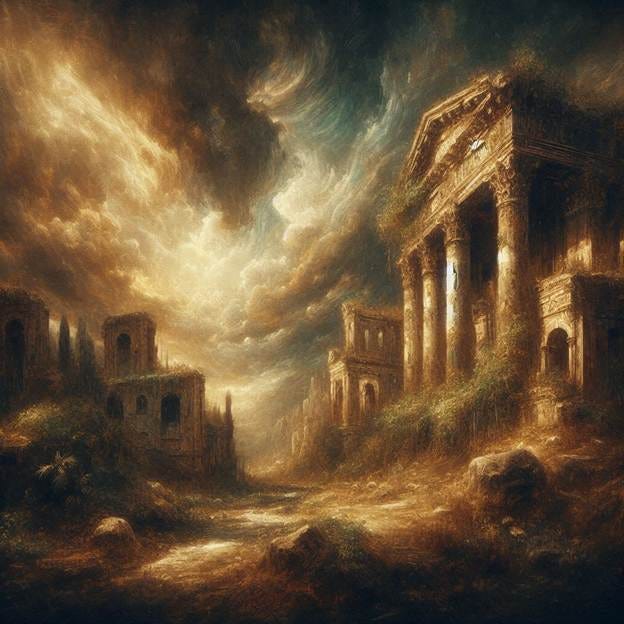
Readers of this newsletter will recognize the pattern: whenever Trueman and Triola turn their attention to the long arc of history, they are less interested in the spectacle of power than in the quiet forces that undo it. Empires, after all, rarely fall with a single dramatic blow. They unravel the way a frayed rope gives way—fiber by fiber, tension by tension—until the whole structure can no longer remember what held it together.
Across centuries and continents, the same motifs recur with almost literary insistence. External pressures arrive first: the slow grind of war, the overreach of distant frontiers, the steady drain of defending too much territory with too few resources. The Romans knew this intimately, as did the Ottomans, the Qing, and the British. Expansion promises glory; maintenance demands a price no treasury can pay forever.
But the more revealing story unfolds inside the imperial walls. Political decay—corruption, factionalism, the hollowing of institutions—creates a kind of moral exhaustion. Leadership becomes reactive rather than visionary. Bureaucracies swell while their capacity shrinks. The empire begins to forget its own narrative, and with that forgetting comes drift.
Economic strain follows like a shadow. Inequality widens. The wealthy insulate themselves from the burdens of the state while the poor shoulder more than they can bear. Armies grow expensive; infrastructure grows brittle. A society that once believed in its own future begins to doubt the fairness of its present.
Then come the forces no emperor can negotiate with: drought, famine, disease, environmental mismanagement. The Maya faced centuries of intermittent drought; medieval Europe reeled under plague; modern states confront climate instability. Nature, indifferent to imperial ambition, becomes the final editor of history.
And beneath all of this lies the most fragile element of any empire: social cohesion. When people cease to believe in the shared project—when identity fractures, when trust erodes, when the imperial story no longer persuades—collapse accelerates. The center does not hold because the center no longer means anything.
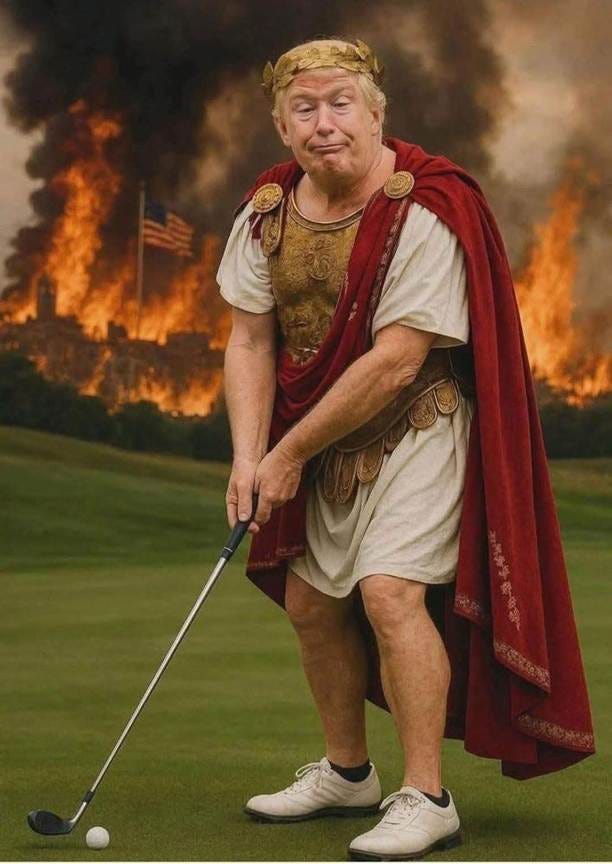
What emerges from this pattern is not a morality tale but a structural truth. Empires collapse not from a single cause but from the convergence of many: overextension, inequality, political decay, environmental stress, and the quiet erosion of collective purpose. The fall is rarely sudden. It is a long forgetting, a gradual loosening of the bonds that once made the whole seem inevitable.
Trueman and Triola would remind us that studying these patterns is not an exercise in fatalism. It is a way of sharpening our ethical imagination. If collapse is a story of systems losing coherence, then resilience is a story of communities remembering what binds them—justice, shared purpose, and the humility to recognize limits.
Empires fall. But societies that learn from their failures may yet endure.