
A mischievous alternative title for Jane Campion’s The Power of the Dog might well be “Who’s Gonna Kill Phil?”—a darkly comic reframing that nonetheless captures the film’s gravitational pull. Phil Burbank’s death is not merely a narrative twist but the slow, inevitable culmination of a life built on provocation, dominance, and the dangerous belief that he alone understands the terrain.
One line in the film crystallizes this dynamic. When asked about the shadow on the distant hillside—“Is there something there?”—Phil replies, “Not if you can’t see it.” The remark is more than a taunt; it is a philosophy. Phil treats perception as a hierarchy, a test of worthiness, a way of sorting those who can read the world from those who cannot. He assumes he is the only one capable of seeing clearly.
The film’s quiet brilliance lies in revealing how wrong he is. The story becomes a meditation on who truly perceives the shape of danger, who understands the contours of cruelty, and who recognizes the moment when a shadow is not a shadow at all but a warning.
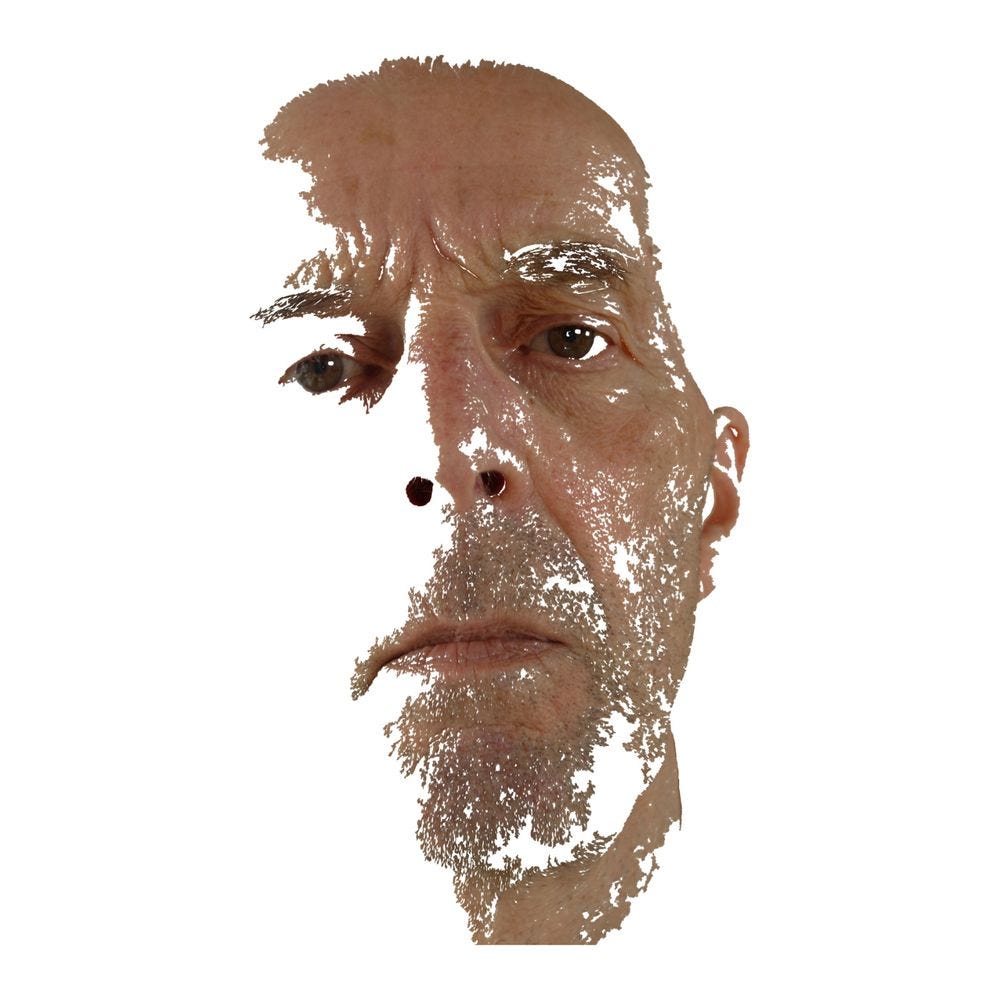
This theme resonates unexpectedly with the work of artist Cor Wijtman. Wijtman’s art invites viewers to confront the limits of their own perception—how much meaning resides not in detail but in outline, in the faint suggestion of form. Wijtman’s work often plays with silhouettes, negative space, and the tension between what’s visible and what’s implied. His pieces feel like meditations on perception—how much of meaning is in the outline rather than the detail. That’s exactly the dynamic in Power of the Dog: the story is a silhouette, and the viewer has to decide what shape they’re actually seeing.
Placed alongside Campion’s film, Wijtman’s visual language becomes a kind of echo. Both ask a similar question: What do we see, and what does our seeing reveal about us?
In that sense, the imagined title “Who’s Gonna Kill Phil?” becomes more than a joke. It becomes a lens—a way of understanding a story about power, vulnerability, and the perilous assumption that one’s own vision is the only one that matters.
The connection between the film’s shadow-on-the-hill moment and Wijtman’s visual language is spot on. Both ask the same question: What does your seeing say about you?
Cor Wijtman (@corwijtman.bsky.social) — Bluesky
Cor Wijtman (@corwijt48.bsky.social) — Bluesky