

There is a stubborn truth at the heart of any democratic project: a people cannot grow morally if they refuse to remember honestly. Nations, like individuals, are tempted by flattering stories—those soft-focus narratives in which harm is accidental, progress inevitable, and responsibility diffuse enough to dissolve. Yet the work of education, at its best, resists this temptation. It insists that the next generation inherit not a myth but a usable past, one that equips them to recognize injustice rather than reenact it.
This is where the contemporary debates around “teaching honest history,” often collapsed into the shorthand of CRT, reveal their deeper stakes. Strip away the slogans and the panic, and what remains is a simple question: Do we trust our students enough to tell them the truth? Not a punitive truth, not a shaming truth, but a truth capacious enough to hold both the cruelty and the courage that shaped this country. A truth that acknowledges the architecture of inequality without reducing any child to an emblem of guilt or innocence. A truth that treats young people as moral agents capable of understanding complexity.
The past is not past when its consequences still structure the present
Honest history is not a curriculum of blame. It is a curriculum of clarity. It teaches that laws, institutions, and cultural habits have long shadows; that the past is not past when its consequences still structure the present. It teaches that progress has always been contested, that rights were won through struggle, and that the work of justice is not a chapter that closes but a responsibility that continues. In this sense, teaching about redlining, segregation, disenfranchisement, or the long fight for civil rights is not ideological—it is civic. It gives students the vocabulary to understand the world they inhabit and the imagination to improve it.
There is also a quieter, more intimate value in this work. When students encounter the full, unvarnished record of American history, they learn that suffering has witnesses, that resilience has lineage, and that their own moral choices are part of a larger human story. They learn empathy not as sentiment but as literacy: the ability to read the experiences of others without erasing or romanticizing them. And they learn that patriotism, if it is to mean anything at all, must be strong enough to withstand the truth.
The fear surrounding honest history often comes from the belief that acknowledging injustice will fracture us. But the opposite is true. What fractures a society is denial—those brittle narratives that cannot bear scrutiny and therefore demand silence. What strengthens a society is the courage to look directly at what has been done, to understand how we arrived here, and to imagine how we might do better. Education is the place where that courage is cultivated, one classroom at a time.
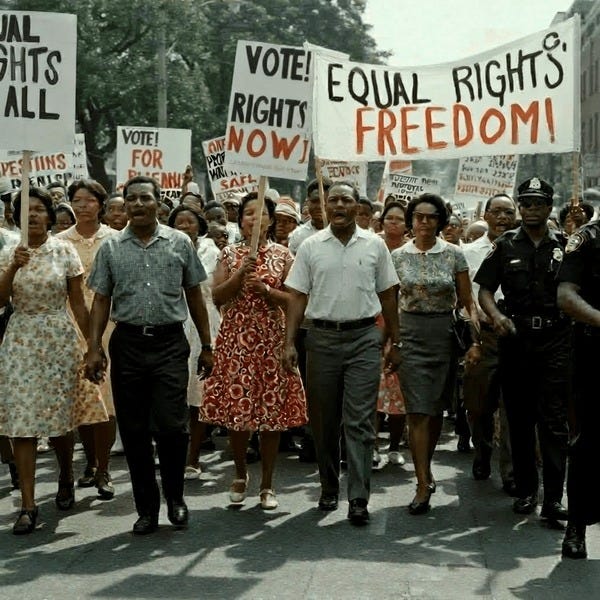
In the end, teaching honest history is not about relitigating the past. It is about enlarging the moral horizon of the present. It is about giving students the tools to recognize patterns, question power, and imagine alternatives. It is about preparing them not merely to succeed in the world as it is, but to participate in the ongoing work of shaping the world as it ought to be.
And perhaps that is the quiet promise beneath all the noise: that a nation brave enough to tell its children the truth is a nation still capable of becoming wiser, kinder, and more just than it has been.