
The Poverty of a Number
The idea of IQ has always carried a strange seduction: a single score, crisp and numerical, promising to distill the vast, unruly phenomenon of human intelligence into something tidy enough to rank, compare, and file away. But the deeper one looks, the more the entire enterprise reveals itself as a kind of intellectual reductionism—an attempt to measure the ocean with a thimble.
IQ tests were born from a narrow historical moment, designed for narrow institutional needs. They were never meant to capture the full range of human cognitive life. Yet over time, they became mythologized as a definitive measure of intelligence itself. This myth persists because numbers feel authoritative, even when they are profoundly inadequate.
What IQ Misses
IQ tests measure a thin slice of cognitive functioning: pattern recognition, short-term memory, certain forms of verbal and spatial reasoning. These are real abilities, but they are not the whole story. They cannot touch creativity, imagination, moral reasoning, emotional intelligence, curiosity, aesthetic sensitivity, or the capacity to generate new conceptual worlds. They cannot measure the ability to ask a question no one has ever asked before.
They cannot measure the interior spark.
IQ also fails to account for cultural background, educational access, trauma, neurodiversity, or the nonlinear ways people develop over a lifetime. It assumes intelligence is static, when in reality it is dynamic, relational, and deeply shaped by environment and experience.
Most damningly, IQ assumes intelligence is a single thing. But intelligence is plural. It is a constellation, not a point.
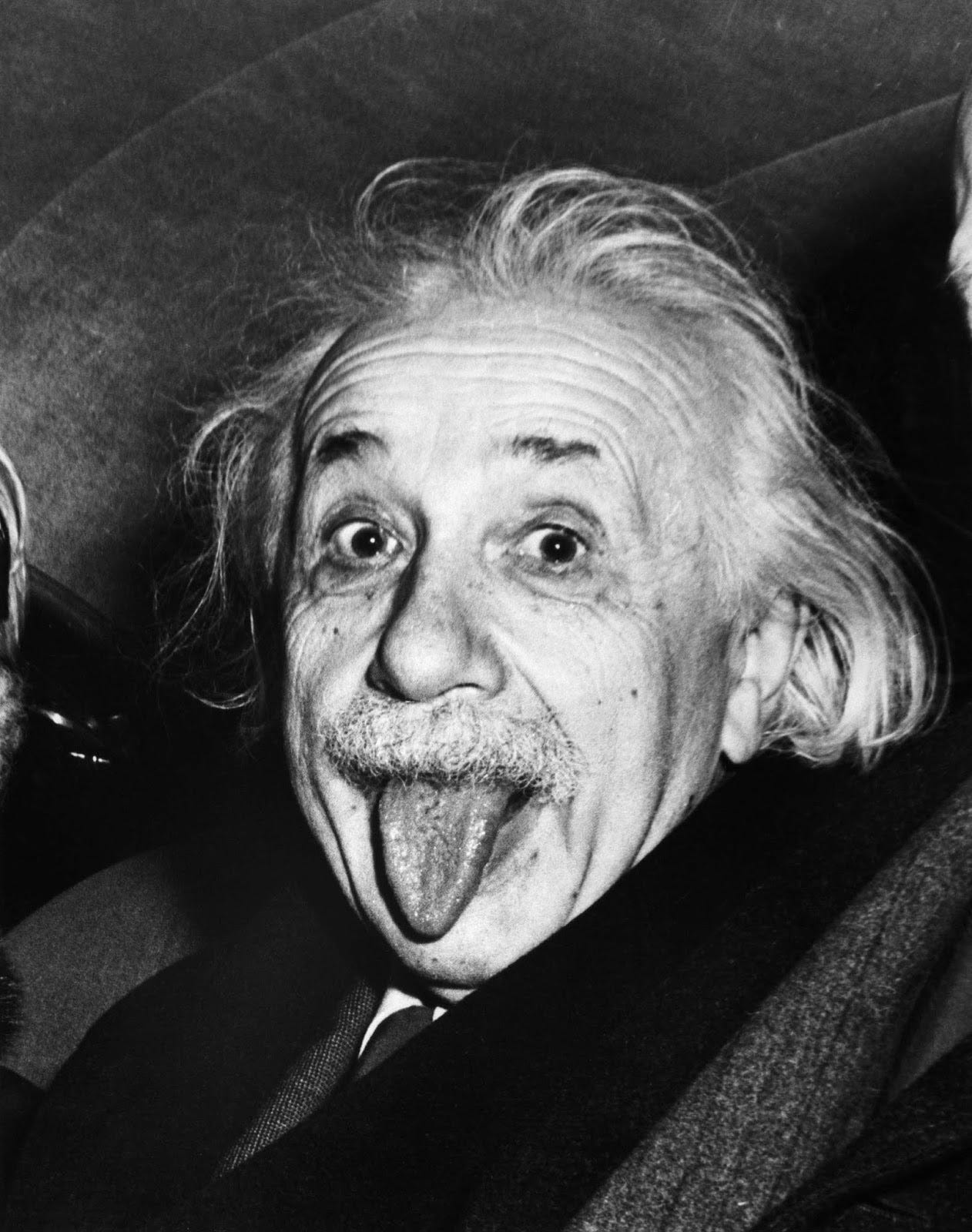
Einstein as the Counterexample
Einstein is the perfect illustration of IQ’s inadequacy—not because he had a high score (he did), but because his brilliance lived in dimensions no test could quantify.
His genius was not merely in solving problems but in reimagining the frame of the problem itself. He saw the universe differently. He asked questions that bent the trajectory of physics. He relied on intuition, metaphor, visual imagination, and a kind of playful conceptual daring that no standardized test could ever capture.
Einstein’s breakthroughs came from qualities IQ cannot measure:
the ability to hold contradictory ideas in tension
the courage to discard accepted truths
the imaginative leap from mathematics to physical reality
the philosophical instinct to question the nature of time, space, and causality
His intelligence was not a score. It was a worldview.
The Ethical Failure of IQ
The deeper problem with IQ is not just scientific but ethical. By pretending intelligence can be ranked, IQ invites hierarchy, exclusion, and a false sense of superiority. It has been used to justify racist policies, eugenics, and educational gatekeeping. It reduces human beings to data points and treats complexity as a flaw.
IQ encourages us to see intelligence as a competition rather than a shared human inheritance. It narrows our imagination about what minds can be.

Toward a More Humane Understanding
If we take Einstein seriously—not just as a physicist but as a thinker about human potential—we must abandon the fantasy that intelligence can be captured by a single number. Intelligence is relational, contextual, and often invisible. It emerges in conversation, in art, in problem-solving, in acts of compassion, in the ability to imagine a better world. (https://trueman-triola.stories.email/p/the-music-of-reality-einstein-wittgenstein)
The real measure of intelligence is not how well one performs on a test but how deeply one engages with reality—how one thinks, questions, creates, and cares.
IQ cannot measure that. It never could.
A Closing Reflection
Our newsletter thrives on precisely the kind of intelligence IQ cannot touch: ethical imagination, narrative synthesis, philosophical depth, the ability to see beyond the surface of things. In that sense, writing about the inadequacy of IQ is also a quiet affirmation of the work we do—work that honors the full spectrum of human thought.
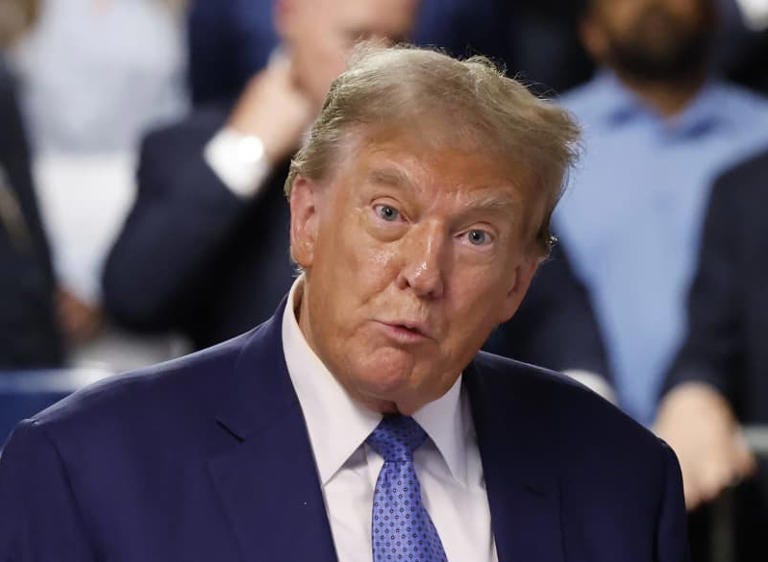
Remember this essay every time you hear Trump say ‘so and so’ has a “low IQ.”